
Pest Control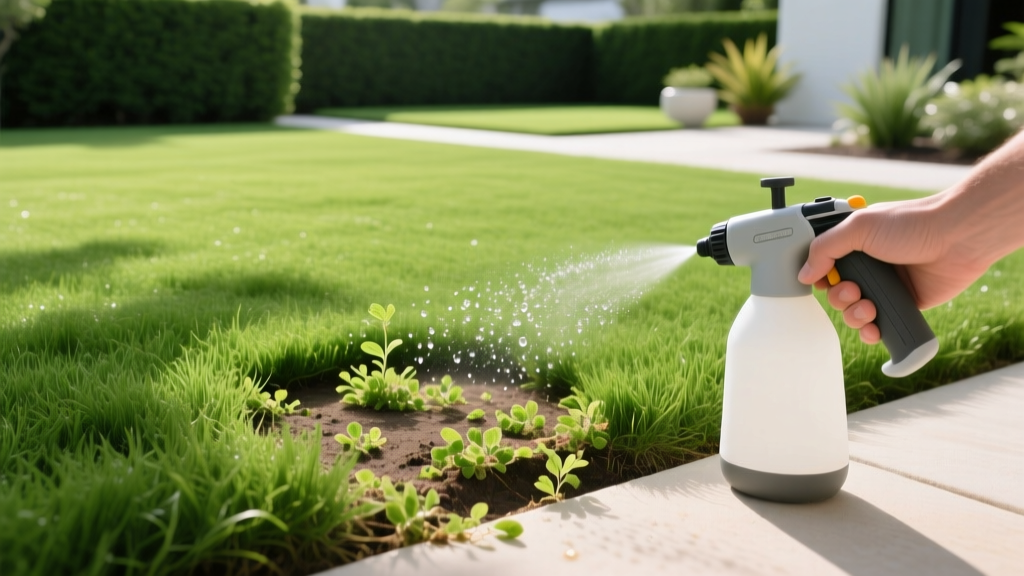
Best St Augustine Grass Weed Killer for Safe Spot Treatments
The St. Augustine Herbicide Sensitivity Matrix
St. Augustinegrass (Stenotaphrum secundatum) is notoriously sensitive to synthetic auxin herbicides. While common broadleaf killers relying on high concentrations of 2,4-D, dicamba, and MCPP work wonders on Kentucky Bluegrass or Bermuda, they will severely stunt, cup, and yellow St. Augustine stolons. Finding a safe st augustine grass weed killer requires selecting active ingredients that bypass the grass's specific metabolic vulnerabilities while effectively disrupting target weed biology.
Before selecting a product for spot treatment, consult this sensitivity matrix to understand how common active ingredients interact with St. Augustine turf.
| Active Ingredient | Safety Profile on St. Augustine | Primary Target Weeds | Max Application Temp |
|---|---|---|---|
| Atrazine | High (Excellent) | Broadleaves, Annual Grasses, Doveweed | 85°F (29°C) |
| Sulfentrazone + Metsulfuron | High (Excellent) | Sedges, Tough Broadleaves, Chamberbitter | 90°F (32°C) |
| Halosulfuron-methyl | High (Excellent) | Yellow & Purple Nutsedge | 90°F (32°C) |
| 2,4-D + Dicamba (Standard) | Low (High Risk of Stunting) | Broadleaves (Dandelion, Clover) | 80°F (26°C) |
| Quinclorac | Moderate (Risk of Chlorosis) | Crabgrass, Broadleaves | 85°F (29°C) |
According to the Texas A&M AgriLife Extension, avoiding standard 2,4-D formulations is the single most important step in preventing chemical burn on St. Augustine lawns. Instead, homeowners must rely on specialized formulations.
Top St Augustine Grass Weed Killer Formulations
For spot-treating isolated weed outbreaks without damaging the surrounding turf, these two chemical profiles offer the highest efficacy and safety margins.
Atrazine (The Pre- and Post-Emergent Workhorse)
Atrazine is a photosystem II inhibitor that provides both post-emergent control of existing broadleaves and pre-emergent suppression of annual grass seeds. For spot treatments, liquid Atrazine (such as Hi-Yield Atrazine Weed Killer, typically priced around $22 for a 32 oz bottle) is the gold standard for St. Augustine. It is highly effective against doveweed, chickweed, and clover.
Mixing Ratio: 0.75 fluid ounces of Atrazine per 1 gallon of water. This volume covers approximately 1,000 square feet, but for spot treatment, apply only until the target weed leaves are uniformly wet, avoiding runoff.
Limitation: Atrazine is slow-acting. It disrupts photosynthesis, meaning weeds will take 14 to 21 days to fully yellow and die. Do not reapply within 30 days.
Sulfentrazone + Metsulfuron (The Broadleaf & Sedge Eradicator)
When dealing with stubborn sedges or waxy broadleaves like chamberbitter, Atrazine is often insufficient. Professional-grade blends combining Sulfentrazone (a PPO inhibitor for rapid cell membrane disruption) and Metsulfuron (an ALS inhibitor) offer rapid burn-down. Products like Blindside (approx. $115 for an 8 oz bottle) are expensive upfront but highly concentrated, requiring only 0.065 ounces per gallon of water.
This combination causes visible necrosis on target weeds within 24 to 48 hours while remaining completely safe for St. Augustine stolons, provided a non-ionic surfactant (NIS) is included to help the chemical penetrate waxy weed cuticles without scorching the turf.
⚠️ CRITICAL TEMPERATURE WARNING: St. Augustine grass is highly susceptible to herbicide-induced phytotoxicity when heat-stressed. Never apply Atrazine when ambient temperatures exceed 85°F, and never apply Sulfentrazone blends above 90°F. The University of Florida IFAS Extension explicitly warns that applying these chemicals during summer heat spikes will cause severe stolon stunting and turf thinning, regardless of the herbicide's baseline safety profile.
Weed Species Spot-Treatment Cheat Sheet
Identify your specific weed and apply the corresponding targeted protocol:
- Doveweed (Murdannia nudiflora): Use Atrazine. Doveweed has a thick, waxy cuticle. Add 0.25% v/v Non-Ionic Surfactant (approx. 1/2 teaspoon per gallon) to ensure the herbicide adheres to the leaf surface.
- Yellow & Purple Nutsedge: Use Halosulfuron-methyl (e.g., SedgeHammer, ~$25 per 13.5g box). Mix one 13.5g packet into 1 gallon of water. Spot-treat the nutsedge rosettes. Do not mow for 48 hours before or after application.
- Chamberbitter (Phyllanthus urinaria): Use Sulfentrazone + Metsulfuron. Chamberbitter is highly resistant to Atrazine and 2,4-D. The PPO inhibitor in sulfentrazone provides the necessary rapid burn-down.
- Crabgrass: Avoid Quinclorac spot treatments on St. Augustine, as it frequently causes temporary severe chlorosis. Instead, spot-treat young crabgrass (less than 2 tillers) with Atrazine, or manually pull mature plants and rely on a pre-emergent like Dithiopyr in early spring.
Step-by-Step Spot Application Protocol
Precision is critical when applying a st augustine grass weed killer. Broadcast spraying increases the risk of cumulative chemical stress. Follow this exact protocol for spot treatments:
- Calibrate Your Sprayer: Use a 1-quart or 1-gallon hand-pump sprayer. Do not use a hose-end sprayer, as they cannot deliver the precise, low-volume application required for spot treatment.
- Select the Right Nozzle: Swap the standard cone nozzle for a flat-fan nozzle (such as the TeeJet 8002VS). This produces a uniform, coarse droplet pattern that minimizes wind drift onto desirable turf.
- Mix the Solution: Fill the sprayer halfway with water. Add the precise herbicide dosage, then add the Non-Ionic Surfactant (NIS). Agitate gently, then fill the rest of the sprayer with water. (Always add surfactant last to prevent excessive foaming).
- Apply at the Correct Height: Hold the nozzle 12 to 18 inches above the target weed. Spray just enough to wet the leaves until they glisten, but stop before the liquid begins to drip off the leaf tips. Dripping indicates chemical waste and increases the risk of soil-level root uptake, which can stress the St. Augustine root zone.
- Mark the Spot: Place a small landscaping flag next to the treated weed. Because herbicides like Atrazine take up to three weeks to show full efficacy, marking the spot prevents accidental double-application.
Real-World Failure Modes and Edge Cases
Even with the correct herbicide, homeowners frequently encounter failure due to environmental and biological edge cases.
The Surfactant Burn Trap: Many homeowners assume that "more surfactant equals better weed control." Adding extra NIS beyond the 0.25% v/v threshold strips the protective epicuticular wax off the St. Augustine grass blades, leading to severe desiccation and sunscald, especially in full-sun lawns. Always measure surfactant with a syringe or precise measuring spoon.
Drought-Stressed Turf: Never apply any post-emergent herbicide to St. Augustine grass that is experiencing drought stress (indicated by folding leaf blades and a bluish-gray tint). When turf is drought-stressed, its metabolic processes slow down, preventing it from detoxifying the herbicide. This results in severe phytotoxicity. Irrigate the lawn deeply 24 hours before spot treatment to ensure the grass is actively growing and capable of metabolizing the chemical safely.
The "Southern Weed Killer" Misconception: Many big-box store products are labeled as "Safe for Southern Lawns." While they may contain lower concentrations of dicamba, they often still include 2,4-D and MCPP. If you must use these ready-to-hose formulations, apply them only during the cooler months (late fall or early spring) when temperatures are consistently below 80°F. During the active growing season, stick strictly to Atrazine or Sulfentrazone-based concentrates for guaranteed safety.

