
Pest Control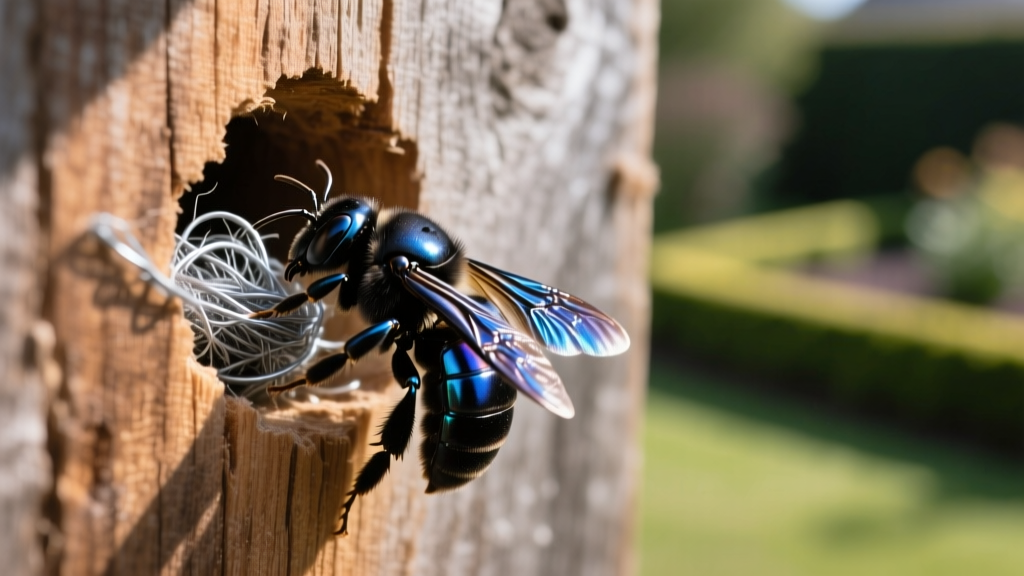
Steel Wool for Carpenter Bees: How to Plug Holes and Prevent Returns
The Anatomy of a Carpenter Bee Gallery
The Eastern carpenter bee (Xylocopa virginica) is a vital pollinator, but its nesting habits make it a structural nuisance for homeowners. Unlike termites, carpenter bees do not consume wood; they excavate it to create brood chambers. The entrance hole is always exactly 1/2 inch (12.7mm) in diameter—matching the width of the female bee's body. From this entrance, the bee bores a primary tunnel at a 90-degree angle, then turns horizontally along the wood grain to create a gallery that can extend 4 to 6 inches deep. Over successive generations, daughter bees often reuse and expand these galleries, eventually tunneling up to 10 feet into a single fascia board or deck joist.
Because these bees exhibit high site fidelity, leaving a hole unplugged guarantees that the next generation will return to the exact same spot. According to University of Kentucky Entomology, untreated softwoods like pine, fir, cedar, and redwood are the primary targets, especially if the wood is unpainted or lacking a thick polyurethane seal.
Why Standard Wood Fillers and Caulk Fail
Many homeowners attempt to seal carpenter bee holes with standard acrylic latex caulk or basic wood filler. This approach almost always fails within one season for three reasons:
- Shrinkage and Cracking: As wood expands and contracts with seasonal humidity changes, rigid wood fillers crack and pull away from the gallery walls.
- Chewing Capability: While carpenter bees cannot chew through solid steel or cured epoxy, emerging adult bees in the spring can easily push through dried latex caulk or soft, uncured wood putty if the barrier is thin.
- Depth Limitations: Squeezing caulk into a 6-inch deep tunnel only plugs the first inch. The remaining void acts as a hollow acoustic chamber, attracting new scouting bees looking for pre-existing nests.
The Steel Wool Strategy: Physical vs. Chemical Barriers
Using steel wool for carpenter bees introduces an impenetrable physical barrier deep into the gallery. The interlocking steel fibers are impossible for the bee's mandibles to cut or push aside. When packed tightly into the 1/2-inch entrance and the horizontal tunnel, it creates a permanent roadblock that forces emerging bees to die inside the gallery or deters new queens from attempting to excavate the space.
CRITICAL WARNING: The Rust Stain Trap
Do not use standard carbon steel wool (like Grade #3 or #4) on exterior wood, especially cedar or redwood. Carbon steel wool sheds microscopic iron particles. When exposed to rain and the natural tannins in wood, these particles oxidize rapidly, creating severe, permanent black and brown rust stains that will bleed through primer and paint. If you must use a metallic mesh, you must upgrade to stainless steel scrubbers or copper mesh (such as Stuf-Fit) to prevent tannin-iron reactions.
Step-by-Step: Plugging Holes for Permanent Defense
For the most effective yard defense, combine a residual insecticide dust with a metallic mesh plug and a weatherproof sealant. Follow this protocol to ensure zero returns.
- Time the Treatment (Dusk or Night): Carpenter bees are diurnal. Treat the holes at dusk or after dark when foraging adults have returned to the gallery but are sluggish and less aggressive. Wear protective eyewear and leather gloves.
- Apply Residual Dust: Use a hand duster to puff a small amount of silica aerogel or deltamethrin dust (such as Drione Dust, approx. $28 for 7oz) directly into the hole. This ensures any larvae deep inside the gallery are eliminated before they mature.
- Pack the Metallic Mesh: Take a 2-inch strip of copper mesh (like Stuf-Fit, approx. $14 for a 20ft roll) or a shredded stainless steel scrubbing pad. Use a flathead screwdriver to aggressively stuff the mesh into the hole, pushing it at least 1 inch deep into the horizontal tunnel. The mesh should be packed so tightly that it cannot be pulled back out.
- Seal the Entrance: Once the mesh is flush with the wood surface, seal the remaining 1/2-inch gap with a high-quality, paintable exterior sealant. DAP Painter's Putty ($6) or a two-part exterior wood epoxy works best, as they do not shrink or crack under UV exposure.
- Paint or Stain: Once the putty cures, paint over the repair. Carpenter bees strongly prefer bare, weathered wood; a fresh coat of exterior acrylic paint acts as a powerful secondary deterrent.
Material Comparison Matrix
Choosing the right plugging material dictates the longevity of your repair. Below is a comparison of common DIY and professional materials used for carpenter bee defense.
| Material | Avg. Cost | Rust/Stain Risk | Chew-Proof | Best Use Case |
|---|---|---|---|---|
| Carbon Steel Wool | $4 / pack | High (Severe) | Yes | Interior framing only |
| Stainless Steel Scrubber | $6 / pack | None | Yes | Exterior fascia & decks |
| Copper Mesh (Stuf-Fit) | $14 / 20ft | None | Yes | Professional standard, all woods |
| Expandable Foam | $8 / can | None | No (Bees chew it) | Not recommended for bees |
| Wood Filler / Caulk | $6 / tube | None | No (Cracks over time) | Topical seal over mesh only |
Long-Term Yard Defense Strategies
Plugging existing holes is only reactive. To secure your yard's perimeter against future scouting queens, implement these preventative measures in early spring (March to April) before the mating season begins:
- Paint or Polyurethane Bare Wood: Penn State Extension notes that carpenter bees heavily prefer untreated, weathered wood. Applying a coat of exterior paint or a thick polyurethane varnish to fascia boards, deck railings, and fence posts makes the surface too slick and hard for the bees to grip and excavate.
- Citrus and Almond Oil Sprays: For homeowners avoiding synthetic chemicals, spraying a concentrated citrus oil or almond oil solution on vulnerable wood eaves acts as a natural olfactory repellent. Reapply every 3 weeks during the active spring nesting season.
- Install Decoy Traps: Hang pre-drilled wooden carpenter bee traps ( featuring 1/2-inch holes angled slightly upward) at the far corners of your property line. These traps exploit the bee's preference for pre-existing holes, drawing them away from your home's structural wood and into a disposable collection chamber.
Frequently Asked Questions
Will steel wool kill the bees already inside the tunnel?
No. Steel wool is purely a physical exclusion barrier. It will trap adult bees inside the gallery where they will eventually die, but it does not possess any insecticidal properties. To actively kill larvae or adults deep inside a 6-inch tunnel, you must apply a desiccant dust like Drione or Diatomaceous Earth into the hole before packing the steel wool.
Can I use steel wool for carpenter bees on my cedar pergola?
You should avoid standard carbon steel wool on cedar. Cedar contains high levels of natural tannins and moisture. When carbon steel reacts with cedar tannins, it produces a dark, ink-like stain that is nearly impossible to sand out or paint over. Always use copper mesh or stainless steel for cedar, redwood, and pressure-treated lumber.
How deep do I need to push the steel wool into the hole?
You must push the mesh at least 1 to 2 inches past the surface entrance. Carpenter bee tunnels immediately turn 90 degrees after the entrance. If you only plug the surface, the expanding foam or wood filler you apply over it will have no structural backing, and emerging bees can easily push the plug out from the inside.

