
Pest Control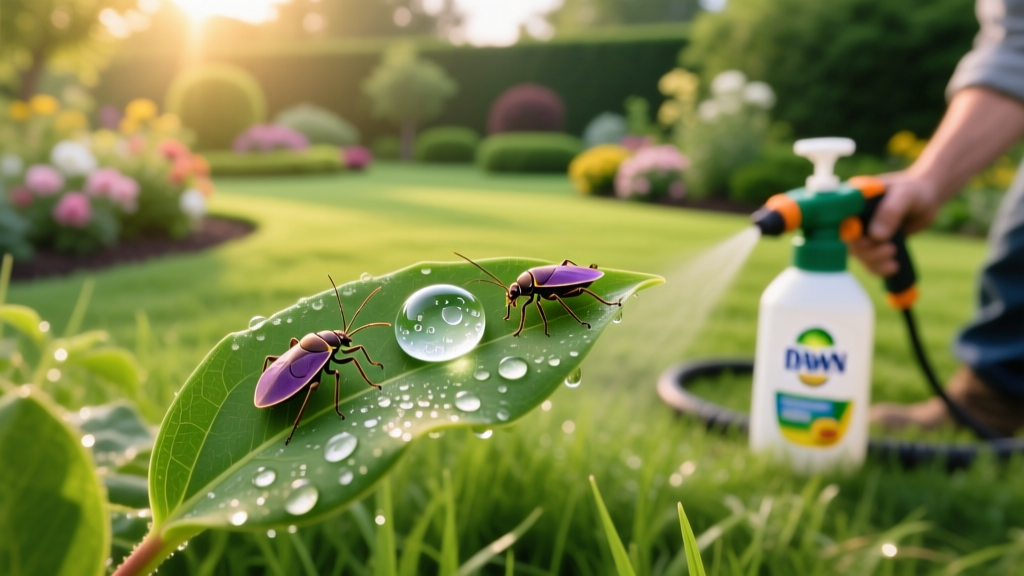
Stink Bugs and Dawn Dish Soap: The Ultimate Organic Spray Guide
The Reality of Brown Marmorated Stink Bugs in Organic Gardens
The brown marmorated stink bug (BMSB) has become one of the most destructive invasive pests for home gardeners and commercial growers alike. Unlike defoliators that chew through leaves, stink bugs use piercing-sucking mouthparts to inject digestive enzymes into fruits and vegetables, leaving behind necrotic, corky spots that ruin the harvest. For gardeners committed to organic and chemical-free pest management, synthetic pyrethroids are off the table. This leaves many turning to a common household item: Dawn dish soap.
While the internet is flooded with vague advice about mixing soap and water, the efficacy of this method relies entirely on precise chemical ratios, correct product selection, and strategic application. Using the wrong variant of Dawn or applying it under the wrong environmental conditions can result in severe plant damage (phytotoxicity) or complete pest control failure.
The Science: How Dawn Dish Soap Kills Stink Bugs
Dawn dish soap is not a registered pesticide, but it functions mechanically as a surfactant-based insecticidal soap. The primary active cleaning agents in Dawn are anionic surfactants, specifically sodium lauryl sulfate and sodium laureth sulfate.
Stink bugs, like many insects, are protected by an epicuticular wax layer on their exoskeleton that prevents moisture loss. When a properly diluted Dawn solution makes direct contact with a stink bug, the surfactants dissolve this waxy cuticle. This causes two lethal effects:
- Rapid Desiccation: The bug loses its ability to retain water, leading to fatal dehydration within minutes.
- Asphyxiation: The soapy film blocks the insect's spiracles (breathing pores), suffocating the pest.
Critical Limitation: Soap sprays have absolutely zero residual effect. Once the soapy water dries on the leaf surface, it will not kill stink bugs that land on the plant later. Direct contact during application is mandatory for efficacy.
The Exact DIY Dawn Soap Spray Recipe
Not all dish soaps are created equal, and not all Dawn variants are safe for plants. You must use Original Blue Dawn. Avoid 'Dawn Ultra', 'Dawn Platinum', or 'Dawn Free & Clear'. The 'Ultra' and 'Platinum' lines contain higher concentrations of degreasing surfactants and added enzymes that will strip the protective wax off your plant leaves, causing severe chemical burns. The 'Free & Clear' line lacks the specific anionic surfactant profile needed to penetrate the insect cuticle effectively.
The 32-Ounce Master Recipe
- Water: 30 ounces of warm (not hot) distilled or filtered water. (Hard tap water contains calcium and magnesium ions that bind to the soap, creating a useless scum).
- Soap: 1.5 tablespoons (22.5 ml) of Original Blue Dawn Dish Soap.
- Adjuvant (Optional but recommended): 1 teaspoon of vegetable oil or neem oil to help the solution adhere to the insect's body longer.
Mixing Order: Always add the water to the spray bottle first, then add the soap and oil. This prevents excessive foaming that makes the bottle difficult to fill and use.
Step-by-Step Application Protocol
Because BMSB are highly mobile and hide under leaves during the heat of the day, timing and technique dictate your success rate.
- Time of Day: Spray only in the early morning (before 8:00 AM) or late evening (after 6:00 PM). Stink bugs are sluggish in cooler temperatures, making them easier targets. Furthermore, spraying in direct midday sun will cause the water to evaporate rapidly, concentrating the soap and burning the plant foliage.
- Temperature Check: Do not apply if the ambient temperature is above 85°F (29°C). High heat opens the plant's stomata, increasing the absorption of the soap and leading to phytotoxicity.
- Targeting: Adjust your spray nozzle to a direct, solid stream rather than a fine mist. You need enough liquid volume to completely drench the insect. Aim for the underside of leaves where stink bugs congregate to feed and lay their barrel-shaped eggs.
- The Shake Rule: Shake the bottle vigorously every 3 to 4 minutes during application. The oil and soap will separate from the water quickly, and spraying plain water will not kill the bugs.
Dawn Soap vs. Commercial Insecticidal Soaps
While DIY Dawn sprays are highly accessible, it is important to understand how they compare to OMRI-listed (Organic Materials Review Institute) commercial insecticidal soaps, which are formulated specifically with potassium salts of fatty acids.
| Feature | DIY Dawn Soap Spray | Commercial Insecticidal Soap |
|---|---|---|
| Cost per 32 oz | ~$0.15 | ~$8.00 - $12.00 |
| Plant Safety | Moderate (High risk if mixed incorrectly) | High (Formulated with plant-safe fatty acids) |
| Efficacy on BMSB | High (Requires direct drenching) | High (Requires direct drenching) |
| Residual Effect | None | None |
| Hard Water Reaction | Forms scum, reduces efficacy | Formulated to resist minor water hardness |
Critical Plant Safety and Phytotoxicity Warnings
Dish soap is a degreaser. If the concentration is too high, it will strip the protective cuticle off your plant leaves just as it does to the stink bug. Certain plants are highly sensitive to soap sprays and should never be treated with Dawn mixtures, even at low concentrations.
⚠️ Do Not Spray These Sensitive Plants
- Sweet Peas
- Ferns (all varieties)
- Impatiens
- Azaleas and Rhododendrons
- Tomatoes (highly sensitive to soap residue; use only as a last resort and rinse with plain water 2 hours after application)
The 24-Hour Patch Test: Before spraying an entire crop, spray a single, mature leaf on 3 different plants. Wait 24 hours. If the leaf shows yellowing, browning at the edges, or a bleached appearance, your mixture is too strong or the plant is too sensitive. Dilute the solution by adding 50% more water and test again.
Troubleshooting Common Application Failures
If you are spraying stink bugs and they are not dying, or if your plants are showing damage, review these common failure points identified by extension entomologists at Penn State University and the University of Maryland.
- Failure Mode 1: The bugs fall off but crawl away.
Cause: Insufficient soap concentration or lack of direct coverage. Stink bugs have a hard, shield-like back. If the spray only hits the top of the carapace, it may not penetrate the joints. You must spray the underside of the insect where the legs and softer abdominal segments are exposed. - Failure Mode 2: The solution looks milky and leaves white flakes.
Cause: Hard water interference. The calcium in your tap water is reacting with the sodium lauryl sulfate. Switch to distilled water or add a water-softening agent to your mix. - Failure Mode 3: Leaves develop brown, crispy spots the next day.
Cause: Phytotoxicity from UV interaction or heat. Applying soap sprays when the sun is high causes the water to evaporate, leaving a concentrated layer of degreaser on the leaf that burns the tissue under UV light. Always rinse plants with plain water a few hours after a soap application if treating sensitive crops.
Integrating Soap Sprays into a Broader Organic Strategy
While the Dawn dish soap spray is an excellent, low-cost knockdown agent for visible adult stink bugs and nymphs, it cannot be your sole line of defense. According to research on insecticidal soap mechanics from Cornell University, soap must be paired with cultural controls for long-term management. Use the soap spray to eliminate immediate threats, but simultaneously deploy pheromone traps at the perimeter of your property to intercept migrating adults, and manually remove the distinctive bronze-colored egg masses from the undersides of leaves before they hatch. By combining the immediate, chemical-free lethality of a properly mixed Dawn spray with proactive scouting, you can protect your garden from stink bugs without resorting to broad-spectrum synthetic toxins.

