
Pest Control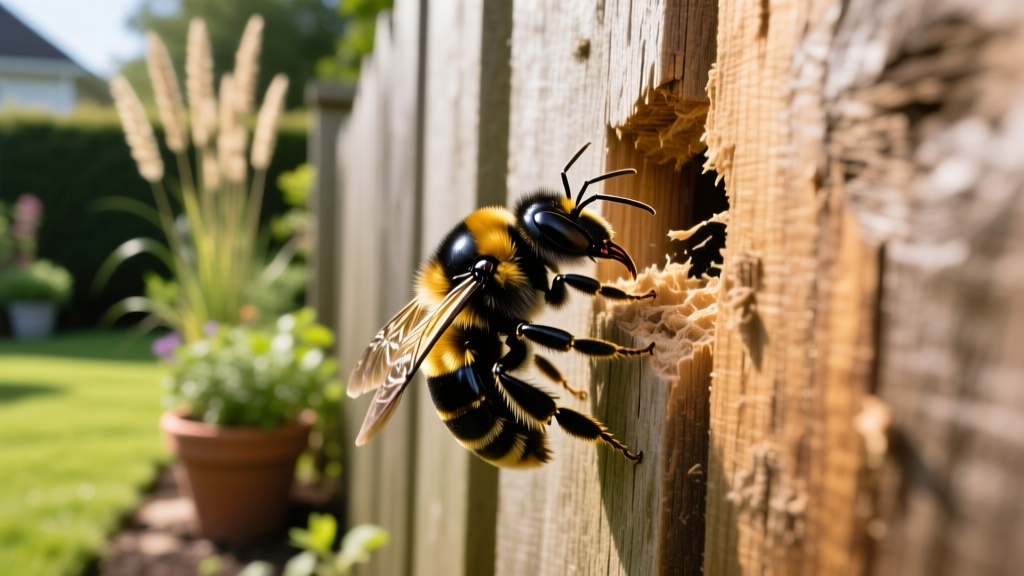
Bees That Eat Wood: How to Stop Carpenter Bee Damage
The Myth and Reality of Bees That Eat Wood
When homeowners search for solutions to stop "bees that eat wood," they are almost always dealing with carpenter bees (Xylocopa species). The first critical piece of information you need to know is that these insects do not actually consume wood for nutrition like termites or carpenter ants do. Instead, they are excavators. The female carpenter bee uses her powerful mandibles to chew through timber, creating perfectly circular, half-inch diameter tunnels to lay her eggs and overwinter.
While they are vital pollinators for your garden, their nesting habits pose a severe structural threat to yard infrastructure. A single female can carve out a primary tunnel 6 to 10 inches deep, branching into four to six sub-galleries. Over two or three seasons, successive generations will reuse and expand these tunnels, leading to internal rot, moisture intrusion, and eventual structural failure of deck railings, pergolas, and fence posts. According to NC State Extension, the most common species in the eastern United States, Xylocopa virginica, strongly prefers untreated, weathered softwoods, making standard yard structures highly vulnerable.
Identifying the Culprit: Carpenter Bees vs. Bumblebees
Before applying any treatment, accurate identification is mandatory. Carpenter bees are frequently mistaken for bumblebees, but their physical traits and behaviors are distinctly different.
- Abdomen: Carpenter bees have a shiny, hairless, black abdomen. Bumblebees have fuzzy, yellow-and-black striped abdomens.
- Size: Adult carpenter bees range from 1/2 inch to 1 inch in length, making them noticeably larger than most native solitary bees.
- Sexual Dimorphism: Male carpenter bees feature a distinct white or yellow patch on their faces. Males are highly territorial and will aggressively "dive-bomb" intruders, but they lack a stinger and are entirely harmless. Females are solid black, possess a stinger, but are highly docile and will only sting if physically crushed or handled.
- Nesting Behavior: Bumblebees nest in underground cavities (like abandoned rodent burrows). Carpenter bees nest exclusively in above-ground wood.
Warning: Secondary Pest Vulnerability
Do not ignore old carpenter bee holes. Woodpeckers frequently tear open infested wood to eat the bee larvae inside, causing massive cosmetic and structural damage. Furthermore, empty galleries invite moisture and wood-decaying fungi, accelerating the rot process in your yard structures.
Do not ignore old carpenter bee holes. Woodpeckers frequently tear open infested wood to eat the bee larvae inside, causing massive cosmetic and structural damage. Furthermore, empty galleries invite moisture and wood-decaying fungi, accelerating the rot process in your yard structures.
Target Materials: What Wood Are They Attacking?
Carpenter bees are highly selective. Understanding their preferences allows you to prioritize your yard defense strategy. They heavily target unpainted, unstained, or weathered softwoods. The highest-risk materials in your yard include:
| Wood Type | Risk Level | Common Yard Applications |
|---|---|---|
| Cedar | Extreme | Fence panels, deck railings, pergola beams |
| Redwood | Extreme | Outdoor furniture, raised garden beds, trim |
| Pine / Fir | High | Eaves, fascia boards, shed siding |
| Cypress | High | Gazebos, decorative yard posts |
| Hardwoods (Oak, Teak) | Low | Premium decking, heavy-duty structural posts |
The Treatment Arsenal: Eradication and Repellent Matrix
Effective management requires a two-pronged approach: eliminating existing larvae and repelling foraging females. The University of Kentucky Entomology Department notes that surface sprays are largely ineffective because the bees spend most of their time inside the galleries. You must deliver the active ingredient directly into the tunnel.
| Treatment Method | Product Example | Active Ingredient | Est. Cost | Best Application |
|---|---|---|---|---|
| Insecticidal Dust | Drione Dust | 1% Pyrethrin + 40% Silica Gel | $25 / 7oz | Active gallery eradication |
| Microencapsulated Liquid | Demand CS | Lambda-cyhalothrin 9.7% | $45 / 8oz | Surface residual barrier |
| Wood Preservative | Bora-Care | Disodium Octaborate Tetrahydrate | $65 / Gallon | Pre-treatment of raw lumber |
| Natural Repellent | Essential Oil Blends | Citrus / Almond Oil | $20 / Quart | Light deterrence (requires weekly reapplication) |
Step-by-Step Eradication and Hole Plugging Protocol
To permanently resolve an infestation, follow this precise protocol. Timing is critical: treat the tunnels at dusk or after dark when the female bees are inside the galleries and less active.
- Locate Active Tunnels: Look for coarse, yellowish sawdust (frass) accumulating on the ground or wood surfaces directly beneath perfectly round holes. Listen for faint buzzing or chewing sounds inside the wood.
- Apply Insecticidal Dust: Using a hand bellow duster (like the JT Eaton model), puff a small amount of Drione Dust or Delta Dust directly into the hole. Do not pack the hole tightly with dust; you want a light coating on the tunnel walls so the bee picks it up on her body and spreads it to the larvae and sub-galleries.
- Wait 48 to 72 Hours: Leave the holes open. This allows foraging bees to return, contact the dust, and spread the insecticide throughout the entire nesting complex.
- Plug the Holes: After the waiting period, seal the tunnels to prevent future generations from reusing them. Insert a wooden dowel coated in exterior wood glue, or push in a tightly fitted cork. For a flush finish, cut the dowel flush with the surface and cover it with a high-quality exterior wood filler like Elmer's E855 or Abatron WoodEpox for structural gaps.
- Paint or Seal the Repair: Once the wood filler cures, sand it smooth and apply exterior paint or a thick polyurethane sealant to mask the repair and deter future drilling.
Long-Term Yard Proofing: Paint, Stain, and Polyurethane
Prevention is vastly cheaper than structural repair. According to Penn State Extension, the most foolproof method to deter carpenter bees is to paint all exposed wood surfaces. Carpenter bees rarely attack painted wood because the paint fills the wood pores and masks the natural scent of the timber.
The Stain vs. Paint Dilemma
Many homeowners prefer the natural look of wood and opt for semi-transparent stains. Standard wood stains do not deter carpenter bees. The bees can easily chew through thin stain layers. If you must maintain a natural wood aesthetic, you must apply a physical barrier. Use a high-build exterior spar urethane, such as Minwax Helmsman Spar Urethane, applying at least three coats to achieve a minimum thickness of 2 to 3 mils. This creates a hardened resin shell that is difficult for the bees to penetrate.
Alternative Physical Barriers
For high-risk areas like fascia boards and eaves where bees frequently target the end-grain of the wood, install physical barriers. Aluminum fascia wrap or vinyl soffit materials are entirely impervious to carpenter bees. If replacing wood trim with PVC composite materials (like Azek or Trex), you will permanently eliminate the risk in those specific zones, as these materials contain no cellulose for the bees to excavate.
Frequently Asked Questions
Will citrus oil really keep bees that eat wood away?
Citrus and almond oils act as mild olfactory deterrents. Spraying a mixture of boiled citrus peels and water onto wood can discourage new females from starting tunnels. However, it degrades rapidly in UV light and washes away in the rain. It is not a substitute for insecticidal dust in active infestations or polyurethane coatings for long-term prevention.
Do carpenter bees cause as much damage as termites?
No, the scale of damage is different. Termites consume wood continuously and can compromise the primary load-bearing framing of a house. Carpenter bees cause localized, cosmetic, and moisture-related damage to exterior trim, decks, and fences. However, left unchecked for 5+ years, carpenter bees can hollow out a 4x4 cedar post enough to cause it to snap under the weight of a pergola roof.
Are traps effective for yard defense?
Commercial wooden carpenter bee traps (which feature pre-drilled angled holes leading into a plastic bottle) can catch foraging males and females. Place them at the corners of your deck or eaves in early spring (March to April) before the bees establish new nests. While they help reduce local populations, traps alone will not stop a determined female from boring into an attractive, untreated cedar railing nearby. Use traps as a supplementary tool, not a primary defense.

