
Pest Control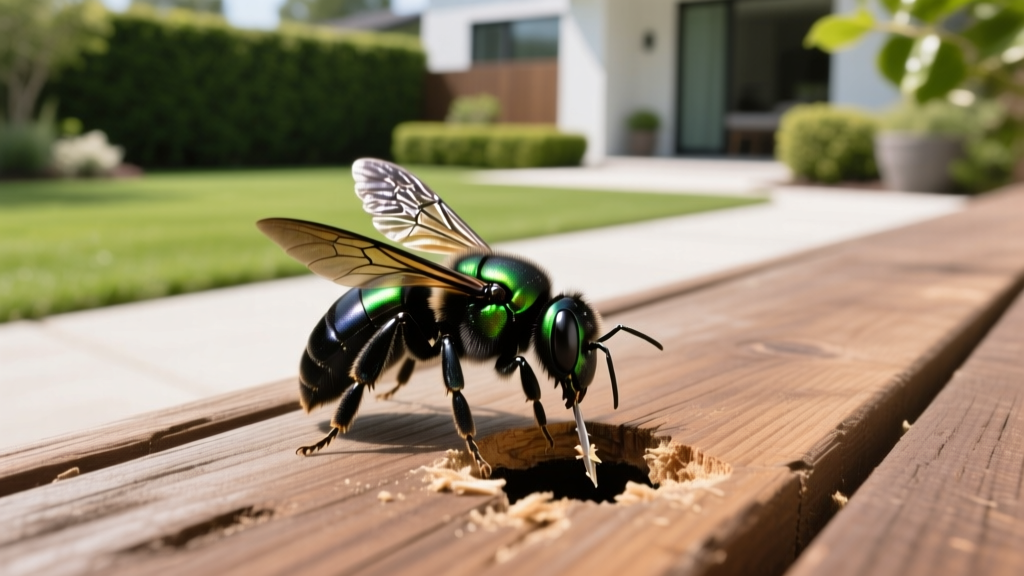
Wood Eating Bees: How to Stop Carpenter Bee Yard Damage
The "Wood Eating" Myth: Carpenter Bees vs. Wood-Boring Insects
When homeowners spot perfectly round holes appearing in their deck railings, fascia boards, or fence posts, they often search for solutions for "wood eating bees." However, from an entomological standpoint, this is a misnomer. Carpenter bees (Xylocopa species) do not consume wood for sustenance. Unlike termites or powderpost beetles, which digest cellulose, carpenter bees excavate wood to create nesting galleries for their offspring. They chew through the timber, spitting out the waste as coarse sawdust (frass), and use the hollowed tunnels as nurseries.
Understanding this distinction is critical for your yard defense strategy. Because they are excavators rather than consumers, carpenter bees are highly selective about the materials they target. They strongly prefer untreated, unpainted, and weathered softwoods—such as cedar, pine, redwood, and cypress. Hardwoods and heavily painted surfaces are rarely attacked. The Eastern Carpenter Bee (Xylocopa virginica) is the most common culprit in North American yards, easily identified by its large, robust body, metallic black thorax, and yellow fuzz, often causing it to be mistaken for a bumblebee.
Identifying Carpenter Bee Damage in Your Yard
Early detection prevents minor surface blemishes from turning into severe structural compromises. Carpenter bee damage follows a highly specific, predictable pattern that differentiates it from woodpecker damage or rot.
- The Entrance Hole: The initial entry point is almost exactly 1/2 inch (12-13mm) in diameter. It is perfectly circular, resembling a drill bit mark.
- The Tunnel Architecture: The bee bores straight into the wood for about 1 to 2 inches, then makes a sharp 90-degree turn to tunnel parallel with the wood grain. These lateral galleries typically extend 4 to 6 inches but can reach up to 10 inches in older, reused nests.
- Frass Accumulation: Look for small, conical piles of coarse, pale sawdust directly beneath the entrance holes. This is the excavated material being pushed out.
- Fecal Staining: Over time, you will notice yellowish-brown streaks of fecal matter dripping down the wood surface directly below the nest entrance. This staining is notoriously difficult to wash off untreated wood.
According to North Carolina State Extension entomologists, while a single season's tunneling rarely causes structural failure, the real danger lies in successive generations. Female offspring often return to the exact same tunnels the following spring, extending the galleries deeper and attracting woodpeckers that will tear the wood apart to reach the bee larvae inside.
The Seasonal Lifecycle: Timing Your Defense
Effective pest control requires aligning your treatments with the insect's biological clock. Treating at the wrong time of year yields poor results and wastes chemical products.
Carpenter Bee Activity Calendar
April - May (Spring Emergence): Adults emerge from overwintering. Males aggressively patrol territories (they cannot sting, but will dive-bomb intruders). Females begin excavating new nests or cleaning old ones. Best time for preventive liquid barrier sprays.
June - July (Brood Rearing): Females lay eggs in partitioned cells within the tunnel, provisioning each with pollen. Best time for targeted dusting of active holes.
August - September (Late Summer Mating): The new generation emerges, mates, and begins seeking shelter to overwinter. Crucial time to plug holes to prevent overwintering inside your wood structures.
DIY Treatment Protocol: Dusts, Sprays, and Plugs
Liquid insecticides often fail against carpenter bees because the wood absorbs the moisture, and the bees simply avoid the damp entrance. Insecticidal dust is the gold standard for active nest eradication because it clings to the bee's body as it crawls through the tunnel, transferring the toxin to the larvae and other bees sharing the gallery.
Step-by-Step Eradication Process
- Safety First: Wear nitrile gloves, safety goggles, and an N95 respirator mask. Treat at dusk or night when the bees are inactive inside the tunnels and less aggressive.
- Apply Insecticidal Dust: Use a hand-held bulb duster to puff a small amount (about 1/4 teaspoon) of residual dust directly into the 1/2-inch entrance hole. Do not pack the hole full; the bee needs to walk through the dust.
- Wait 48 to 72 Hours: Leave the hole open. The female bee will enter, get coated in the dust, and track it deep into the gallery, effectively eliminating the brood. Killing the bee immediately at the entrance leaves the larvae inside to rot and attract secondary pests.
- Seal the Gallery: After 3 days, plug the hole tightly. Use a wooden dowel coated in wood glue, a specialized carpenter bee cork plug, or exterior-grade wood filler. This prevents future bees from reusing the tunnel and stops moisture intrusion that leads to wood rot.
Product Comparison Matrix: Choosing the Right Chemical
| Product Type | Active Ingredient | Best Use Case | Average Cost (2026) |
|---|---|---|---|
| Tempo Dust | Cyfluthrin (1%) | Active hole treatment; fast knockdown and high transfer rate. | $16 - $19 (4 oz) |
| Delta Dust | Deltamethrin (0.05%) | Damp environments; waterproof formulation won't clump in humid yards. | $24 - $28 (1 lb) |
| Cyzmic CS | Lambda-cyhalothrin | Preventive exterior barrier spray on fascia and eaves in early spring. | $35 - $45 (8 oz) |
| Boric Acid Powder | Boric Acid (99%) | Organic alternative; slower acting but highly lethal when tracked into nest. | $8 - $12 (16 oz) |
For comprehensive details on safe application and environmental impact, refer to the Penn State Extension guidelines on carpenter bee management, which emphasize targeted dusting over broad-spectrum spraying to protect native pollinators.
Preventative Yard Defense Strategies
Eradication is only half the battle. If you leave your yard structures exposed, new scout bees will find them the following spring. Carpenter bees rely on visual and tactile cues to find suitable nesting sites. Altering the surface of the wood is the most effective long-term defense.
- Paint Over Stain: While stains offer some UV protection, they do not deter carpenter bees. A thick coat of exterior latex or oil-based paint completely masks the wood grain and creates a physical barrier the bees cannot easily chew through. Painted fascia boards are rarely targeted.
- Polyurethane Coatings: If you want to maintain the natural look of cedar or redwood deck furniture, apply two to three coats of exterior-grade polyurethane or marine varnish. The hardened resin surface is highly unappealing to excavating females.
- Alternative Materials: When replacing rotted fence posts or deck boards, consider composite lumber (like Trex or Fiberon) or PVC trim boards. Carpenter bees cannot bore into these synthetic materials, offering a permanent, zero-maintenance solution for high-risk areas like south-facing eaves.
- Decoy Traps: Hanging pre-drilled wooden carpenter bee traps can intercept scout bees. These traps feature a angled 1/2-inch hole leading into a plastic bottle or screened chamber. While they won't eliminate a massive infestation, they are highly effective at catching early spring scouts before they establish primary nests in your structural timber.
When to Call a Professional: Cost and Thresholds
DIY treatment is highly effective for ground-level decks, patio furniture, and lower fence rails. However, professional intervention is recommended under specific circumstances. If the damage is located on high fascia boards, second-story eaves, or structural roof overhangs, the risk of ladder falls combined with aggressive, dive-bombing male bees makes DIY treatment hazardous.
As of 2026, professional pest control services typically charge between $150 and $350 for a targeted carpenter bee treatment, which includes dusting active holes, applying a residual micro-encapsulated liquid barrier to the eaves, and sealing accessible entry points. If you notice more than 15-20 active holes on a single structure, or if woodpeckers have begun tearing at your siding to reach the larvae, the structural integrity of the wood may already be compromised, requiring a joint assessment by a pest control operator and a carpentry contractor.
Frequently Asked Questions
Do male carpenter bees sting?
No. Male carpenter bees are highly territorial and will aggressively fly directly at your face if you approach their nest, but they lack a stinger. Only the females possess a stinger, and they are generally docile unless physically handled or trapped.
Can I use WD-40 or citrus spray to repel them?
While almond oil and citrus sprays are often touted online as natural repellents, their efficacy is extremely short-lived. They evaporate within days and require constant reapplication. Insecticidal dusts and physical exclusion (plugging and painting) provide vastly superior, long-term yard defense.
Will filling the hole with steel wool work?
Steel wool is an excellent deterrent for rodents, but carpenter bees can sometimes chew past it or simply abandon the hole and start a new one an inch away. Wooden dowels, cork plugs, or exterior wood putty provide a flush, seamless seal that completely blocks the gallery and prevents moisture rot.

