
Pest Control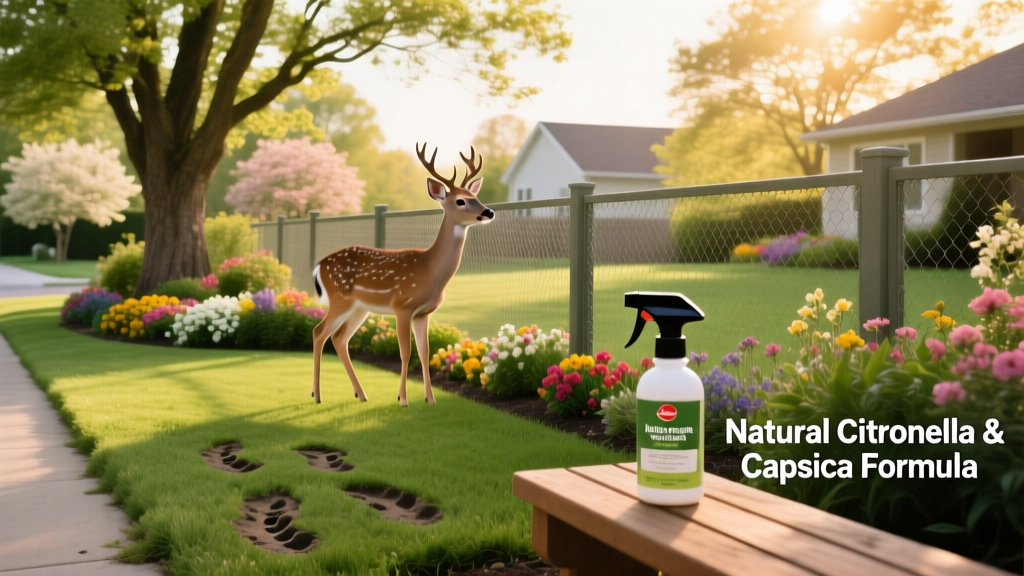
How to Stop Deer From Eating Plants: Fencing, Repellents & Tips
White-tailed deer (Odocoileus virginianus) are highly adaptable foragers capable of consuming up to 6 to 10 pounds of vegetation daily. When suburban expansion intersects with natural deer corridors, landscaping becomes an all-you-can-eat buffet. Stopping deer requires moving beyond generic scare tactics and implementing a layered defense strategy based on physical exclusion, chemical aversion, and tactical plant selection.
Understanding Deer Foraging Behavior and Pressure
Deer rely on memory and routine. They establish specific foraging trails and return to reliable food sources repeatedly. The concept of 'starvation pressure' is critical: in late winter or early spring, when natural forage is scarce, deer will consume plants they normally avoid, including highly toxic or fibrous species. According to the eXtension Wildlife Damage Management working group, deterrence success drops significantly during high-pressure seasons unless physical barriers are employed. Furthermore, deer quickly habituate to static visual deterrents like plastic owls or reflective tape, rendering them useless within 48 to 72 hours.
Physical Barriers: The Only 100% Guarantee
While repellents require constant reapplication, physical exclusion provides a permanent solution. Deer can jump up to 8 feet vertically from a standstill, but they cannot jump high and wide simultaneously. Understanding this biomechanical limitation dictates fence design.
Woven Wire and Metal Fencing
A standard woven wire fence must be a minimum of 8 feet tall to prevent vertical leaps. For aesthetic integration, black PVC-coated chain link or welded wire mesh blends into tree lines better than galvanized steel. Expect to pay between $1.50 and $2.50 per linear foot for materials, excluding 3-inch galvanized steel T-posts driven 24 inches into the ground.
Polypropylene Deer Netting
For budget-conscious homeowners or wooded lots, UV-stabilized polypropylene mesh is highly effective. Look for netting with a tensile strength of at least 600 lbs per square inch and a 1.5-inch hexagonal mesh size. Because poly mesh lacks the rigidity of metal, it must be installed with a 12-inch outward flare at the base, buried under 3 inches of mulch or secured with landscape staples to prevent deer from pushing underneath.
Angled and Electric Fencing
If an 8-foot vertical fence violates local HOA or municipal height restrictions, a 6-foot fence angled outward at 45 degrees exploits the deer's inability to calculate angled jump trajectories. Alternatively, a 4-wire electric fence baited with peanut butter on aluminum foil strips trains deer to avoid the perimeter via snout shock. A standard 1-joule energizer is sufficient for a 2-acre perimeter.
| Material | Required Height | Cost (per 100 ft) | Lifespan | Best Application |
|---|---|---|---|---|
| Woven Wire (PVC Coated) | 8 ft (Vertical) | $150 - $250 | 20+ years | Permanent perimeter, high-value gardens |
| Polypropylene Mesh | 7.5 - 8 ft | $50 - $90 | 5 - 8 years | Wooded lots, budget installations |
| Electric Wire (4-Strand) | 4 - 5 ft | $120 - $180 | 10+ years | Large properties, agricultural borders |
| Angled Metal Mesh | 6 ft (at 45°) | $130 - $200 | 15+ years | HOA-restricted height zones |
Chemical and Scent Repellents: Area vs. Contact
When fencing is impossible, chemical repellents disrupt the deer's sensory evaluation of plants. Repellents fall into two categories: area repellents (scent-based) and contact repellents (taste-based).
- Putrescent Egg Solids (Area/Contact): Products like Liquid Fence and Deer Off use putrescent egg solids (typically 2.0% to 4.0% concentration) to mimic the scent of predator decay. These must be applied to dry foliage and allowed to cure for 24 hours. Reapplication is required every 3 to 4 weeks and immediately after 1 inch of rainfall.
- Blood-Based (Area): Plantskydd utilizes porcine blood and is OMRI-listed for organic gardening. It adheres exceptionally well to bark and woody stems, offering up to 120 days of winter rain-resistance on dormant trees.
- Capsaicin and Essential Oils (Contact): Products utilizing hot pepper extract (capsaicin) or peppermint oil irritate the deer's trigeminal nerve upon chewing. These are the only safe chemical options for edible vegetable gardens.
Warning: Never apply Thiram-based fungicides or putrescent egg contact repellents on edible crops, fruit trees, or herbs intended for human consumption. Always read the EPA label; restrict synthetic contact repellents to ornamental shrubs and non-edible perennials.
Tactical Plant Selection: Resistant vs. Proof
No plant is 100% deer-proof under extreme starvation pressure. However, 'deer-resistant' plants possess specific biological defenses: toxicity, high essential oil content, or tough, pubescent (fuzzy) foliage. The Rutgers University Deer-Resistant Plant Database categorizes plants by damage severity, providing a vital framework for landscape design in high-density deer zones.
Highly Resistant Plant Categories
- Toxic Alkaloids: Narcissus (Daffodils) contain lycorine, which causes immediate gastrointestinal distress. Digitalis (Foxglove) and Convallaria (Lily of the Valley) are similarly avoided.
- High Essential Oils: Lavandula (Lavender), Rosmarinus (Rosemary), and Salvia (Sage) overwhelm the deer's highly sensitive olfactory system.
- Textural Deterrents: Stachys byzantina (Lamb's Ear) and Paeonia (Peonies) feature thick, fuzzy, or leathery cuticles that make chewing physically difficult and unpalatable.
Motion-Activated and Sensory Deterrents
For small-scale garden protection where fencing is overkill, motion-activated devices exploit the deer's startle reflex. The Orbit 62100 Yard Enforcer motion-activated sprinkler (retailing around $75) detects infrared heat signatures up to 40 feet away and fires a 3-second burst of water. To prevent habituation, the Humane Society of the United States recommends moving motion-activated devices every 4 to 5 days and combining them with auditory or scent-based deterrents to create a multi-sensory threat profile.
Expert Troubleshooting: Why Your Deterrent Failed
Homeowners frequently report that repellents 'stopped working' after a month. This failure is rarely due to the product itself, but rather application errors:
- Failure to Rotate Active Ingredients: Deer habituate to a single scent. Alternate between putrescent egg sprays in the spring and blood-based or capsaicin sprays in the summer.
- Applying to Wet Foliage: Spraying liquid repellents on dew-heavy grass dilutes the active ingredients and prevents the UV-binding polymers from adhering to the leaf cuticle. Always spray between 10 AM and 2 PM on dry days.
- Ignoring the Perimeter: Deer browse edges first. Apply repellents heavily to the outer 10 feet of your property line, not just the individual hostas in the center of the yard.
By combining an 8-foot physical barrier for primary perimeters with a rotating schedule of putrescent egg and capsaicin repellents for interior landscaping, you can effectively eliminate deer damage and preserve your garden's structural integrity year-round.

