
Pest Control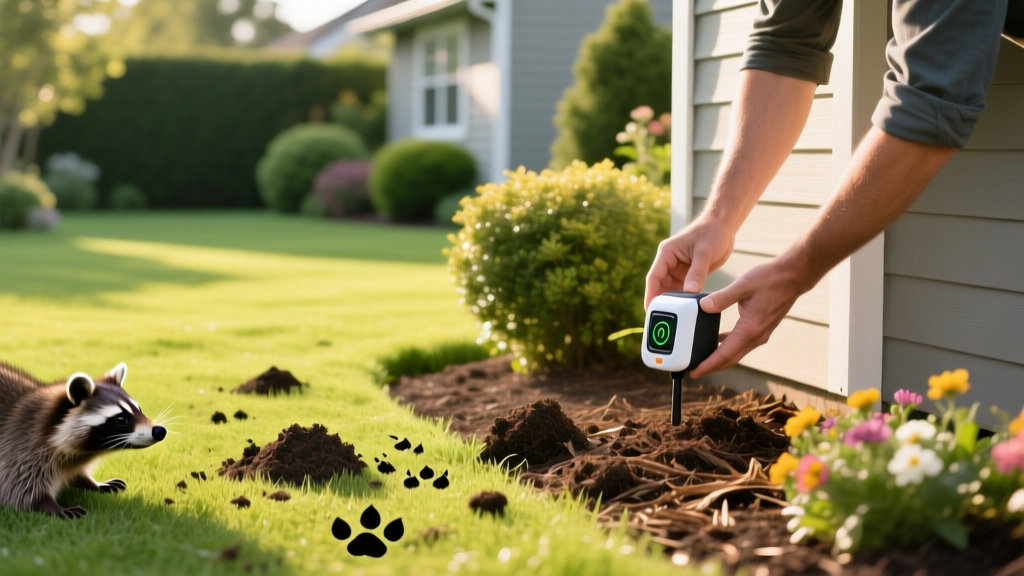
How to Discourage Raccoons From Digging Up Your Lawn and Garden
Raccoons are highly intelligent, adaptable foragers with sensitive front paws capable of detecting soil vibrations and tearing through turf with alarming speed. When you wake up to find your lawn rolled back like a carpet or your garden beds excavated, the immediate instinct is to chase the animal away. However, learning how to discourage raccoons effectively requires addressing the root attractant, deploying multi-sensory deterrents, and hardening your property's perimeter. Surface-level fixes like mothballs or ultrasonic emitters fail because raccoons quickly habituate to static threats.
This guide outlines a three-tiered defense strategy used by wildlife management professionals to reclaim your yard, focusing on precise biological controls, targeted hardware, and exclusion metrics.
The Root Cause: Grubs and Soil Insects
Raccoons do not dig up lawns out of malice; they do it for calories. The primary culprit is the white grub (larvae of Japanese beetles, June bugs, and masked chafers). A single raccoon can consume hundreds of grubs in a night, using its dexterous claws to peel back the grass roots to access the protein-rich larvae beneath. According to the University of California Integrated Pest Management program, raccoon damage is often the first visible indicator of a severe subsurface grub infestation.
Warning: The Habituation Trap
Do not rely on ultrasonic pest repellers. Research from the Internet Center for Wildlife Damage Management confirms that raccoons will investigate ultrasonic devices, realize they pose no physical threat, and ignore them entirely within 48 to 72 hours. Save your money for physical and biological controls.
Do not rely on ultrasonic pest repellers. Research from the Internet Center for Wildlife Damage Management confirms that raccoons will investigate ultrasonic devices, realize they pose no physical threat, and ignore them entirely within 48 to 72 hours. Save your money for physical and biological controls.
Tier 1: Eliminate the Food Source (Grub Control)
If you remove the food, the raccoons will forage elsewhere. You must treat the soil to eliminate grubs without poisoning the local ecosystem or your pets. You have three primary routes for grub eradication, each with distinct application windows and efficacy profiles.
Biological vs. Chemical Grub Control Matrix
| Treatment Type | Active Agent | Application Timing | Cost per 5,000 sq ft | Pet/Wildlife Safe? |
|---|---|---|---|---|
| Beneficial Nematodes | Heterorhabditis bacteriophora (Hb) | Late summer/early fall when grubs are young and soil is >60°F | $35 - $45 | Yes (100% organic) |
| Milky Spore | Paenibacillus popilliae | Anytime ground is not frozen; takes 1-3 years to establish | $80 - $100 | Yes (100% organic) |
| Preventative Chemical | Imidacloprid or Chlorantraniliprole | Early summer (June/July) before eggs hatch | $20 - $30 | No (Toxic to pollinators/aquatic life) |
Pro-Tip: Applying Nematodes Correctly
Beneficial nematodes are the fastest organic fix for an active grub problem, but they are highly susceptible to UV light and desiccation. Purchase Hb nematodes (specifically the Heterorhabditis bacteriophora strain, which actively hunts grubs rather than waiting for them). Apply them at dusk or on a heavily overcast day. Water the lawn deeply immediately before application to soften the soil, and water again lightly after application to wash the nematodes off the grass blades and into the root zone. Apply at a rate of 1 billion nematodes per 2,000 square feet.
Tier 2: Sensory and Physical Deterrents
While waiting for grub treatments to take effect, or if raccoons are targeting your vegetable garden rather than your turf, you must deploy active deterrents. The goal is to trigger their instinctual fear of sudden environmental changes.
The Gold Standard: Motion-Activated Sprinklers
Water is a raccoon's kryptonite. They detest the sudden noise, physical sensation, and startling movement of a pressurized water jet. The Orbit 62100 Yard Enforcer (retailing around $65-$75) is the industry benchmark for this task.
- Detection Range: Up to 35 feet with a 70-degree infrared sensor arc.
- Crucial Setting: Switch the dial to "Night Only" mode. Raccoons are strictly nocturnal foragers. Running the device during the day wastes water and startles neighborhood pets or delivery workers.
- Anti-Habituation Protocol: Raccoons are smart enough to map the sprinkler's blind spots. You must move the Orbit Yard Enforcer to a different stake or garden edge every 48 hours to maintain the illusion of an unpredictable threat.
Taste and Olfactory Repellents
For targeted protection on garden beds or fruit trees, capsaicin-based repellents like Nature's MACE Critter Ridder create a burning sensation on the raccoon's sensitive paws and snout. Apply the granular formula in a 2-foot perimeter band around raised beds. Reapply every 30 days or immediately after heavy rainfall exceeding 1 inch. Avoid liquid sprays on edible plant leaves, as the capsaicin oil will ruin the taste of your harvest.
Tier 3: Exclusion and Habitat Modification
Deterrents manage behavior; exclusion dictates access. Raccoons will return to a reliable food or shelter source regardless of minor annoyances if the reward is high enough.
The "L-Trench" Deck and Shed Exclusion Method
Raccoons frequently nest under decks, sheds, and crawl spaces. To evict and exclude them, simple vertical fencing is useless—they will just dig under it. You must use 19-gauge, 1/2-inch galvanized hardware cloth installed in an L-shape.
- Dig a trench 12 inches deep and 6 inches wide around the perimeter of the structure.
- Attach the hardware cloth to the bottom edge of the structure.
- Bend the bottom 12 inches of the wire at a 90-degree angle so it extends outward into the trench (away from the structure).
- Bury the wire. When a raccoon tries to dig at the base of the wall, its paws hit the buried horizontal wire mesh, preventing further excavation.
Securing Waste Receptacles
Raccoons possess the cognitive ability to unbungee cords, flip simple latches, and unscrew basic lids. According to Penn State Extension wildlife guidelines, securing trash requires mechanical locking. Use heavy-duty locking carabiners to clip the lid to the handle, or invest in wildlife-proof bins like the simplehuman 13-Gallon Step Can with a rigid lock bar, or commercial bear-proof bins (e.g., Toter Bear-Proof) if you live in high-density raccoon or bear zones.
Raccoon Deterrence Decision Matrix
Use this troubleshooting flow to determine your immediate next step based on the damage you are observing.
If you see: Rolled-back sod, shallow 2-inch deep divots across the lawn.
Action: Apply Hb nematodes immediately. Deploy Orbit Yard Enforcer on "Night" mode. Stop nighttime irrigation to dry out the topsoil, making digging harder.
If you see: Specific vegetable plants dug up, corn stalks snapped, or half-eaten tomatoes.
Action: Install 2-foot tall poultry wire around the garden bed. Bury the bottom 6 inches. Apply capsaicin granular repellent to the soil perimeter. Do not use motion sprinklers if they will soak your ripening crops and cause fungal rot.
If you see: Trash scattered, compost bins raided, no lawn damage.
Action: Upgrade to mechanical locking bins. Move bins into a garage or shed until the morning of pickup day. Clean the bottom of the bins with an ammonia-based cleaner to destroy lingering food odors.
Action: Apply Hb nematodes immediately. Deploy Orbit Yard Enforcer on "Night" mode. Stop nighttime irrigation to dry out the topsoil, making digging harder.
If you see: Specific vegetable plants dug up, corn stalks snapped, or half-eaten tomatoes.
Action: Install 2-foot tall poultry wire around the garden bed. Bury the bottom 6 inches. Apply capsaicin granular repellent to the soil perimeter. Do not use motion sprinklers if they will soak your ripening crops and cause fungal rot.
If you see: Trash scattered, compost bins raided, no lawn damage.
Action: Upgrade to mechanical locking bins. Move bins into a garage or shed until the morning of pickup day. Clean the bottom of the bins with an ammonia-based cleaner to destroy lingering food odors.
Frequently Asked Questions
Will Epsom salt keep raccoons away?
No. While frequently recommended in amateur gardening forums, Epsom salt (magnesium sulfate) does not possess any olfactory or taste properties that deter raccoons. Furthermore, heavy application can alter your soil's magnesium levels, potentially causing nutrient lockout for your turfgrass and garden plants.
Are raccoons dangerous to my pets?
Yes. Raccoons are primary vectors for rabies, raccoon roundworm (Baylisascaris procyonis), and leptospirosis. Never allow dogs or cats to engage with raccoons. A raccoon cornered by a dog will fight aggressively, often aiming for the dog's eyes or abdomen. Always supervise pets during nighttime bathroom breaks if you have an active raccoon presence.
When is it legal to trap and relocate a raccoon?
Wildlife relocation laws vary strictly by state and municipality. In many states (such as New York and California), it is illegal for homeowners to trap and relocate raccoons due to the high stress and mortality rate it causes the animal, and the risk of spreading disease to new territories. Check with your local Department of Natural Resources (DNR) or hire a licensed Nuisance Wildlife Control Operator (NWCO) to handle trapping legally and ethically.

