
Pest Control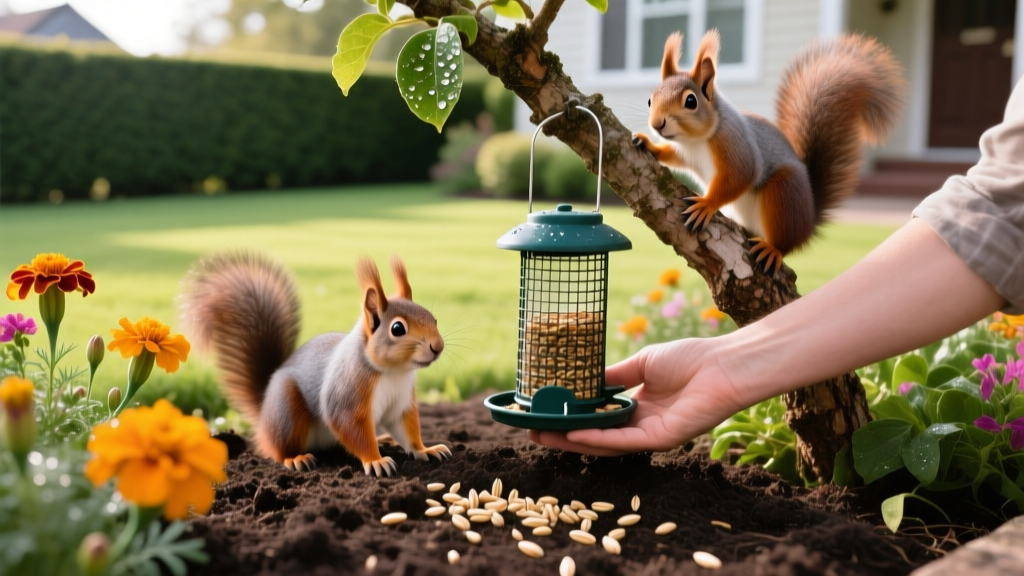
How to Stop Squirrels From Eating Plants in Your Garden
Eastern gray squirrels and fox squirrels cause significant landscape damage by digging up newly planted bulbs, chewing on tender stems, and stripping bark from ornamental trees. Their incisors grow continuously, compelling them to gnaw on fibrous plant material to file their teeth down. Furthermore, their instinct to cache food for winter drives them to excavate garden beds, often leaving uprooted seedlings and half-eaten root systems in their wake. Stopping this behavior requires a multi-layered approach combining physical exclusion, chemical deterrence, and strategic habitat modification.
Identifying Squirrel Damage vs. Other Pests
Before deploying deterrents, confirm that squirrels are the actual culprits. Misidentifying the pest leads to wasted money on ineffective treatments. According to the Internet Center for Wildlife Damage Management, squirrel damage presents distinct signatures compared to rabbits, deer, or voles.
- Squirrel Signatures: Shallow, 2-inch deep divots in mulch or soil (caching behavior); half-eaten tomatoes or strawberries with bite marks on multiple fruits; stripped bark on branches less than 2 inches in diameter; cleanly snipped flower heads (especially tulips and crocus).
- Rabbit Signatures: Clean, 45-degree angled cuts on stems and leaves close to the ground; small, round droppings near the damage site.
- Vole Signatures: Subsurface runways hidden under mulch; gnawed roots and tubers with no surface digging; bark stripped from the very base of tree trunks up to the snow line.
- Deer Signatures: Ragged, torn leaf edges (deer lack upper incisors); damage occurring 2 to 5 feet above ground level.
Physical Exclusion: Sizing and Installing Barriers
Physical barriers offer the highest long-term success rate for protecting high-value plants. Squirrels are agile; they can jump 4 feet vertically and 8 to 10 feet horizontally. Barrier dimensions must account for these metrics to prevent bypassing.
| Barrier Type | Material Specification | Best Application | Estimated Cost (2026) |
|---|---|---|---|
| Bulb Cages | 19-gauge, 1/2-inch x 1/2-inch galvanized hardware cloth | Tulip, crocus, and lily beds | $35 - $45 per 2x10 ft roll |
| Tree Trunk Guards | 24-inch wide sheet metal or heavy-duty plastic wrap | Protecting bark on young ornamentals | $15 - $25 per guard |
| Pole Baffles | 24-inch diameter galvanized steel cone | Bird feeders and isolated planters | $30 - $50 per baffle |
| Fruit Netting | 1/4-inch to 1/2-inch UV-stabilized polypropylene | Berry bushes and dwarf fruit trees | $20 - $40 per 14x14 ft sheet |
Critical Installation Rules for Hardware Cloth
Never use standard 1-inch chicken wire for bulb cages or garden bed covers. Squirrels can easily reach their paws and heads through 1-inch gaps to pull up sprouting shoots. You must use 1/2-inch hardware cloth. When constructing a subterranean bulb cage, dig a trench 6 inches deeper than your planting depth, line the bottom and sides with the hardware cloth, plant the bulbs, and cover the top with another layer of cloth before backfilling with soil. This prevents digging from both above and below.
Tree Baffle Placement Metrics
If you are using a cone baffle to protect a tree trunk or a hanging planter, the bottom of the baffle must be mounted at least 5 feet above the ground. If mounted at 3 or 4 feet, a squirrel will simply jump past the baffle and grab the trunk above it. Additionally, prune any overhanging branches so they are at least 10 feet away from the protected area to eliminate horizontal drop-in access.
Taste and Odor Repellents: Formulations That Actually Work
When physical barriers are impractical—such as in large, open perennial borders—taste and odor repellents can condition squirrels to avoid specific zones. The University of Minnesota Extension notes that repellents must be applied before damage becomes a habit, and they require strict reapplication schedules.
Active Ingredients to Look For
- Capsaicin and Piperine (Hot Pepper): Found in products like Critter Ridder or Bonide Hot Pepper Wax. These irritate the mammalian trigeminal nerve. They are highly effective on chewing damage but do not stop digging behavior. Cost: $15-$25 for a 32 oz ready-to-use spray.
- Putrescent Whole Egg Solids: The active ingredient in Liquid Fence. This relies on a decaying odor that signals predator presence or spoiled food. It is highly effective at stopping foraging and digging but has a strong initial smell that dissipates for humans after 24 hours (though squirrels can still detect it).
- Thiram: A fungicide that doubles as a potent taste repellent. Often used in commercial agriculture and available in some consumer-grade products. It is highly rain-fast but should not be used on plants intended for human consumption.
⚠️ Pollinator and Pet Warning: Capsaicin-based sprays are toxic to bees and aquatic life if applied directly to blooms or water features. Never spray hot pepper repellents on open flowers. Apply only to stems, foliage, and the surrounding soil. Furthermore, while capsaicin deters mammals, it does not affect birds; if you are trying to protect birdseed, capsaicin-coated seed (suet) is an excellent, bird-safe deterrent.
Strategic Planting and Decoy Feeding
Squirrels are highly selective foragers. By altering your plant palette and providing alternative food sources, you can redirect their energy away from your prized ornamentals.
Squirrel-Resistant Plants (Toxic or Unpalatable)
Squirrels rely on taste and smell to evaluate food. Plants containing toxic alkaloids or strong essential oils are naturally avoided.
- Daffodils (Narcissus): Contain lycorine, a toxic alkaloid that causes severe gastrointestinal distress in rodents. Squirrels will actively dig around daffodils to get to neighboring tulips, but will not eat the daffodil bulbs themselves.
- Alliums and Garlic: The high sulfur content and strong odor mask the scent of other plants and irritate squirrel nasal passages.
- Hyacinths: Contain calcium oxalate crystals which cause immediate mouth irritation upon chewing.
- Fritillaria (Crown Imperial): Emits a skunky odor that repels burrowing rodents and squirrels alike.
The Decoy Strategy
If your property is heavily wooded and squirrel pressure is immense, deterrents may eventually fail. In these cases, establish a decoy feeding station at the furthest edge of your property, at least 30 feet away from your garden beds. Provide dried corn cobs and black oil sunflower seeds. This exploits their caching instinct, encouraging them to harvest and bury food in the decoy zone rather than excavating your flower beds. Note: This strategy can increase the overall local squirrel population over time, so it is best used as a temporary seasonal measure during fall bulb-planting and spring emergence.
Troubleshooting Matrix: When Squirrels Beat Your Deterrents
Even well-planned defenses can fail if environmental variables change. Use this matrix to diagnose and correct breaches in your pest management strategy.
| Observed Symptom | Probable Cause | Corrective Action |
|---|---|---|
| Bulbs dug up despite capsaicin soil drench | Rainfall exceeded 1 inch, washing away the water-soluble capsaicin. | Switch to putrescent egg solid granules, which bind better to soil particles, or install 1/2-inch hardware cloth cages. |
| Squirrels bypassing the tree trunk baffle | Overhanging branches are within 8 feet, or the baffle is mounted below 4 feet. | Prune branches to a 10-foot clearance and raise the baffle to a minimum of 5 feet above grade. |
| Tomatoes bitten but not eaten | Squirrels are seeking water, not food, during a summer drought. | Provide a shallow birdbath or drip saucer filled with fresh water and clean stones (for landing pads) 20 feet away from the garden. |
| Hardware cloth bulb cage pulled to the surface | Frost heave in winter pushed the shallow cage upward. | Bury the bottom edge of the cage at least 8 inches deep, below the local frost line, and secure edges with 6-inch landscape staples. |
Frequently Asked Questions
Do ultrasonic squirrel repellents work in garden beds?
No. Independent testing by university wildlife departments consistently shows that ultrasonic devices have negligible effects on squirrel behavior in open outdoor environments. Sound waves dissipate rapidly outdoors, are blocked by dense foliage, and squirrels quickly habituate to the noise once they realize it poses no physical threat. Invest your budget in physical barriers instead.
Will mothballs keep squirrels out of my garden?
Mothballs (containing naphthalene or paradichlorobenzene) are highly toxic, illegal to use outdoors in most jurisdictions, and ineffective as a garden deterrent. The active gases dissipate almost immediately in open air, and the chemicals will leach into your soil, contaminating groundwater and harming beneficial soil microbes. Never use mothballs in landscaping.
How do I protect my vegetable garden from squirrels without harming them?
For vegetable gardens where chemical repellents like Thiram are unsafe, use 1/2-inch polypropylene bird netting draped over hoops. Ensure the netting is pinned tightly to the soil on all sides using landscape staples so squirrels cannot crawl underneath. For individual ripening fruits like tomatoes, use breathable organza drawstring bags placed directly over the fruit cluster.

