
Pest Control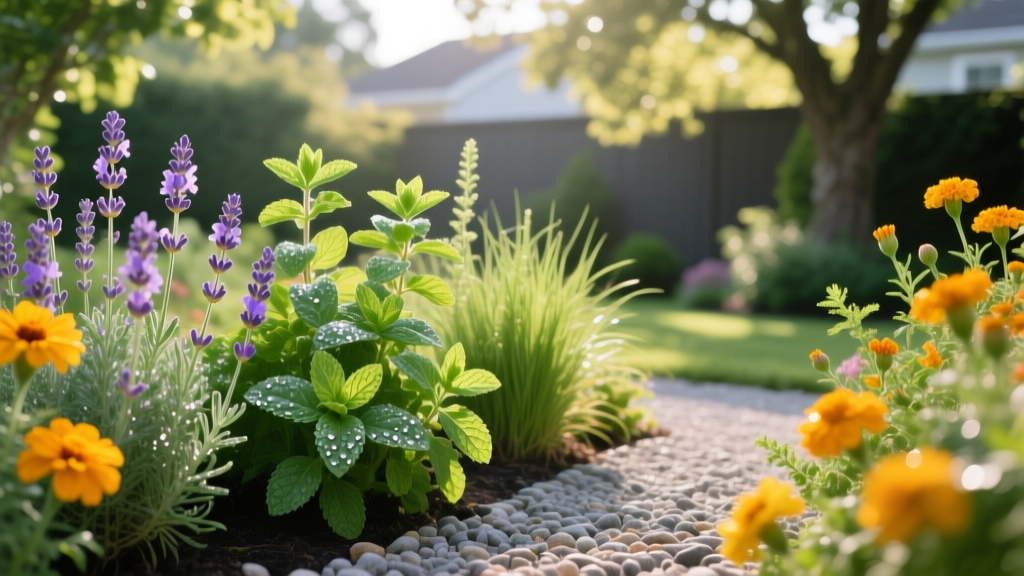
Strategic Bug Repelling Plants for Yard Defense: What Actually Works
The Chemistry of Botanical Defense: VOCs and Root Exudates
The concept of using bug repelling plants for yard defense is often clouded by marketing myths and exaggerated claims. To build an effective botanical barrier, homeowners must understand the underlying biochemistry. Plants do not emit invisible force fields; instead, they synthesize secondary metabolites—specifically Volatile Organic Compounds (VOCs) and root exudates—as a defense mechanism against herbivores and pathogens.
VOCs like linalool, camphor, and nepetalactone interfere with the olfactory receptors of insects, effectively masking the carbon dioxide and lactic acid signals that attract mosquitoes and biting flies to your patio. Below the soil surface, root exudates such as alpha-terthienyl act as potent nematicides, paralyzing soil-borne pests. However, the concentration of these compounds is highly dependent on cultivar selection, soil stress, and mechanical agitation. Simply placing a generic plant in the ground will not yield professional-grade pest control.
Top-Tier Bug Repelling Plants: Cultivar Selection and Efficacy
When selecting flora for insect and rodent yard defense, avoid generic seed mixes. Specific cultivars have been bred or selected for higher essential oil yields and robust growth habits. Below is a strategic matrix of the most effective botanical defenders for residential landscapes.
| Botanical Name & Cultivar | Target Pests | Active Compound | Planting Requirements & Spacing |
|---|---|---|---|
| Lavandula angustifolia 'Hidcote' | Mosquitoes, fleas, moths | Camphor, Linalool | Full sun, alkaline soil (pH 6.5-7.5). Space 18-24 inches apart. |
| Tagetes patula 'Bonanza' (French Marigold) | Root-knot nematodes, whiteflies | Alpha-terthienyl, Limonene | Full sun, well-draining soil. Space 8-10 inches for dense root exudate barrier. |
| Nepeta faassenii 'Walker's Low' (Catmint) | Ticks, mosquitoes, aphids | Nepetalactone | Full sun to part shade. Space 24-36 inches. (Avoid N. cataria to deter feral cats). |
| Allium 'Purple Sensation' | Voles, deer, chewing insects | Diallyl disulfide | Full sun. Plant bulbs 6 inches deep, 8 inches apart in perimeter rings. |
| Fritillaria imperialis (Crown Imperial) | Voles, ground squirrels, moles | Sulfurous alkaloids | Plant 8-10 inches deep on 12-inch centers. Requires sharp drainage. |
The Nepetalactone Caveat: Lab vs. Field Efficacy
While laboratory studies from institutions like Iowa State University have shown that nepetalactone (the essential oil in catmint) is up to 10 times more effective at repelling mosquitoes than DEET, field efficacy is vastly different. In an open yard, wind shear disperses the VOCs rapidly. To achieve meaningful yard defense, Nepeta faassenii must be planted in dense, 24-inch wide continuous borders upwind of your primary seating areas, creating a concentrated vapor corridor rather than isolated point-sources.
Strategic Placement: Designing a Perimeter Defense Matrix
Scattering bug repelling plants randomly across your lawn dilutes their effectiveness. Professional integrated pest management (IPM) relies on the 'Concentric Ring' strategy to push pests away from high-traffic human zones.
- Ring 1 (The Patio & Seating Zone): Utilize containerized botanicals that require frequent human interaction. Potted Pelargonium citrosum (Citronella Geranium) and Mentha piperita (Peppermint) only release significant VOCs when their leaves are mechanically agitated. Brushing against them or using a low-setting leaf blower over the containers triggers the release of citronellal and menthol.
- Ring 2 (The Transition Zone): Establish a 2-to-3-foot wide border of woody perennials like Lavender 'Hidcote' and Catmint 'Walker's Low'. These plants provide a constant, passive baseline of VOCs and create a physical barrier that ticks and crawling insects are reluctant to cross.
- Ring 3 (The Garden & Yard Perimeter): Deploy heavy-duty root exudate producers. Interplant French Marigolds (Tagetes patula) heavily around the perimeter of vegetable raised beds to suppress root-knot nematodes, and line the outer property fences with Alliums to deter burrowing rodents from entering the yard.
⚠️ The Container Confinement Rule for Mints
Never plant Mentha species (peppermint, spearmint, pennyroyal) directly into your garden beds. Their aggressive rhizomatous root systems will choke out ornamental and edible crops within a single growing season. Always plant mints in 15-gallon smart fabric pots, and bury the pots to their rims in the soil. This contains the roots while allowing the VOCs to permeate the air space.
Rodent Deterrent Flora: Expanding Beyond Insects
Most guides on bug repelling plants ignore mammalian pests, yet voles, mice, and ground squirrels can cause catastrophic damage to root systems and hardscaping. Rodents rely heavily on olfaction to navigate and forage; overwhelming their scent receptors is a highly effective cultural control method.
Daffodils (Narcissus spp.): Unlike tulips and crocuses, which act as rodent forage, daffodils contain lycorine, a toxic alkaloid that makes the bulbs and foliage highly unpalatable and mildly toxic to voles and mice. Planting a dense ring of Narcissus around the base of vulnerable fruit trees prevents winter bark girdling.
Crown Imperial (Fritillaria imperialis): This striking bulb emits a distinct, skunky, musky odor due to its sulfurous compounds. When planted 8 inches deep around the perimeter of sheds, decks, and garden beds, it creates an olfactory wall that deters burrowing rodents from establishing tunnel networks beneath your hardscaping.
Failure Modes: Why Your Botanical Barrier Might Stop Working
Even the best bug repelling plants will fail if their secondary metabolite production is compromised. Avoid these common horticultural mistakes that neutralize botanical pest control:
- Over-Fertilization: High-nitrogen synthetic fertilizers promote rapid, lush, watery growth. This dilutes the concentration of essential oils in the foliage. To maximize VOC production, feed lavender, catmint, and marigolds with a low-nitrogen, high-potassium organic fertilizer (such as a 3-2-5 kelp meal blend) only once in early spring.
- Overwatering and Root Rot: Mediterranean botanicals like lavender and rosemary produce higher concentrations of defensive terpenes when subjected to mild drought stress. Waterlogged soil not only causes fatal root rot but also halts the synthesis of camphor and linalool. Allow the top 3 inches of soil to dry completely between irrigation cycles.
- Improper Pruning of Woody Perennials: If lavender is allowed to become overly woody and leggy, it stops producing high-camphor foliage at the base. Prune Lavandula angustifolia back by one-third in early spring, cutting only into the green, leafy wood, never into the dead, brown stems.
- Ignoring Wind Shear: VOCs are rapidly dispersed by wind. If your patio is situated downwind of your botanical barrier, the repellent gases will blow away from your seating area. Always map your prevailing summer breezes and plant your heaviest VOC producers upwind of where you sit.
Integrating Botanicals with IPM (Integrated Pest Management)
Bug repelling plants are a powerful cultural control, but they are not a standalone silver bullet. According to the Environmental Protection Agency's IPM principles, effective pest management requires a multi-tiered approach combining biological, cultural, and mechanical controls.
For comprehensive yard defense, pair your botanical perimeter with biological controls. For instance, apply beneficial nematodes (Steinernema carpocapsae) to your lawn in early spring to destroy flea and tick larvae in the soil, while your above-ground Catmint and Lavender borders repel the adult stages. For mosquito control, eliminate all standing water sources and utilize UC Davis IPM recommendations for biological larvicides like Bacillus thuringiensis israelensis (Bti) in water features that cannot be drained.
Furthermore, consult resources from local university extension pest management programs to identify the specific pest pressures native to your microclimate. By combining the chemical warfare of strategically placed bug repelling plants with rigorous habitat modification and biological interventions, you can reclaim your yard from insects and rodents without relying on broad-spectrum synthetic pesticides.

