
Pest Control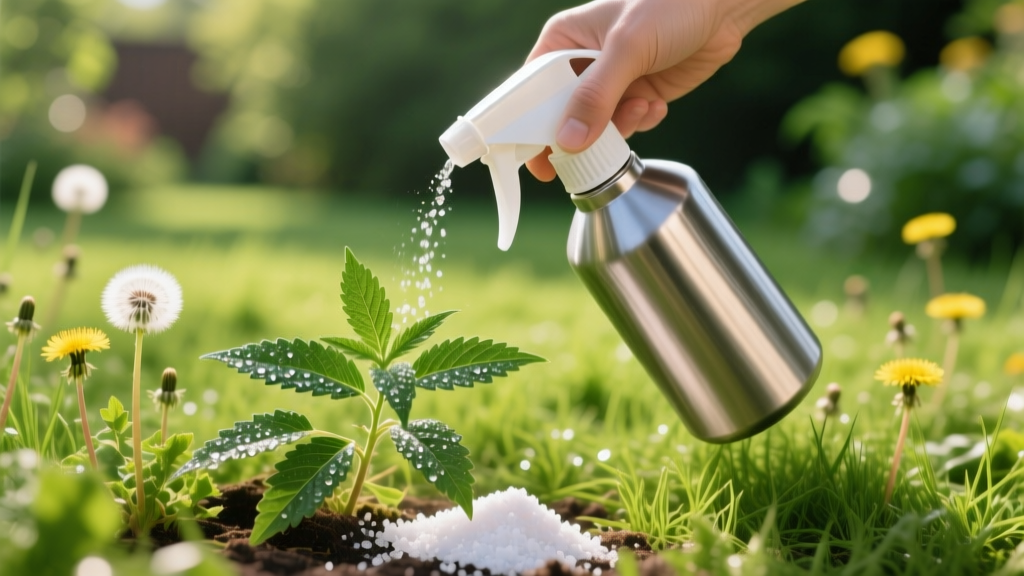
How to Make a Strong Homemade Weed Killer Without Vinegar
Why Formulate a Strong Homemade Weed Killer Without Vinegar?
Many homeowners default to horticultural vinegar (20% to 30% acetic acid) for organic weed control, but this approach carries significant agronomic and safety drawbacks. High-concentration acetic acid is highly corrosive, requiring specialized chemical-resistant sprayers and heavy PPE to prevent severe respiratory and ocular damage. Furthermore, repeated applications drastically lower soil pH, locking up essential nutrients like phosphorus and calcium, which ultimately harms the surrounding turfgrass and ornamental beds.
To achieve rapid, chemical-free burn-down without acidifying your soil, you must target the weed's cellular structure using natural essential oils and fatty acids. By formulating a strong homemade weed killer without vinegar, you utilize compounds that strip the waxy cuticle of the leaf and rupture cell membranes, causing rapid desiccation while remaining classified as minimum-risk by environmental authorities.
Critical Warning: Never use household bleach, sodium chloride (table salt), or borax as DIY weed killers. These are soil sterilants that will permanently destroy soil biology, prevent future plant growth, and leach into local groundwater. Always refer to the EPA's Minimum Risk Pesticide guidelines to ensure your ingredients are environmentally sound.
The Science of Non-Acidic Organic Burn-Downs
Effective organic post-emergent herbicides rely on contact action rather than systemic translocation. The three most potent, naturally derived active ingredients available to homeowners are:
- d-Limonene (Citrus Oil): Extracted from citrus peels, this terpene dissolves the waxy epidermal layer of the leaf, causing immediate moisture loss.
- Eugenol (Clove Oil): Destroys cell membranes on contact, leading to rapid tissue necrosis (browning) within hours.
- Pelargonic Acid (Nonanoic Acid): A naturally occurring fatty acid found in geraniums that strips the leaf cuticle and causes severe cellular leakage.
Recipe 1: The Citrus-Clove Contact Killer (Best for Broadleaf Weeds)
This formulation is highly effective against young annual broadleaf weeds like chickweed, spurge, and oxalis. The combination of d-limonene and eugenol provides a dual-action membrane attack, while the castile soap acts as a non-ionic surfactant to reduce water surface tension, ensuring the solution spreads evenly across the leaf rather than beading off.
Ingredients and Exact Measurements
- 2 fluid oz d-Limonene (90%+ purity citrus extract)
- 1 fluid oz Clove essential oil (high eugenol content)
- 1 teaspoon Liquid castile soap (unscented, acts as an emulsifier and surfactant)
- 1 gallon Warm water (warmth helps emulsify the oils)
Mixing and Application Protocol
- Pour the warm water into a 1-gallon or 2-gallon pressurized pump sprayer. Note: Essential oils will degrade the rubber seals on cheap hose-end sprayers; always use a tank sprayer with Viton or chemical-resistant O-rings.
- Add the liquid castile soap and agitate gently to create a mild suds base.
- Add the d-limonene and clove oil. Seal the tank and shake vigorously for 60 seconds to create a temporary emulsion.
- Spray directly onto the foliage of the weeds until the leaves are thoroughly wet but not dripping. Agitate the tank every 5 minutes during application, as the oils will naturally separate over time.
Recipe 2: Pelargonic Acid Emulsion (Best for Tough Grasses)
While the citrus-clove recipe excels on broadleaves, grassy weeds like crabgrass and quackgrass have thicker, more fibrous cuticles. Pelargonic acid (nonanoic acid) is the active ingredient in premium commercial organic herbicides like A.D.I.O.S. and BurnOut. You can source technical-grade pelargonic acid online to create a highly potent DIY alternative.
Pro Tip: Pelargonic acid has a sharp, pungent odor that dissipates within 24 hours. Apply this mixture on a day with a slight breeze, and wear a basic N95 mask during mixing to avoid inhaling the concentrated vapors.
The Ratio: Mix 3 fluid ounces of technical-grade pelargonic acid with 1 gallon of water and 2 teaspoons of a dedicated agricultural surfactant (such as methylated seed oil or a high-quality non-ionic wetting agent). Apply at a rate of 1 gallon per 1,000 square feet. Visible necrosis will occur in as little as 15 minutes when applied in direct sunlight.
DIY vs. Commercial Organic Herbicides: Cost & Efficacy Matrix
Understanding the financial and operational trade-offs between homemade concoctions and commercial organic products is crucial for scaling your weed management across a large property.
| Product / Formulation | Cost per Gallon (Ready to Spray) | Speed of Burn-Down | Best Target |
|---|---|---|---|
| DIY Citrus-Clove Mix | $3.50 - $4.25 | 2 to 4 hours | Young broadleaf annuals |
| DIY Pelargonic Acid | $5.00 - $6.50 | 15 to 45 minutes | Grassy weeds, tough perennials |
| Commercial BurnOut (RTU) | $12.00 - $16.00 | 15 to 30 minutes | General purpose broadleaf/grass |
| Commercial A.D.I.O.S. | $14.00 - $18.00 | 12 to 24 hours | Deep-rooted perennials (top growth) |
Environmental Timing and Application Tactics
Organic contact herbicides are entirely dependent on environmental conditions to achieve maximum efficacy. Because they do not translocate through the plant's vascular system, they must physically destroy the leaf tissue present at the time of spraying.
The Temperature and UV Threshold
For the fastest results, apply your homemade solutions when ambient temperatures are between 75°F and 85°F, and the UV index is high (mid-day, full sun). The heat accelerates the evaporation of the essential oils into the leaf stomata, while the UV radiation synergizes with the eugenol to speed up cellular collapse. Spraying in the early morning or late evening when the plant's stomata are closed will reduce efficacy by up to 60%.
Managing Perennial Weeds Without Systemic Chemicals
The most common point of failure for organic weed control is the expectation of root-kill on perennial weeds like field bindweed, Canada thistle, or mature dandelions. Contact killers will successfully burn the top growth to the soil line, but the taproot or rhizome will resprout within 10 to 14 days.
To manage perennials organically, you must employ an exhaustion strategy. Spray the top growth with your DIY pelargonic acid or citrus-clove mix every time it reaches 2 inches in height. This forces the weed to continually expend its stored root carbohydrates to push new growth, which you immediately destroy. According to integrated pest management guidelines outlined by the University of California IPM program, repeated defoliation over a single growing season will eventually starve the root system, leading to total plant death without introducing synthetic soil contaminants.
The Boiling Water Method for Hardscapes
For weeds growing in the cracks of driveways, sidewalks, and patio pavers, skip the essential oils entirely. Pouring water heated to 200°F (93°C) directly onto the crown of the weed instantly cooks the plant proteins and destroys the root crown. This is the most cost-effective, zero-residue method for hardscape weed control, provided you use a specialized weed-steaming kettle to avoid burning yourself.

