
Pest Control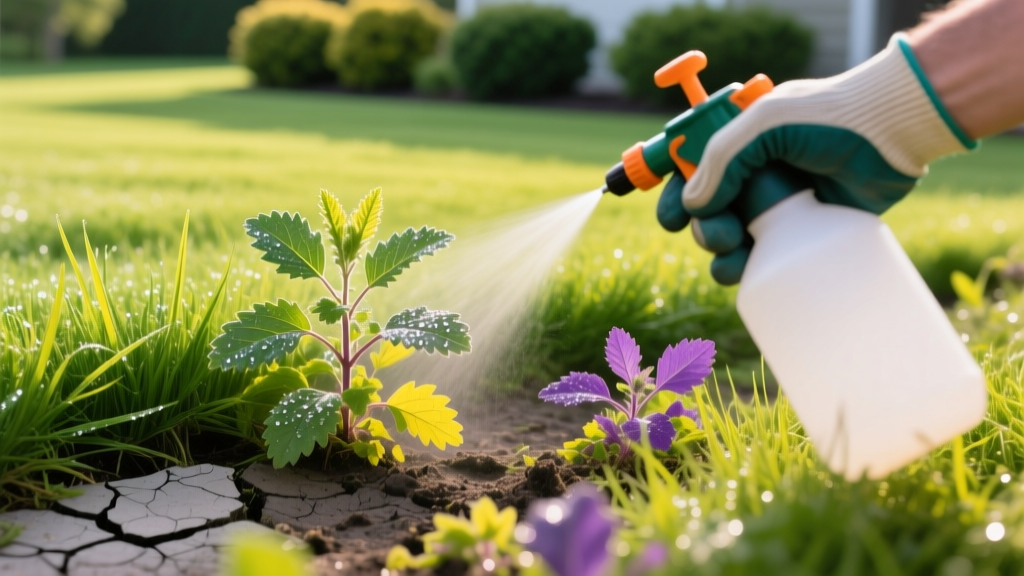
Strongest Weed Killer That Kills Everything: Spot-Treatment Guide
When selective herbicides fail to eradicate deeply rooted nightmares like dallisgrass, torpedo grass, or mature poison ivy, homeowners inevitably search for the strongest weed killer that kills everything. In the turfgrass management industry, 'killing everything' refers to non-selective herbicides. These chemicals do not distinguish between a pesky broadleaf weed and your prized Kentucky bluegrass. While they are the ultimate weapon for stubborn weed species, using them in a residential lawn requires surgical precision to avoid creating dead, barren patches in your turf.
This guide breaks down the chemistry of total-vegetation killers, exposes the dangers of soil sterilants, and provides exact spot-treatment protocols to eliminate invasive species without destroying your surrounding lawn.
The Chemistry of Total-Vegetation Herbicides
Not all non-selective herbicides operate the same way. Understanding the mode of action is critical for spot-treating specific weed species. Systemic herbicides travel through the plant's phloem to destroy the root system, while contact herbicides burn off foliage on impact but often leave perennial roots intact.
| Active Ingredient | Mode of Action | Visible Results | Soil Residual | Best Target Weeds |
|---|---|---|---|---|
| Glyphosate (41%) | Systemic (EPSP synthase inhibitor) | 7 to 14 days | None (binds to soil) | Bermudagrass, Dallisgrass, Poa annua |
| Diquat | Contact (Photosystem I disruptor) | 24 to 48 hours | None | Annual broadleaves, aquatic weeds |
| Glufosinate | Systemic/Contact (Glutamine synthetase) | 4 to 7 days | None | Young grasses, clover, chickweed |
| Imazapyr | Systemic (ALS inhibitor) | 14 to 30 days | 6 to 12+ months | Industrial areas, poison ivy, kudzu |
According to the Environmental Protection Agency (EPA), glyphosate remains the most widely used non-selective herbicide due to its lack of soil residual activity, making it safer for replanting. However, for rapid visual results on annual weeds, diquat is significantly faster.
WARNING: The Soil Sterilant Trap
Many consumers searching for the 'strongest weed killer' accidentally purchase products containing Imazapyr or Prometon (often marketed as 'GroundClear' or 'Vegetation Killers' for driveways). These are soil sterilants. If you spot-treat a weed in your fescue lawn with Imazapyr, the chemical will persist in the soil for up to a year, killing the surrounding grass via root uptake and preventing any new grass seed from germinating. Never use soil sterilants in or near residential turfgrass.
Surgical Spot-Treatment Protocols
When deploying the strongest weed killer that kills everything, your application method dictates whether you save your lawn or ruin it. Broadcast spraying non-selective herbicides over a lawn is catastrophic. Instead, utilize these targeted delivery systems.
1. The Wick Applicator Method
For tall, invasive grasses like quackgrass or torpedo grass that grow faster than your desirable turf, a rope-wick applicator is the safest tool.
- Preparation: Mow your lawn at the standard height. Wait 48 hours for the invasive weeds to grow an inch above the desirable canopy.
- Application: Fill the wick reservoir with a 5% glyphosate solution. Walk backward, dragging the wick over the tops of the tall weeds. The herbicide transfers only to the leaves it touches, leaving the shorter, desirable grass completely untreated.
2. The Shielded Spray Technique
For low-growing, spreading weeds like creeping charlie or wild violet, use a pump sprayer equipped with a plastic spray shield or a bell nozzle.
- Wind Check: Never apply when wind speeds exceed 5 MPH to prevent microscopic drift.
- Pressure Control: Keep pump pressure below 20 PSI. High pressure creates fine mist droplets that easily bounce off the target weed and settle on adjacent grass blades.
- Execution: Place the shield directly over the weed cluster and spray a single, brief burst to coat the foliage without pooling the liquid on the soil.
3. The Sponge Brush Painting Method
For woody, vining weeds like poison ivy or blackberry brambles encroaching on lawn edges, use a foam brush to physically paint the herbicide onto the leaves. This guarantees zero drift and ensures the chemical penetrates the thick, waxy cuticle of the vine.
Commercial-Grade Mixing Rates and Surfactants
Retail 'ready-to-use' non-selective sprayers are heavily diluted and economically inefficient for large spot-treatment jobs. As of 2026, purchasing commercial-grade concentrates and mixing them yourself yields a cost of roughly $0.15 per gallon of finished solution, compared to $12.00 per gallon for pre-mixed retail jugs.
'The biggest mistake homeowners make with non-selective herbicides is ignoring water hardness and surface tension. Without a non-ionic surfactant, glyphosate beads up and rolls off the waxy leaves of mature weeds, rendering the strongest weed killer entirely useless.' — Turfgrass Management Extension Specialist
Exact Mixing Protocol for 41% Glyphosate
- Base Rate: Mix 2.5 fluid ounces of 41% Glyphosate concentrate (e.g., Compare-N-Save or Roundup Pro) per 1 gallon of water. This yields a roughly 2% active ingredient solution, ideal for tough perennial grasses.
- Surfactant Addition: Add 0.5% v/v of a Non-Ionic Surfactant (NIS). In practical terms, this is exactly 1 teaspoon of NIS per gallon of mixed solution. This breaks the surface tension, allowing the herbicide to spread evenly across the leaf surface.
- Water Quality: Use distilled or soft water. Hard water contains calcium and magnesium ions that bind to glyphosate molecules, neutralizing them before they even reach the plant.
- Ammonium Sulfate (AMS): If you must use hard tap water, add 1 tablespoon of AMS per gallon to condition the water and protect the herbicide's efficacy.
Environmental Variables and Failure Modes
Even the strongest weed killer that kills everything will fail if applied under the wrong environmental conditions. The NC State University TurfFiles program emphasizes that herbicide efficacy is deeply tied to plant physiology and weather patterns.
- Temperature Extremes: Systemic herbicides require active plant growth to translocate to the roots. Do not apply when temperatures are below 55°F or above 85°F. In cold weather, the plant's metabolism halts; in extreme heat, the plant closes its stomata to conserve water, blocking chemical absorption.
- Drought Stress: If the soil is bone-dry, weeds enter survival mode and stop moving nutrients to their roots. Irrigate the area lightly 24 hours before treatment to ensure the weed is actively growing and pulling the herbicide down into the rhizomes.
- Premature Mowing: Wait a minimum of 48 to 72 hours after application before mowing the area. Mowing too soon severs the leaf tissue before the chemical has time to travel to the root crown, guaranteeing a rapid resurgence.
Post-Treatment Soil Recovery and Replanting
One of the primary advantages of using glyphosate or diquat for spot treatments is the ability to replant quickly. Because these chemicals become biologically inactive upon contact with soil microbes, you can safely sow new grass seed or lay sod just 3 to 7 days after the initial application. To rehabilitate the spot:
- Wait until the targeted weed is completely brown and brittle (usually 10-14 days for glyphosate).
- Rake out the dead debris to expose the bare soil.
- Aerate the spot with a hand fork to relieve compaction caused by foot traffic during treatment.
- Overseed with a turf-type tall fescue or Kentucky bluegrass blend that matches your existing lawn, and apply a starter fertilizer.

