
Pest Control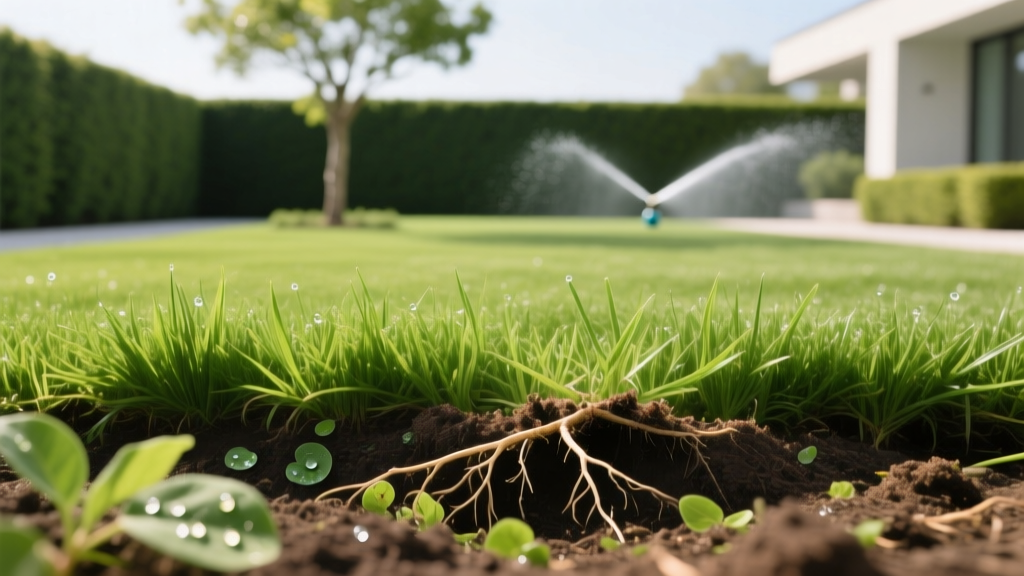
How Systemic Herbicides Impact Soil Nutrition and Fertilizer
The Hidden Cost of Weed Control: Systemic Herbicides and the Rhizosphere
When homeowners and turf managers apply systemic herbicides to eliminate deep-rooted perennial weeds, the primary focus is on foliar absorption and phloem translocation. However, the eventual destination of these active ingredients—the soil rhizosphere—triggers a cascade of chemical and biological interactions that directly impact soil nutrition and fertilizer efficacy. Systemic herbicides do not simply disappear upon reaching the root zone; they interact with soil cations, alter microbial respiration, and can temporarily lock out critical micronutrients.
Understanding the subterranean lifecycle of these chemicals is essential for maintaining high Cation Exchange Capacity (CEC) and ensuring that your expensive nitrogen, phosphorus, and potassium (N-P-K) fertilizers actually reach the turfgrass root system. According to the Environmental Protection Agency (EPA), the environmental fate of herbicides like glyphosate is heavily dependent on soil pH, organic matter content, and microbial activity, making localized soil management a critical component of any integrated pest management (IPM) strategy.
Active Ingredients, Soil Half-Life, and Binding Affinity
Not all systemic herbicides behave identically in the soil profile. The soil adsorption coefficient (Kd) determines how tightly an herbicide binds to soil particles, which in turn dictates its availability to bind with fertilizer nutrients. Below is a comparative analysis of the most common systemic active ingredients used in modern lawn care.
| Active Ingredient | Common Brand Names | Avg. Soil Half-Life | Soil Binding (Kd) | Primary Nutrient Interaction |
|---|---|---|---|---|
| Glyphosate | Roundup Pro, Honcho | 47 days | High (Tight binding) | Chelates Mn, Fe, Zn, Ca |
| 2,4-D | Trimec, SpeedZone | 10 days | Low (High mobility) | Minimal direct chelation |
| Dicamba | End Run, Drive XLR8 mixes | 14-28 days | Moderate | Alters microbial N-cycling |
| Quinclorac | Drive XLR8, Facet | 18-115 days | Variable (pH dependent) | Phytotoxic to certain turf at high residual |
| Triclopyr | Turflon, Battleship | 45-90 days | Moderate to High | Suppresses mycorrhizal colonization |
The Chemistry of Nutrient Lockout
The most significant nutritional impact of systemic herbicides—particularly glyphosate—occurs through a process known as chelation. Glyphosate is chemically structured as a phosphonate, which gives it a high affinity for binding to positively charged metal cations in the soil.
Manganese and Iron Deficiencies
When glyphosate reaches the soil, it acts as a powerful chelator, wrapping around Manganese (Mn), Iron (Fe), and Zinc (Zn) ions. This renders these essential micronutrients insoluble and unavailable to turfgrass roots. In highly managed lawns with slightly alkaline soil (pH 7.0 to 7.5), this chelation effect is amplified. Turfgrass suffering from herbicide-induced manganese deficiency will exhibit interveinal chlorosis (yellowing between the leaf veins) on newer growth, a symptom frequently misdiagnosed as a simple nitrogen deficiency or drought stress.
Microbial Die-Off and the Nitrogen Cycle
Soil biology is the engine of nutrient cycling. Mycorrhizal fungi, specifically Glomus intraradices, extend the root system's reach, trading plant carbohydrates for immobile soil phosphorus. Research highlighted by the University of California Integrated Pest Management program indicates that broad-spectrum systemic herbicides can temporarily suppress mycorrhizal spore germination and hyphal growth. When these fungal networks are disrupted, the turf's ability to uptake phosphorus and micronutrients drops by up to 30%, rendering applied granular fertilizers largely ineffective until the microbiome recovers.
The Fertilizer Timing Matrix: When to Feed and When to Spray
Mixing systemic herbicides with liquid fertilizers in the same tank is a common practice for efficiency, but it often results in chemical antagonism. Use the following decision framework to schedule your applications for maximum efficacy.
WARNING: The Iron-Glyphosate Antagonism
Never tank-mix liquid iron (Fe-DTPA or Fe-EDTA) with systemic glyphosate or glufosinate. The herbicide will immediately chelate the iron in the tank, neutralizing the herbicide's ability to translocate within the weed and causing severe precipitation that will clog your sprayer nozzles. Always separate liquid iron and systemic herbicide applications by at least 14 days.
- Scenario A: Granular Pre-emergent + Systemic Post-emergent. Safe to apply on the same day. The granular pre-emergent requires watering in, which will also help move the foliar-applied systemic herbicide into the soil profile for root absorption of target weeds.
- Scenario B: High-Nitrogen Liquid Urea + 2,4-D. Safe to tank mix, but apply during early morning hours. High nitrogen increases the turf's metabolic rate, which can increase the volatility of 2,4-D esters if temperatures exceed 85°F.
- Scenario C: Foliar Micronutrients + Triclopyr. Separate by 7 days. Foliar nutrients applied immediately after triclopyr can alter the leaf surface pH, reducing the herbicide's cuticular penetration.
Mitigation Strategies: Rebuilding Soil Biology Post-Application
If you are running an aggressive weed control program utilizing systemic herbicides every 4 to 6 weeks, you must implement a soil recovery protocol to prevent long-term nutrient lockout and biological degradation. As noted by Penn State Turfgrass Extension, proactive soil amendment is critical for maintaining turf density in chemically managed landscapes.
1. Apply Chelated Micronutrients (EDDHA/EDTA)
To bypass the herbicide-induced lockout of iron and manganese, apply synthetic chelates 14 to 21 days after your herbicide application. Look for products containing Fe-EDDHA, which remains stable in soils up to pH 9.0.
Cost & Dosage: Commercial-grade Fe-EDDHA (6% ortho-ortho) costs approximately $55 to $75 per gallon. Apply at a rate of 2 to 3 oz per 1,000 square feet mixed with 1.5 gallons of water.
2. Stimulate Microbial Degradation with Humic Acids
Humic and fulvic acids serve as carbon food sources for soil bacteria, accelerating the microbial breakdown of herbicide residues. Fulvic acid, due to its smaller molecular weight, can also act as a natural chelator, helping to mobilize locked-up nutrients.
Cost & Dosage: A high-quality 12% humic/fulvic acid blend costs roughly $40 to $50 per gallon. Apply at 3 to 4 oz per 1,000 square feet immediately following the herbicide's soil half-life window (typically 3 weeks post-application for glyphosate).
3. Reintroduce Mycorrhizal Inoculants
For lawns subjected to heavy triclopyr or quinclorac use, apply a granular mycorrhizal inoculant during your fall aeration. Look for products guaranteeing at least 1,000 propagules per gram of Rhizophagus irregularis. Expect to pay $25 to $40 for a 2 lb bag, which will treat up to 4,000 square feet.
Expert Troubleshooting: Yellowing Lawns After Herbicide Use
Turfgrass yellowing following a systemic herbicide application is a frequent complaint. Use this diagnostic flowchart to determine the root cause and apply the correct fix.
- Symptom: Necrotic (brown) leaf tips with yellow halos.
Cause: Phytotoxicity from herbicide drift or surfactant burn.
Fix: Apply a kelp/seaweed extract (cytokinin-rich) at 1 oz per 1,000 sq ft to reduce plant stress and stimulate new cell growth. Do not apply nitrogen, as this will force growth on damaged tissue. - Symptom: Interveinal chlorosis on new growth only; older leaves remain green.
Cause: Micronutrient lockout (Iron/Manganese chelation by herbicide residue).
Fix: Apply a fast-acting foliar Fe-DTPA spray at 2 oz per 1,000 sq ft. Follow up with a soil application of humic acid to restore rhizosphere chemistry. - Symptom: Uniform pale green to yellow color across the entire turf canopy, stunted root growth.
Cause: Mycorrhizal suppression and reduced nitrogen mineralization.
Fix: Core aerate the lawn to introduce oxygen, and apply a slow-release organic nitrogen source (like methylene urea or feather meal) at 0.5 lbs N per 1,000 sq ft to feed the recovering soil food web without burning the compromised root system.
Pro Tip for Soil Testing
If you are applying systemic herbicides more than four times per season, request a Mehlich-3 soil test annually rather than a standard Bray P1 test. Mehlich-3 provides a more accurate reading of extractable micronutrients (Zn, Mn, Fe, Cu) in soils with varying pH levels, allowing you to precisely calculate the exact chelated micronutrient deficit caused by your herbicide program.

