
Pest Control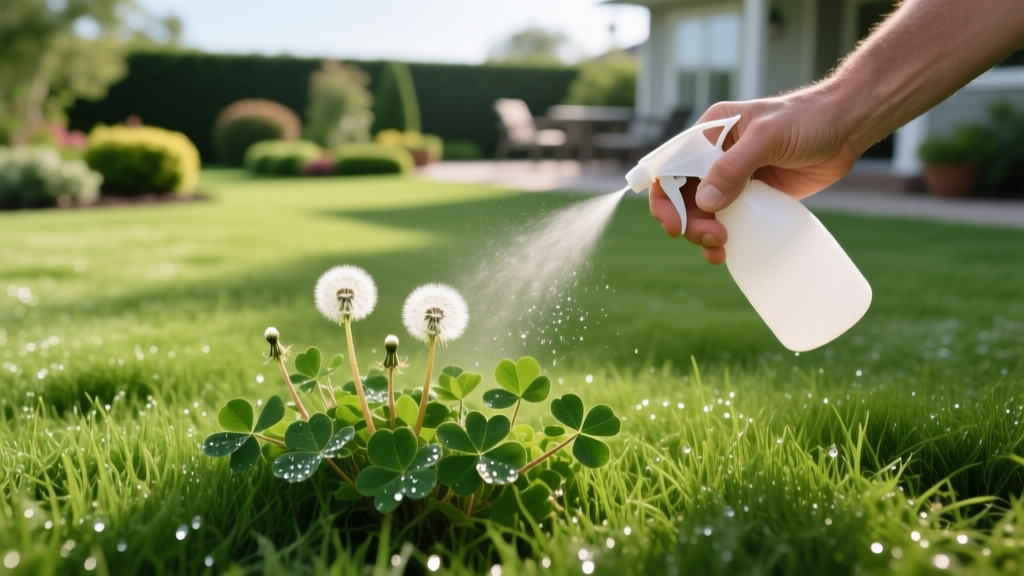
Broadleaf Weed Killer for Lawns: A Spot-Treatment Masterclass
The Anatomy of a Broadleaf Invasion
Broadleaf weeds like dandelions (Taraxacum officinale), white clover (Trifolium repens), and ground ivy (Glechoma hederacea) disrupt turfgrass canopies, compete aggressively for soil nitrogen, and harbor fungal pathogens. While broadcast spraying entire lawns was historically common, modern agronomic standards heavily favor targeted applications. Using a dedicated broadleaf weed killer for lawns via spot-treatment reduces chemical load by up to 85%, preserves soil microbiology, and prevents collateral damage to ornamental beds and desirable pollinator forage.
The secret to successful spot-treatment lies in matching the herbicide's active ingredient to the specific weed's root architecture and growth habit. A systemic 2,4-D formulation will easily collapse a taprooted dandelion, but it will barely stunt the creeping rhizomes of wild violet.
Spot-Treatment Economics vs. Broadcast Spraying
Treating a 5,000 sq. ft. lawn via broadcast application requires roughly 1.5 gallons of mixed herbicide, costing between $12 and $18 per application. Targeted spot-treatment of the same lawn (assuming 15% weed coverage) requires only 0.25 gallons of mix, dropping the chemical cost to under $3 per application while drastically reducing environmental runoff.
Treating a 5,000 sq. ft. lawn via broadcast application requires roughly 1.5 gallons of mixed herbicide, costing between $12 and $18 per application. Targeted spot-treatment of the same lawn (assuming 15% weed coverage) requires only 0.25 gallons of mix, dropping the chemical cost to under $3 per application while drastically reducing environmental runoff.
Weed-to-Herbicide Matching Matrix
Identifying the weed's reproductive strategy is the first step in selecting your broadleaf weed killer for lawns. Consult this matrix before mixing your tank.
| Weed Species | Root / Growth Type | Primary Active Ingredient | Recommended Product Class |
|---|---|---|---|
| Dandelion | Deep Taproot | 2,4-D (Amine) | Standard 3-Way Selective |
| White Clover | Stolons (Creeping) | Dicamba + MCPP | Trimec-style Blends |
| Ground Ivy | Stolons / Aggressive | Triclopyr | Brush & Weed Killers |
| Wild Violet | Rhizomes / Waxy Leaf | Triclopyr + Surfactant | Ester-based Formulations |
| Broadleaf Plantain | Fibrous / Shallow | Carfentrazone + 2,4-D | Fast-Burndown Blends |
Active Ingredient Deep-Dive and Product Selection
Not all broadleaf weed killers for lawns are created equal. Commercial-grade concentrates offer vastly superior results compared to ready-to-use hose-end sprayers, primarily due to the ability to add adjuvants and control dilution rates.
1. The 3-Way Standard (2,4-D, Mecoprop-p, Dicamba)
This is the workhorse of residential lawn care. Products like SpeedZone Broadleaf Herbicide (approx. $55 per pint) include a fourth ingredient, Carfentrazone, which accelerates cell membrane disruption. You will see visible wilting (necrosis) on plantain and dandelions within 24 hours, though total root kill still takes 14 to 21 days. SpeedZone is highly effective in cooler spring temperatures (55°F–65°F).
2. Triclopyr: The Heavy Artillery
When dealing with waxy-leaved or woody-stemmed broadleaves like wild violet, ground ivy, or black medic, standard 3-way mixes will fail. Triclopyr mimics auxins aggressively and penetrates waxy cuticles. Monterey Brush and Weed Killer or generic Triclopyr esters are required here. Note: Triclopyr can cause temporary stunting in St. Augustine and Centipede grasses, so restrict use to cool-season turfs (Fescue, Bluegrass, Ryegrass) and Bermuda.
3. Formulation Chemistry: Amine vs. Ester
This is a critical distinction often missed by homeowners. Amine formulations are water-soluble, have low odor, and are safe to use in temperatures up to 85°F. Ester formulations are oil-soluble, penetrate waxy leaves rapidly, and are highly effective in cool weather (below 60°F), but they are prone to volatilization (turning into a gas) in high heat, which can drift and damage nearby garden tomatoes and ornamentals.
Precision Calibration and Mixing Protocol
To achieve surgical spot-treatment, abandon the hose-end sprayer. Use a 1-gallon or 2-gallon handheld pump sprayer equipped with an 8002 flat-fan nozzle. This nozzle produces a medium droplet size that minimizes wind drift while ensuring complete leaf coverage without runoff.
The 1-Gallon Spot-Treatment Recipe:
- Water First: Fill the tank with 0.75 gallons of clean water.
- Add Herbicide: Add 1.5 fluid ounces of your chosen 3-way concentrate (check label for exact rate).
- Add Surfactant: Add 0.5% v/v of a non-ionic surfactant (NIS). This equals roughly 1/3 of a teaspoon per gallon. Surfactants break the surface tension of water, allowing the chemical to spread across the waxy leaf of a dandelion rather than beading up and rolling off.
- Top Off & Agitate: Add the remaining water to the 1-gallon mark and shake vigorously.
Environmental Constraints and Volatility Risks
Herbicide efficacy and safety are entirely dependent on atmospheric conditions at the time of application.
WARNING: Dicamba Volatilization Thresholds
According to the EPA's regulations on dicamba, applications containing dicamba must never occur when ambient temperatures exceed 85°F, or if they are forecasted to exceed 85°F within 24 hours. At high temperatures, dicamba vaporizes off the leaf surface and drifts into neighboring properties, causing severe cupping and stunting to sensitive broadleaf ornamentals and vegetable gardens.
According to the EPA's regulations on dicamba, applications containing dicamba must never occur when ambient temperatures exceed 85°F, or if they are forecasted to exceed 85°F within 24 hours. At high temperatures, dicamba vaporizes off the leaf surface and drifts into neighboring properties, causing severe cupping and stunting to sensitive broadleaf ornamentals and vegetable gardens.
Optimal Application Window: Spray between 6:00 AM and 10:00 AM when wind speeds are strictly below 5 mph, and morning dew has just evaporated. Ensure no rainfall is forecasted for at least 6 hours post-application to guarantee rainfastness.
Iron HEDTA: The Organic Spot-Treatment Alternative
For homeowners managing lawns near sensitive waterways or those strictly avoiding synthetic auxins, Chelated Iron (FeHEDTA) is the gold standard. Products like Fiesta Turf Weeder (approx. $35 per gallon) utilize the fact that broadleaf weeds cannot regulate iron uptake, leading to fatal oxidative stress and cellular necrosis. Turfgrass, however, naturally restricts iron absorption and simply turns a darker shade of green.
The trade-off with Iron HEDTA is that it is a contact herbicide with limited translocation. It will burn the top growth of a dandelion in 24 hours, but the taproot often survives. Research from the University of Minnesota Extension indicates that Iron HEDTA requires a mandatory second application 21 to 28 days after the first to achieve 80%+ root kill on perennial broadleaves.
Troubleshooting Common Spot-Treatment Failures
If your targeted broadleaf weed killer for lawns failed to eradicate the infestation, audit your application against these common failure modes:
- Mowing Too Soon: Herbicides require 48 hours to translocate from the leaf tissue down to the root crown. Mowing 12 hours after spraying physically removes the chemical before it reaches the root.
- Drought-Stressed Weeds: Weeds shut down their vascular systems during drought to conserve water. If you spray a dandelion during a dry spell, the phloem will not transport the herbicide to the taproot. Irrigate the lawn 24 hours before spraying to activate the weed's vascular system.
- Surfactant Omission: Skipping the non-ionic surfactant on waxy weeds like wild violet or purslane will result in a 90% failure rate, as the water-based spray will simply bounce off the leaf cuticle.
For further identification and localized timing, consult the turfgrass pathology resources provided by Purdue Turfgrass Science, which maintains updated regional models for optimal broadleaf weed germination and treatment windows.

