
Pest Control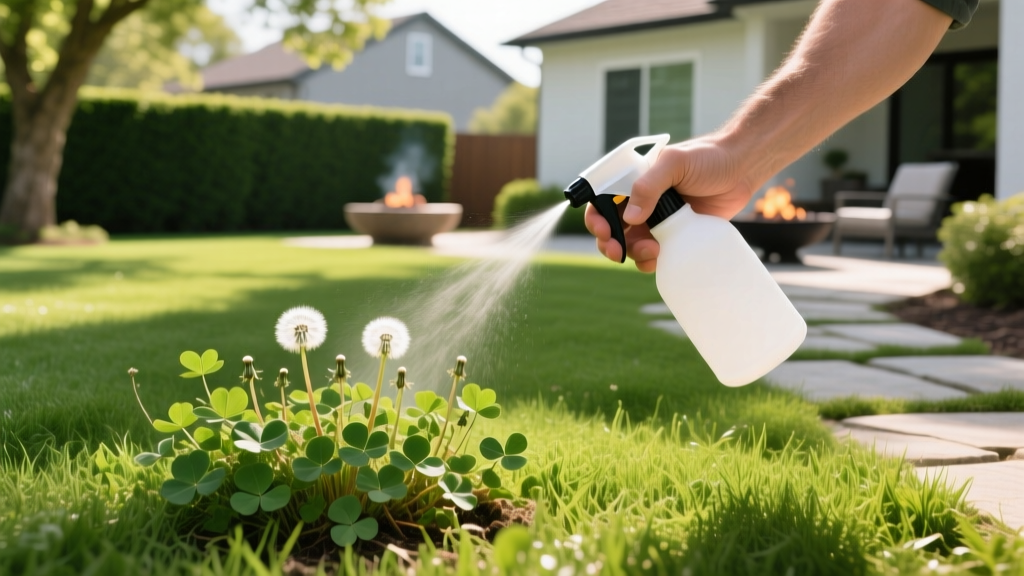
Targeted Home Weed Killer Recipe for Spot-Treating Lawn Weeds
Most online guides suggest mixing 5% household vinegar, table salt, and dish soap. As a turf management strategy, this is fundamentally flawed. Household vinegar lacks the acetic acid concentration to penetrate mature weed cuticles, table salt destroys your soil's microbial biome, and anionic dish soaps (like standard Dawn) bind to hard water minerals, rendering the surfactant useless.
To build an effective home weed killer recipe for spot-treating specific lawn invaders, you must match the chemical formulation to the weed's biological structure. This guide provides exact formulations, pricing, and application protocols for eradicating specific weed species without causing long-term soil toxicity.
The Chemistry of a Lethal Home Weed Killer Recipe
Acetic acid works as a contact herbicide by rapidly drawing moisture out of plant cell membranes, causing immediate desiccation. However, efficacy is entirely dependent on concentration and cuticle penetration.
- 5% Acetic Acid (Grocery Store): Only burns the top layer of young seedlings. Mature weeds will regrow from the root within 48 hours.
- 20% to 30% Horticultural Vinegar: The minimum threshold for destroying the cellular structure of mature broadleaf and grassy weeds. Expect to pay $25 to $35 per gallon from agricultural suppliers.
The Surfactant Requirement
Weeds possess a waxy epicuticle designed to repel water. Without a surfactant, your acetic acid mixture will bead up and roll off the leaf. You must use a non-ionic surfactant (such as Southern Ag Surfactant, approx. $14 per 32 oz bottle). Avoid anionic dish soaps; they react with calcium in hard tap water to form insoluble scum, neutralizing the surface tension-breaking properties you need.
Species-Specific Formulations
Not all weeds share the same biological defenses. A recipe that melts a dandelion will barely singe crabgrass. Below are three targeted home weed killer recipes designed for specific weed categories.
Recipe A: Broadleaf Perennials (Dandelions, Plantain, Dock)
Broadleaf perennials have deep taproots but relatively porous leaf surfaces. The addition of d-limonene (citrus oil) acts as a powerful solvent that strips the leaf's protective wax, allowing the acetic acid to reach the plant's vascular system faster.
D-Limonene Broadleaf Mix
- 1 Gallon 20% Horticultural Vinegar ($28)
- 2 oz d-Limonene / Orange Oil Extract ($12 per 16oz bottle)
- 1 oz Non-Ionic Surfactant
Application: Spray until runoff. Desiccation occurs in 2 to 4 hours at 75°F. The taproot may require a second application 7 days later if the crown was not fully saturated.
Recipe B: Creeping Stoloniferous Weeds (Creeping Charlie, White Clover)
Creeping weeds spread via stolons (above-ground runners) and possess dense, hairy leaves that repel liquids. Eugenol (clove oil) is highly effective here because it disrupts the plant's cellular respiration and penetrates dense foliar hairs better than citrus oil.
Eugenol Creeping Weed Mix
- 1 Gallon 20% Horticultural Vinegar
- 1.5 oz Eugenol / Clove Oil Essential Oil ($18 per 4oz bottle)
- 1.5 oz Non-Ionic Surfactant
Application: Apply during the active vegetative growth phase (spring/fall). Ensure you spray the connecting stolons, not just the visible leaf clusters, to prevent localized regrowth.
Recipe C: Annual Grassy Weeds (Crabgrass, Goosegrass)
Grassy weeds have thick, highly siliconized waxy cuticles that make them incredibly resistant to contact herbicides. To breach this defense, you need a higher acid concentration and a heavier surfactant load.
Heavy-Cuticle Grassy Weed Mix
- 1 Gallon 30% Horticultural Vinegar ($38)
- 2.5 oz Non-Ionic Surfactant (Double dose to emulsify the thick wax)
Application: Must be applied when ambient temperatures exceed 80°F. The heat softens the siliconized cuticle, allowing the 30% acid and surfactant to penetrate. Expect severe necrosis within 6 hours.
Weed Species Treatment Matrix
| Weed Category | Target Species | Cuticle Defense | Recommended Recipe | Optimal Temp |
|---|---|---|---|---|
| Broadleaf Perennial | Dandelion, Broadleaf Plantain | Thin wax, porous | Recipe A (d-Limonene) | 65°F - 80°F |
| Stoloniferous | Creeping Charlie, Clover | Dense foliar hairs | Recipe B (Eugenol) | 60°F - 75°F |
| Annual Grassy | Crabgrass, Goosegrass | Thick siliconized wax | Recipe C (30% Acid) | 80°F - 90°F |
Step-by-Step Spot-Treatment Protocol
Using a contact acid herbicide requires precision to avoid damaging your surrounding turfgrass. Follow this exact protocol:
- Check the Forecast: Ensure no rain is expected for 24 hours and wind speeds are below 5 mph. Drift from 20%+ acetic acid will burn your lawn immediately.
- Calibrate the Sprayer: Use a 1-liter or 2-liter pressurized pump sprayer with a cone nozzle (not a fan nozzle). A cone nozzle minimizes aerosolized drift.
- Shield the Turf: Place a physical cardboard shield between the weed and your desirable grass when spraying in dense lawn areas.
- Saturate the Crown: Do not just mist the leaves. The chemical must pool slightly at the base of the weed (the crown) to prevent the root from pushing out new shoots.
- Neutralize the Soil (Optional but Recommended): 48 hours after treatment, lightly water the treated spot to dilute any residual acid that reached the soil, protecting local earthworm populations and soil microbes.
Common Application Failure Modes
- Applying in Cool Weather: Acetic acid desiccation is a chemical reaction that slows dramatically below 60°F. If you spray crabgrass at 55°F, it will merely stunt the weed rather than kill it.
- Using Hard Tap Water: If your municipal water is high in calcium carbonate, it will buffer the acetic acid, raising the pH and neutralizing the herbicidal effect. Always mix your recipes using distilled water or add 1 oz of ammonium sulfate to the tank to counteract hard water buffering.
- Mowing Before Spraying: Never mow the lawn 48 hours before spot-treating. You need maximum leaf surface area on the weed to absorb the contact herbicide. Wait until the weed has fully regrown its foliage before applying.
Frequently Asked Questions
Will horticultural vinegar change my soil pH?
When used strictly for spot-treatment, the impact on overall soil pH is negligible. Acetic acid breaks down rapidly in the soil (usually within 3 to 5 days) through microbial degradation. However, repeatedly drenching the same square foot of soil can temporarily suppress microbial activity, which is why physical shielding and targeted spraying are mandatory.
Is this home weed killer recipe safe for pets?
Once the solution has completely dried (typically 2 to 4 hours), the treated area is safe for pets. However, 20% and 30% horticultural vinegar is a severe eye and skin irritant in its liquid state. Keep pets indoors during application and until the foliage is dry. The EPA guidelines on safe pest control emphasize keeping all concentrated organic acids away from animal contact zones during active use.
Can I use this recipe in landscape beds and mulch?
Yes, this recipe is highly effective in gravel driveways, patio pavers, and deep mulch beds where there is no desirable plant root zone to protect. In fact, without the risk of turfgrass drift, you can use a wider fan nozzle to cover larger areas of annual weeds in hardscape cracks.

