
Pest Control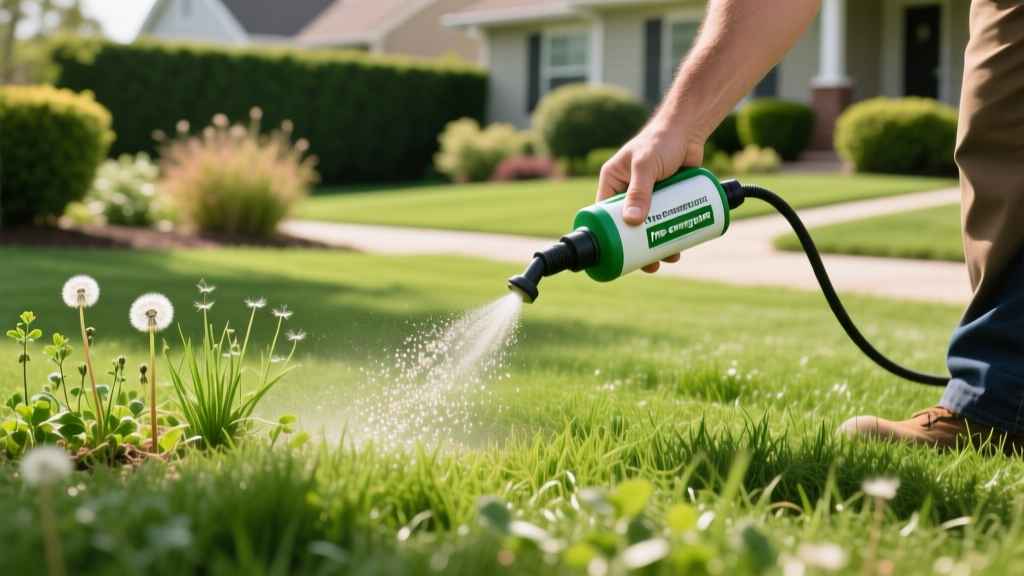
Pre Emergent Lawn Weed Control: Targeting Specific Species
Most homeowners treat pre emergent lawn weed control as a blunt instrument, broadcasting a single chemical across the entire yard on an arbitrary calendar date. This blanket approach wastes money, increases chemical runoff, and frequently fails against localized weed pressure. True efficacy requires matching the active ingredient and application timing to the specific germination biology of your target weed species, while utilizing micro-climate spot-applications to maximize efficiency.
Rather than guessing based on the blooming of forsythia bushes, professional turf managers rely on soil thermodynamics and species-specific chemical barriers. Below is a comprehensive framework for targeting specific weed species with pre-emergent herbicides, integrating localized spot-treatment protocols for high-risk zones and breakthrough weeds.
The Soil Temperature Trigger: Moving Beyond Calendar Dates
Weed seeds do not read calendars; they respond to soil thermodynamics. Germination occurs when the soil temperature at a 1-inch depth reaches a specific threshold for three consecutive days. Measuring this requires a digital soil probe thermometer inserted at 8:00 AM to capture the daily baseline before solar heating skews the data.
Critical Germination Thresholds (at 1-inch depth):
- Crabgrass (Digitaria): 55°F for 3 consecutive days.
- Goosegrass (Eleusine indica): 60°F to 65°F (typically germinates 3-4 weeks after crabgrass).
- Poa annua (Annual Bluegrass): Soil temperatures dropping below 70°F in late summer/early fall.
- Henbit & Chickweed: Soil temperatures dropping below 60°F in early autumn.
According to turfgrass researchers at Purdue University's Turfgrass Extension, applying a pre-emergent too early (more than 14 days before the threshold) risks UV degradation and washout from heavy spring rains before the target weed germinates. Applying too late allows the weed to reach the 2-leaf stage, rendering standard pre-emergents entirely ineffective.
Active Ingredient Matrix: Matching Chemistry to Weed Species
Not all pre-emergents stop all weeds. Selecting the correct active ingredient is the most critical decision in your spot-treatment and barrier strategy. Below is a comparison of the most effective professional-grade chemicals available to homeowners in 2026.
| Active Ingredient | Common Brand | Target Species | Longevity | Cost per 1,000 sq ft |
|---|---|---|---|---|
| Prodiamine | Barricade 65 WDG | Crabgrass, Goosegrass, Foxtail | 4-6 months | $0.015 - $0.03 |
| Dithiopyr | Dimension 2EW | Crabgrass (early post-emergent activity up to 2-leaf stage) | 3-4 months | $0.04 - $0.06 |
| Isoxaben | Gallery 75 DF | Broadleaf weeds (Dandelion, Clover, Henbit) | 4-6 months | $0.05 - $0.08 |
| Pendimethalin | Pendulum AquaCap | Crabgrass, Annual Bluegrass | 2-3 months | $0.03 - $0.05 |
The Dithiopyr Advantage for Late Applications
If you miss the 55°F soil temperature window for crabgrass, Prodiamine will not kill seedlings that have already sprouted. Dithiopyr (Dimension), however, possesses unique early post-emergent properties. It can eradicate crabgrass seedlings up to the 2-leaf stage while still providing a residual pre-emergent barrier. This makes it the superior choice for targeted spot-treatments in areas where you notice early germination.
Micro-Climate Spot-Application: Targeting High-Risk Zones
While pre-emergents are traditionally broadcast, a targeted spot-treatment approach involves identifying micro-climates that heat up or cool down faster than the rest of the lawn. By spot-applying pre-emergents to these specific zones 10 to 14 days before the rest of the lawn, you intercept early germination without over-applying chemicals to dormant areas.
Priority Micro-Climates for Early Spot-Treatment
- South and West-Facing Slopes: These areas receive maximum solar radiation and will hit the 55°F crabgrass trigger weeks before north-facing shaded areas.
- Driveway and Sidewalk Edges: Concrete and asphalt act as thermal masses, absorbing heat during the day and radiating it into the adjacent soil at night. Crabgrass almost always breaks through here first.
- Southern Tree Lines: The drip line on the south side of deciduous trees warms faster in early spring.
- Bare Patches and Thinning Turf: Sunlight reaches the soil surface directly, accelerating soil warming and triggering localized weed flushes.
For these zones, use a handheld broadcast spreader or a precise drop spreader to apply a half-rate of Prodiamine early, followed by the full broadcast rate across the entire lawn once the general soil temperature reaches the threshold.
Critical Failure Modes and Edge Cases
Warning: Common Pre-Emergent Failure Triggers
- Thatch Binding: If your lawn has more than 0.5 inches of thatch, the pre-emergent will bind to the organic matter and never reach the soil surface where seeds germinate. Dethatch or perform core aeration before application.
- Insufficient Watering-In: Pre-emergents require 0.25 to 0.5 inches of irrigation or rainfall within 48 hours to move the chemical off the grass blades and into the top 1 inch of soil. Without this, UV light degrades the active ingredient within days.
- Post-Application Disturbance: Aerating, dethatching, or heavy raking after application physically breaks the chemical barrier, creating localized gaps where weeds will emerge.
The Breakthrough Protocol: Spot-Treating Post-Emergent Escapes
Even with perfect timing, high soil temperatures in late summer can cause the pre-emergent barrier to break down, leading to late-flush goosegrass or crabgrass. When this happens, transition immediately to a post-emergent spot-treatment protocol.
For grassy weed breakthroughs, Texas A&M AgriLife Extension recommends using Quinclorac (Drive XLR8) for crabgrass, or MSMA (where legally permitted for professional use) for stubborn goosegrass. Apply these as localized spot-treatments using a pump sprayer with a fan nozzle, ensuring you wet the foliage without drenching the surrounding desirable turf. Add a non-ionic surfactant at 0.25% v/v to ensure the herbicide penetrates the waxy cuticle of mature weed leaves.
Step-by-Step Species-Specific Application Timeline
Execute this sequence to maintain a year-round species-specific barrier:
- Early Spring (Soil at 50°F): Spot-apply Prodiamine to south-facing slopes, driveway edges, and bare patches.
- Mid-Spring (Soil at 55°F for 3 days): Broadcast Prodiamine or Dithiopyr across the entire lawn for crabgrass and foxtail control. Water in with 0.5 inches of irrigation immediately.
- Early Summer (Soil at 65°F): Inspect driveway edges for goosegrass. If breakthrough is visible, spot-treat with Quinclorac. If not, apply a half-rate split application of Prodiamine to high-heat zones to extend the barrier.
- Late Summer (Soil dropping below 70°F): Apply Isoxaben or a Prodiamine/Isoxaben tank mix to target Poa annua and winter broadleaf weeds. This is the most critical application for cool-season turfgrasses (Fescue, Bluegrass).
By shifting from a calendar-based broadcast mindset to a species-specific, micro-climate targeted approach, you reduce chemical usage by up to 20% while achieving a significantly denser, weed-free turf canopy.

