
Pest Control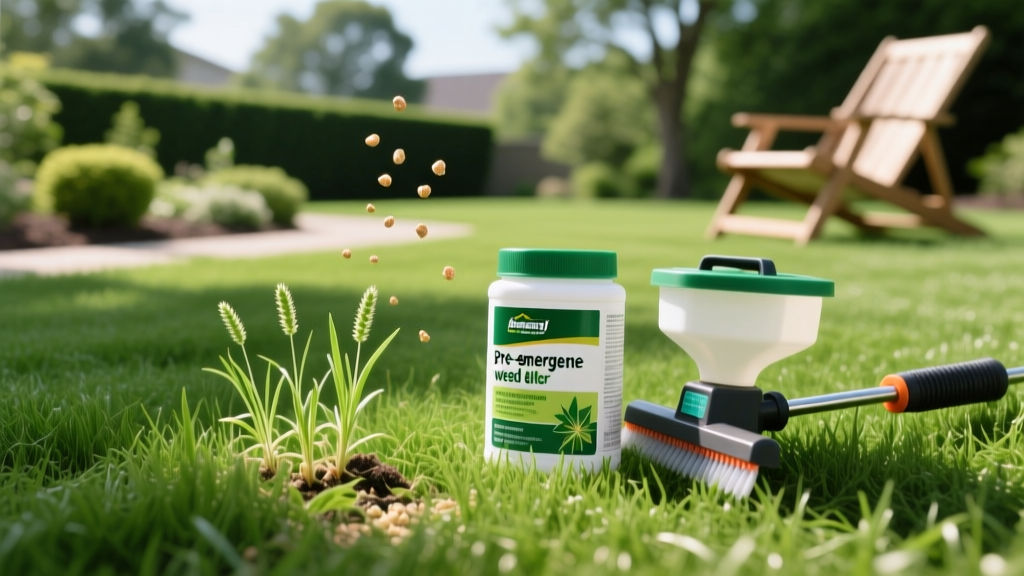
Choosing the Right Pre Emergent Weed Killer for Lawns by Species
Most homeowners treat their entire lawn with a blanket application of herbicides, ignoring the distinct microclimates where specific weed species thrive. A more effective, economical, and environmentally sound approach is spot-treating the weed seed bank. By matching a specific pre emergent weed killer for lawns to the target species and applying it only in high-risk zones, you can achieve superior control while reducing chemical usage by up to 40%.
This guide bridges the gap between broad-spectrum lawn care and precision spot-treatment, detailing exactly which active ingredients to use, where to apply them, and how to avoid the most common application failures.
The Microclimate Approach to Weed Seed Banks
Weed seeds do not distribute evenly across your yard. They accumulate in specific zones based on wind patterns, water runoff, and soil conditions. More importantly, different species require distinct soil temperatures and moisture levels to break dormancy. According to the NC State Turfgrass Program, understanding these microclimates is the first step in precision weed management.
Pro Tip: Radiant Heat Zones
Concrete driveways, sidewalks, and south-facing foundations absorb and radiate heat. Soil temperatures in these 2-foot border zones can be 5°F to 10°F warmer than the center of the lawn. This causes summer annuals like crabgrass to germinate up to two weeks earlier in these strips than in the rest of the yard.
Concrete driveways, sidewalks, and south-facing foundations absorb and radiate heat. Soil temperatures in these 2-foot border zones can be 5°F to 10°F warmer than the center of the lawn. This causes summer annuals like crabgrass to germinate up to two weeks earlier in these strips than in the rest of the yard.
Mapping Your High-Risk Zones
- Driveway & Sidewalk Edges: High heat, compacted soil. Prime targets for Crabgrass, Goosegrass, and Spurge.
- < shaded, Poorly Drained Areas: Cool, moist soil. Prime targets for Poa annua (Annual Bluegrass), Henbit, and Chickweed.
- < low-Lying Wet Zones: Constant moisture. Prime targets for Yellow Nutsedge and Doveweed.
Active Ingredient Selection by Target Species
Not all pre-emergents work on all weeds. The chemical mechanism of action dictates which species will be controlled. Here is how to select the right chemistry for your specific spot-treatment needs.
1. Crabgrass & Goosegrass (Summer Annual Grasses)
For these heat-loving grasses, you need a mitotic inhibitor that stops root cell division immediately after germination. Prodiamine (e.g., Prodiamine 65 WDG) and Dithiopyr (e.g., Dimension 2EW) are the industry standards. Dithiopyr offers a unique advantage: it provides early post-emergent control, meaning it can kill crabgrass up to the tillering stage (1-2 leaves) if you miss your pre-emergent window.
2. Poa Annua & Broadleaf Winter Annuals
Winter annuals germinate when soil temperatures drop below 70°F in late summer. Isoxaben (e.g., Gallery 75 DF) is a cellulose biosynthesis inhibitor that is exceptionally effective against broadleaf winter annuals like henbit and chickweed. For Poa annua specifically, Pendimethalin or a split-application of Prodiamine yields the best results.
3. Nutsedge & Dallisgrass (Perennials & Tubers)
Standard pre-emergents like Prodiamine are largely ineffective against yellow nutsedge because it reproduces primarily via underground tubers (nutlets), not just seeds. To spot-treat the nutsedge seed bank, you must use Sulfentrazone (e.g., Dismiss), which acts as a PPO inhibitor, causing cell membrane disruption and rapid tissue necrosis upon germination.
Pre-Emergent Comparison Matrix (2026 Pricing & Rates)
The following table compares the most effective active ingredients for targeted spot-treatments, including current professional-grade pricing and application rates.
| Active Ingredient | Brand Example | Target Species | Rate (per 1,000 sq ft) | Est. Cost (2026) |
|---|---|---|---|---|
| Prodiamine 65 WDG | Barricade / Generic | Crabgrass, Goosegrass | 0.5 - 1.0 oz | $1.35 |
| Dithiopyr 2EW | Dimension | Crabgrass (Early Post) | 0.3 - 0.5 fl oz | $2.80 |
| Isoxaben 75 DF | Gallery | Broadleaf Winter Annuals | 0.66 - 1.0 oz | $3.10 |
| Sulfentrazone 4SC | Dismiss | Yellow Nutsedge, Doveweed | 0.18 - 0.27 fl oz | $4.50 |
Step-by-Step Localized Application Protocol
Spot-treating with pre-emergents requires precise calibration. Follow this protocol to ensure the chemical barrier is properly established in your target zones.
- Verify Soil Temperature: Do not rely on air temperature. Use a soil thermometer inserted 2 inches deep. Apply summer annual pre-emergents when soil temps hit 50°F–55°F for three consecutive days. Apply winter annual pre-emergents when soil temps drop below 70°F.
- Manage the Thatch Layer: If your target zone has more than 0.5 inches of thatch, core aerate or dethatch first. Thatch acts as a sponge, intercepting the pre-emergent and preventing it from reaching the soil surface where germination occurs.
- Calibrate Your Sprayer/Spreader: For liquid applications (like Dimension 2EW), calibrate your pump sprayer to deliver exactly 1.5 to 2.0 gallons of water per 1,000 square feet. This ensures adequate coverage without excessive runoff.
- Apply the Pre-Emergent: Treat the specific 2-to-3-foot high-risk perimeter or localized patch. Maintain a steady walking pace of 3 feet per second.
- Activate with Irrigation: Pre-emergents must be watered into the top 0.25 to 0.5 inches of soil within 48 hours to form the chemical barrier. Apply exactly 0.25 inches of water (about 15 minutes with a standard oscillating sprinkler). Any more, and you risk leaching the chemical past the germination zone.
Failure Modes: Why Your Pre-Emergent Failed
According to Penn State Extension Turfgrass Management, the majority of pre-emergent failures are due to application errors rather than chemical resistance. Watch out for these specific edge cases:
The 'Thatch Sponge' Effect
Applying pre-emergent over a thick layer of organic thatch is the number one cause of failure. The chemical binds to the organic matter and never reaches the mineral soil. The weed seeds germinating at the soil surface remain completely unprotected.
Photodegradation (UV Breakdown)
If you apply a liquid or granular pre-emergent and fail to water it in within 7 days, ultraviolet light will break down the active ingredient. Prodiamine is particularly susceptible to UV degradation if left on the surface of dormant, thin turf.
Disruption of the Chemical Barrier
The pre-emergent forms a microscopic film across the soil surface. If you core aerate, heavily rake, or allow heavy foot traffic or pet digging in the treated zone after application, you physically break the barrier, creating 'holes' where weed seeds can germinate unimpeded.
Expert Insight: Never apply a pre-emergent if you plan to overseed your lawn in the spring. Most pre-emergents do not distinguish between weed seeds and turfgrass seeds. If you must overseed, wait until the fall, or use a specialized, seed-safe pre-emergent like Siduron (Tupersan), though it is significantly more expensive and has a shorter residual window.
Expert FAQ on Targeted Pre-Emergent Use
Can I tank-mix a pre-emergent with a liquid fertilizer?
Yes, but with caution. Mixing a pre-emergent like Prodiamine with a liquid nitrogen fertilizer is a common professional practice to save time. However, the fertilizer requires watering to reach the root zone, while the pre-emergent only needs to be watered into the top 0.25 inches of soil. Over-watering to push the nitrogen down will leach the pre-emergent too deep, rendering it useless against surface-germinating weeds.
Do pre-emergents kill existing weeds?
No. With the sole exception of Dithiopyr (Dimension), which has early post-emergent activity on crabgrass up to the tillering stage, pre-emergents only affect germinating seeds. If you have mature weeds in your spot-treatment zone, you must first apply a post-emergent herbicide (like Triclopyr or Quinclorac) to kill the existing plants, then apply the pre-emergent to stop the next generation.
How long does the chemical barrier last?
Residual longevity depends on the application rate and soil biology. A standard rate of Prodiamine 65 WDG (0.8 oz per 1,000 sq ft) will provide approximately 90 to 120 days of control. High microbial activity in warm, moist soils will break down the chemical faster, requiring a split-application (half rate in early spring, half rate in late spring) for season-long control.
Summary Checklist for Spot-Treatment Success
- Identify the specific weed species and its preferred microclimate.
- Match the active ingredient to the weed's biological family (grass vs. broadleaf vs. sedge).
- Measure soil temperature at a 2-inch depth before applying.
- Ensure thatch is less than 0.5 inches thick.
- Water in exactly 0.25 to 0.5 inches of irrigation within 48 hours.
For further reading on safe handling and environmental precautions, always consult the EPA Weed Control Guidelines and read the specific product label before application. Precision spot-treatment not only saves money on chemical costs but also promotes a healthier, more resilient turfgrass ecosystem over time.

