
Pest Control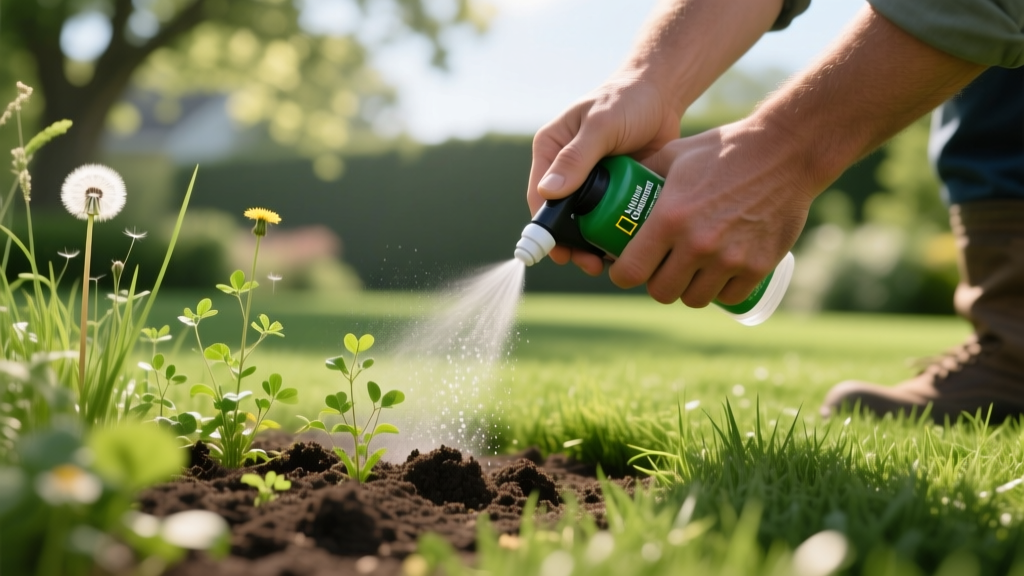
Spot-Treating with Pre Emergent for Weeds: A Species Guide
Blanket-spraying an entire lawn with herbicides is an outdated, expensive approach to turf management. For homeowners dealing with localized infestations, applying a pre emergent for weeds via targeted spot-treatment offers a highly effective, ecologically responsible, and cost-efficient alternative. By mapping historical weed pressure and treating only high-risk micro-zones—such as south-facing slopes, driveway edges, and thinning turf patches—you can reduce chemical usage by up to 70% while maintaining a pristine lawn.
This guide details the exact protocols, soil temperature triggers, and calibration mathematics required to execute a localized pre-emergent strategy in 2026, moving beyond generic broadcast advice into precision turf management.
The Mechanics of Localized Chemical Barriers
Pre-emergent herbicides do not prevent seeds from germinating; they inhibit cell division in the radicle (the first root) immediately after the seed sprouts. To succeed, the active ingredient must form a continuous, unbroken chemical barrier in the top 0.5 to 1 inch of the soil profile. When spot-treating, the primary failure mode is an incomplete barrier at the edges of the application zone, allowing lateral weed encroachment.
Critical Activation Rule: The 0.5-Inch Watering Mandate
According to NC State University Turfgrass Program, a pre-emergent must be watered in with exactly 0.25 to 0.5 inches of irrigation or rainfall within 48 hours of application. Less than 0.25 inches leaves the chemical on the surface where it degrades via UV photodegradation. More than 0.75 inches causes leaching, pushing the active ingredient past the shallow germination zone and rendering it useless against target species like crabgrass.
Weed Species Spot-Treatment Matrix
Different weed species require specific active ingredients and precise soil temperature triggers. Use this matrix to select the correct chemistry for your localized spot-treatments.
| Target Weed Species | Optimal Active Ingredient | Soil Temp Trigger (2-inch depth) | Spot-Treatment Window |
|---|---|---|---|
| Crabgrass (Digitaria) | Prodiamine 65 WDG or Dithiopyr | 55°F for 3 consecutive days | Early Spring (Forsythia bloom) |
| Poa Annua (Annual Bluegrass) | Prodiamine or Isoxaben | 70°F (declining in late summer) | Late Summer / Early Fall |
| Goosegrass (Eleusine indica) | Oxadiazon or Prodiamine | 60°F to 65°F | Mid-Spring (2 weeks post-crabgrass) |
| Chamberbitter (Phyllanthus) | Isoxaben + Oxyfluorfen | 75°F (warm season beds) | Late Spring to Early Summer |
Step-by-Step Spot-Treatment Calibration Protocol
Spot-treating requires a handheld pump sprayer (typically 1 to 2 gallons). Incorrect calibration is the leading cause of localized turf burn and wasted product. Follow this exact sequence to calibrate your equipment for a pre emergent for weeds application.
- Measure the Nozzle Output: Fill your sprayer with a known volume of water (e.g., 128 ounces). Spray into a bucket for exactly 60 seconds at your standard walking pace and pumping pressure. Measure the ounces sprayed. This is your Gallons Per Minute (GPM).
- Determine Swath Width: Walk a 20-foot test line and spray water onto dry concrete. Measure the width of the wet pattern in inches. Convert this to feet (e.g., a 24-inch swath = 2 feet).
- Calculate Coverage Area: Multiply your walking speed (feet per minute) by your swath width (feet) to get your square footage per minute (SQFT/min).
- Mix the Chemistry: For Prodiamine 65 WDG, the standard spot-treatment rate for a 1,000 sq ft zone is 0.18 oz (5 grams) per 1.5 gallons of water. As of 2026, a 5 oz bottle of generic Prodiamine costs approximately $35-$45, yielding enough product to spot-treat roughly 27,000 square feet over the season.
- Agitate Continuously: Wettable granules (WDG) will settle at the bottom of the tank. You must physically shake the sprayer every 3 minutes during application to maintain a uniform suspension.
Non-Obvious Edge Cases and Failure Modes
Even experienced turf managers make critical errors when transitioning from broadcast to spot-treatment. Avoid these specific failure modes:
The Surfactant Mistake
Never add a non-ionic surfactant (NIS) or crop oil concentrate to a pre-emergent application. Surfactants are designed to break surface tension and help chemicals adhere to plant foliage. Pre-emergents must reach the soil. Adding a surfactant causes the chemical to bind to the thatch layer and grass blades, preventing it from reaching the soil surface and causing severe photodegradation.
The Nutsedge Misconception
Yellow and purple nutsedge (Cyperus spp.) reproduce primarily through underground tubers (nutlets), not just seeds. Standard pre-emergents like Prodiamine and Dithiopyr are entirely ineffective against nutsedge tubers. If your localized weed map identifies a nutsedge zone, you must abandon pre-emergents and instead plan for a post-emergent spot-treatment using Halosulfuron-methyl (SedgeHammer) once the weed reaches the 3- to 5-leaf stage in early summer.
Overlapping Residual Toxicity
If you spot-treat a zone with a high rate of Prodiamine (e.g., 0.40 oz per 1,000 sq ft for maximum 6-month residual), you cannot overseed that specific area with cool-season grass seed in the fall. Prodiamine has a long soil half-life. For zones requiring fall overseeding, use Dithiopyr (Dimension), which offers a shorter residual window and possesses early post-emergent activity against young crabgrass.
Cost Analysis: Broadcast vs. Targeted Spot-Treatment
Transitioning to a targeted approach yields significant financial benefits, particularly for larger properties where only 15% to 20% of the turf actually suffers from recurring weed pressure.
2026 Seasonal Cost Breakdown (10,000 sq ft Lawn)
- Full Broadcast (Prodiamine): Requires ~1.8 oz of product. Cost: ~$12.00. (Plus time and chemical load across entire ecosystem).
- Targeted Spot-Treatment (2,000 sq ft of high-risk zones): Requires ~0.36 oz of product. Cost: ~$2.40.
- Net Savings: $9.60 per application, but more importantly, an 80% reduction in active ingredient introduced to your local watershed.
Note: According to Purdue University Extension, reducing broad-spectrum herbicide loads helps preserve local populations of beneficial soil nematodes and earthworms, which are vital for natural thatch decomposition and soil aeration.
Frequently Asked Questions
Can I spot-treat with a pre-emergent if I already see a few weeds?
Generally, no. However, Dithiopyr (Dimension) is unique among pre-emergents because it possesses 'early post-emergent' activity. If you spot-treat with Dithiopyr when crabgrass is in the 1- to 3-leaf stage, it will kill the existing young weeds while simultaneously laying down a residual barrier to prevent further germination. Prodiamine will only stop future weeds; it will not kill visible ones.
How close to a vegetable garden can I spot-treat?
Maintain a minimum 5-foot buffer zone between your pre-emergent application area and any edible garden beds. Pre-emergents can easily drift via wind during application or leach through the soil profile. For immediate garden borders, rely on mechanical barriers, thick mulch layers, or targeted spot-treatments with organic corn gluten meal, though its efficacy is significantly lower than synthetic alternatives.
Does soil pH affect pre-emergent efficacy?
Yes. Highly alkaline soils (pH above 7.5) can accelerate the microbial breakdown of certain herbicides, shortening their residual lifespan. If your soil test indicates a high pH, you may need to increase your spot-treatment application rate by 15% to achieve the same duration of control. Always consult the EPA Safe Pest Control guidelines and the specific product label for soil-pH adjustment factors.

