
Pest Control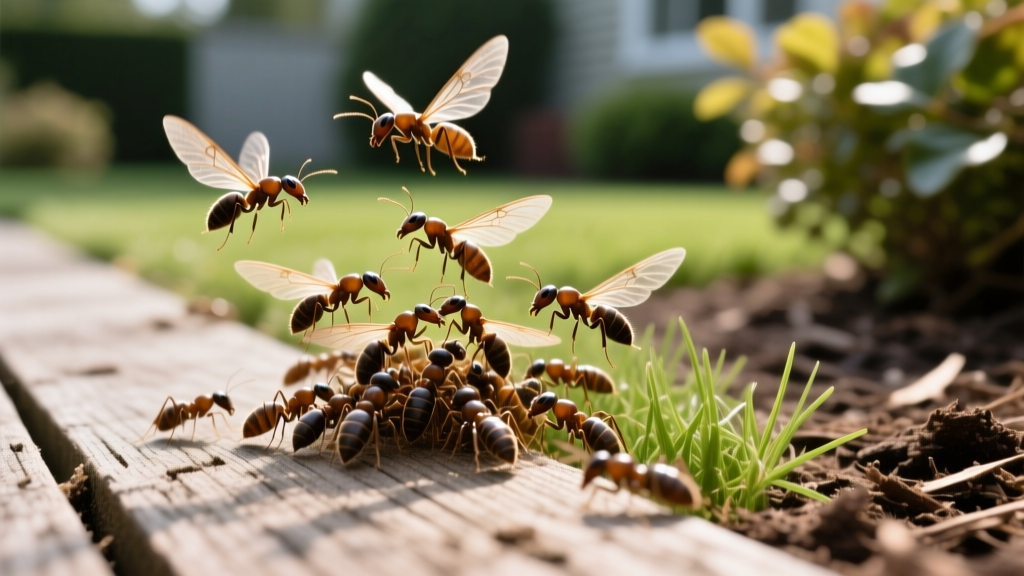
What Color Are Termites? Identify Castes, Species, and Swarms
The Direct Answer: What Color Are Termites?
There is no single answer to what color termites are because their pigmentation is dictated by their caste (their role within the colony) and their species. While the termites actively eating the framing inside your walls are typically creamy white or translucent, the reproductive termites swarming around your windowsills in the spring can be dark brown, black, or amber. Misidentifying these insects based on a rigid color expectation is a primary reason homeowners fail to catch early-stage infestations. According to the Environmental Protection Agency (EPA), understanding the visual variations of termite castes is the first line of defense in structural pest management.
The Termite Color Spectrum: Breakdown by Caste
A mature termite colony operates as a highly organized society divided into distinct castes. Each caste has evolved specific physical traits, including color variations, that correlate with its function.
Workers: The Hidden Destroyers
Workers make up the vast majority of the colony and are responsible for foraging, tunneling, and consuming wood. Because they spend their entire lives hidden inside dark wood galleries or subterranean soil tunnels, they lack protective pigmentation.
- Color: Creamy white, pale yellow, or translucent.
- Size: 1/8 to 3/8 inch long.
- Distinguishing Features: Wingless, blind, and soft-bodied. If you break open a mud tube or a piece of infested baseboard, these are the pale, maggot-like insects that scatter away from the light.
Soldiers: The Defenders
Soldiers protect the colony from predators, primarily ants. Their coloration is a striking two-tone contrast designed to support their defensive anatomy.
- Color: Bodies are pale white or yellowish-white, but their oversized heads and mandibles are heavily pigmented in dark amber, reddish-brown, or nearly black.
- Size: Slightly larger than workers, with heads that can be as wide as their entire body length.
- Distinguishing Features: They cannot feed themselves due to their massive jaws and rely on workers for sustenance. In drywood termite species, the soldier's head is often dark enough to be mistaken for a small beetle or ant when viewed in isolation.
Swarmers (Alates): The Reproductives
Swarmers are the only termites most homeowners ever see. Their job is to leave the nest, mate, and establish new colonies. Because they must survive outside the nest and fly in daylight, they possess heavy melanin pigmentation.
- Color: Dark brown, black, amber, or pale yellow-brown, depending on the species.
- Wings: Four translucent, grayish-white wings that are exactly equal in length, typically extending twice the length of their body.
- Distinguishing Features: Often confused with flying ants. After a brief mating flight, they shed their wings, leaving behind piles of translucent, grayish wing fragments on window sills and decks.
Warning: Do not assume you don't have termites just because you haven't seen white insects. Swarming season brings dark brown and black reproductive termites to the surface. If you see dark, winged insects near light sources, you likely have a mature colony (at least 3 to 5 years old) hidden in your structure.
Species-Specific Color Variations
The University of California Integrated Pest Management (IPM) program notes that geographic location heavily influences which species you will encounter. Below is a comparison matrix of the four most destructive termite species in North America and their specific color profiles.
| Species | Worker Color | Soldier Head Color | Swarmer Body Color |
|---|---|---|---|
| Eastern Subterranean | Creamy White | Pale Amber | Black to Dark Brown |
| Formosan Subterranean | White | Golden-Brown | Pale Yellow-Brown |
| Western Drywood | White to Cream | Dark Brown to Black | Dark Brown / Amber |
| Pacific Dampwood | Creamy White | Reddish-Brown | Dark Reddish-Brown |
Termites vs. Ants: The Color and Anatomy Test
Because termite swarmers range from dark brown to black, they are frequently misidentified as carpenter ants or pavement ants. Relying solely on color will lead to incorrect treatment protocols. The National Pest Management Association (NPMA) recommends using the following anatomical decision framework alongside color observation:
- The Waist Test: Termites have a broad, thick waist (the thorax and abdomen are nearly the same width). Ants have a distinct, pinched hourglass waist.
- The Antennae Test: Termite antennae are straight and beaded, resembling a string of tiny pearls. Ant antennae are elbowed (bent at a sharp 90-degree angle).
- The Wing Test: Termite wings are all exactly the same length and are fragile, often breaking off easily. Ant wings are unequal in length (front wings are longer than hind wings) and are firmly attached.
Secondary Color Clues: Mud Tubes and Frass
If the termites themselves remain hidden, their byproducts offer critical color-coded evidence of an active infestation.
Subterranean Mud Tubes
Subterranean termites build shelter tubes to travel between the soil and your home's wood framing without drying out. These tubes are typically tan, light brown, or dark soil-colored, resembling dried mud or clay packed against your foundation. If you break a tube open and see pale white workers swarming to repair it, the colony is active. If the tube is dry, crumbly, and grayish, it may be abandoned—though a professional inspection is required to confirm.
Drywood Termite Frass (Feces)
Drywood termites do not build mud tubes; instead, they push their fecal pellets out of small 'kick holes' in the wood. The color of this frass directly matches the wood they are consuming. It ranges from light tan and beige to dark brown or black. The pellets are hexagonal, hard, and feel like coarse sand or coffee grounds. Finding piles of tan or brown pellets on baseboards or window sills is a definitive sign of drywood termites.
Actionable Steps: What to Do When You Spot Them
Identifying the color and caste of the termite dictates your immediate next steps.
- Spotting White Workers: This means active, ongoing structural damage. Do not disturb the gallery further, as termites will retreat and reroute, making professional detection harder. Call a licensed exterminator immediately.
- Spotting Dark Swarmers: Collect a few specimens in a sealed plastic bag for identification. Sweep up the discarded wings. Schedule a comprehensive WDI (Wood Destroying Insect) inspection, which typically costs between $75 and $150.
- Evaluating Treatment Options: For subterranean species, liquid soil barriers using Fipronil (e.g., Termidor SC) cost roughly $3 to $16 per linear foot and provide a continuous chemical barrier. Alternatively, bait systems like the Sentricon Always Active system utilize Hexaflumuron to disrupt the termites' molting process, costing between $1,500 and $3,500 for a complete perimeter installation.
Frequently Asked Questions
Are there red termites?
True termites are rarely red. If you see bright red insects with narrow waists and elbowed antennae, you are likely looking at fire ants, carpenter ants, or velvet ants. However, the heads of some dampwood termite soldiers can exhibit a deep reddish-brown hue, which might be perceived as red in certain lighting.
Do termites change color as they age?
Termites do not drastically change color as they age within their specific caste. A worker remains white from its final molt until death. However, if a colony loses its queen, certain nymphs can undergo a developmental shift to become 'secondary reproductives' (neotenics), which may develop slightly darker, pigmented bodies compared to standard workers.

