
Pest Control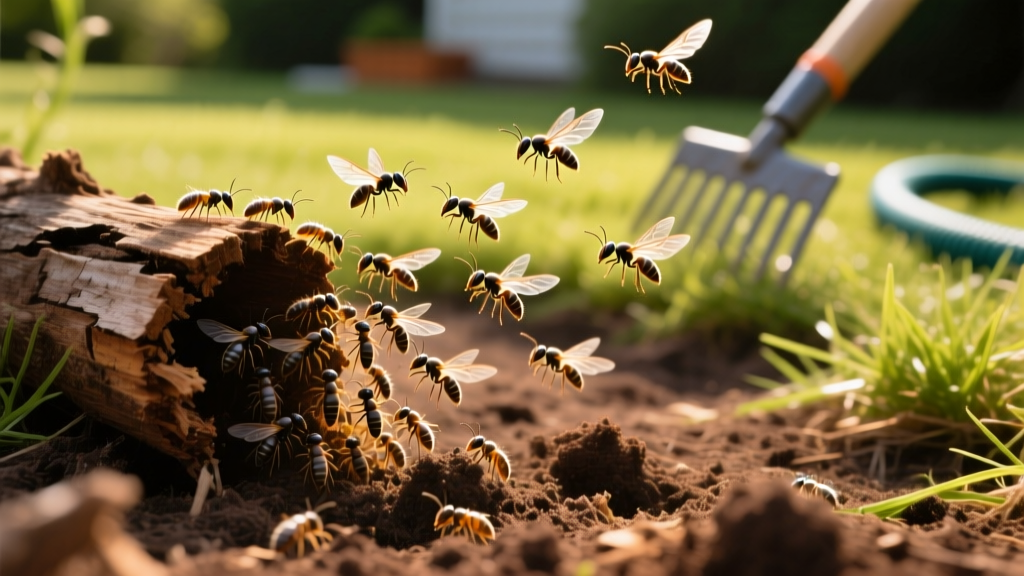
Termite Flying Ants: How to Identify and Stop Yard Swarms
When a cloud of winged insects erupts from your mulch beds or lawn in early spring, the immediate panic often leads homeowners to search for 'termite flying ants.' This colloquial phrase highlights a widespread identification crisis: distinguishing between reproductive termite alates (swarmers) and winged carpenter ants. Misidentifying the swarmer dictates the wrong treatment, leaving your home's structural perimeter vulnerable to catastrophic damage. While both pests thrive in damp yard environments and chew wood, their colony structures, foraging behaviors, and eradication protocols are entirely different.
Defending your yard requires moving beyond surface-level swarm suppression. You must locate the source colony, identify the insect accurately, and deploy targeted chemical or baiting barriers. This guide provides the exact entomological markers, inspection frameworks, and professional-grade treatment specifications required to secure your property's perimeter.
The Anatomy of a Swarm: Termite vs. Carpenter Ant
The term 'termite flying ants' is a biological misnomer. Termites belong to the order Blattodea (related to cockroaches), while carpenter ants belong to Hymenoptera. During their respective nuptial flights, both release winged reproductives to establish new colonies. According to the University of Kentucky Department of Entomology, catching a swarmer and examining three specific anatomical features will provide a definitive identification.
| Feature | Termite Swarmer (Alate) | Flying Carpenter Ant |
|---|---|---|
| Wings | Two pairs of equal-length, milky-white wings that extend far past the abdomen. | Two pairs of unequal length; front wings are larger, dark, and have visible veins. |
| Waist | Thick, uniform waist (broad connection between thorax and abdomen). | Pinched, narrow waist (distinct hourglass shape between body segments). |
| Antennae | Straight, bead-like, and moniliform (no bend). | Elbowed (geniculate) with a distinct 90-degree bend. |
| Body Color | Dark brown to black body, but often appears pale or translucent in certain species. | Solid black, reddish-black, or multi-toned red and black. |
⚠️ Critical Warning: Never use over-the-counter aerosol sprays (like Raid) on a swarm. Killing the visible flying insects only eliminates the reproductive scouts. The primary colony, which may contain hundreds of thousands of workers actively consuming your home's sill plate, remains untouched and will simply reroute its foraging tunnels.
Yard Defense Protocol: Locating the Source Colony
Before applying any termiticide or ant bait, you must map the perimeter to find the colony's origin point. Swarms typically emerge within 50 feet of the primary nest.
Step 1: The Moisture and Wood Grid Search
Both pests require high moisture and cellulose. Inspect your yard focusing on these high-probability zones:
- Stump and Root Systems: Decaying tree stumps left in the yard are the #1 breeding ground for Eastern Subterranean termites (Reticulitermes flavipes).
- Fence Posts and Deck Footings: Check where wood meets soil. Probe the wood with a flathead screwdriver; if it yields easily or sounds hollow, you have active damage.
- Mulch Beds: Mulch deeper than 3 inches retains the exact subterranean humidity termites require to build transit tubes.
Step 2: Identifying the Sign
Termites and carpenter ants leave entirely different physical evidence in the yard.
- Termite Sign: Look for mud tubes (about the width of a pencil) running up foundation walls or tree trunks. Termites cannot survive exposure to dry air and sunlight, so they build these soil-and-saliva highways to travel from the soil to the wood.
- Ant Sign: Carpenter ants do not eat wood; they excavate it to build galleries. Look for 'frass'—piles of coarse sawdust, insect parts, and wood shavings pushed out of tiny slits in wood or soil cracks.
Treatment Strategies and Product Specifications
Once the pest is identified, deploy the appropriate professional-grade defense. The Environmental Protection Agency (EPA) emphasizes that soil-applied liquid termiticides and monitored bait stations are the only proven methods for long-term subterranean termite exclusion.
Termite Colony Elimination: Trenching and Baiting
For active subterranean termite colonies threatening the home perimeter from the yard, a dual approach is standard.
Liquid Trenching (Taurus SC - 9.1% Fipronil):
Fipronil is a non-repellent active ingredient. Termites cannot detect it, allowing them to tunnel through the treated soil, pick up the chemical, and transfer it to the colony via grooming (the transfer effect).
- Mixing Ratio: 0.8 fluid ounces of Taurus SC per gallon of water.
- Trench Dimensions: Dig a trench 6 inches wide and 6 inches deep directly against the foundation.
- Application Rate: Apply 4 gallons of finished solution per 10 linear feet of trench.
- Cost Estimate: A 20 oz bottle costs approximately $90 and treats roughly 60 linear feet of perimeter.
Bait Stations (Advance Termite Bait System):
For yard areas where trenching is impossible (e.g., near concrete patios or large tree root systems), install bait stations.
- Placement: Install stations every 10 feet around the perimeter, specifically targeting areas where mud tubes were previously spotted.
- Mechanism: The wood monitor attracts termites. Once activity is confirmed, replace the monitor with a Diflubenzuron bait cartridge, which inhibits the termites' ability to molt, eventually collapsing the colony.
Flying Ant (Carpenter Ant) Perimeter Control
If your yard swarm is confirmed as carpenter ants, trenching with Fipronil is less effective because carpenter ants often nest in damp wood above ground (like hollow trees or rotting landscaping timbers) rather than strictly in the soil.
Non-Repellent Liquid Application (Alpine WSG - Dinotefuran):
- Mixing Ratio: 1 packet (10 grams) per gallon of water.
- Application: Spray the foundation perimeter up to 3 feet high and 3 feet out into the yard. Spray directly onto tree trunks (up to 6 feet high) and wooden fence lines where foraging trails are visible.
- Cost Estimate: A box of 5 packets costs around $45, yielding 5 gallons of finished solution.
Granular and Gel Baits:
Use Advance Carpenter Ant Bait (granular) scattered in mulch beds, or Maxforce Fleet (gel) applied directly into the frass slits and tree hollows where the ants are entering the wood.
Preventative Landscaping to Destruct Swarm Habitats
Chemical treatments will fail if the yard environment remains a hospitable breeding ground. Implement these structural landscaping modifications to make your yard hostile to both termites and carpenter ants:
- The 6-Inch Siding Rule: Ensure no mulch, soil, or vegetation touches the wooden siding of your home. Maintain a strict 6-inch visual inspection gap between the top of the soil/mulch and the bottom of the siding to expose mud tubes.
- Mulch Depth Limitation: Restrict organic mulch depth to a maximum of 2 inches. Consider replacing organic hardwood mulch near the foundation with inorganic alternatives like crushed stone or rubber mulch, which do not retain moisture or provide cellulose.
- Stump Grinding and Removal: Any tree removed from the yard must have its stump and primary root ball ground down to at least 12 inches below grade. Leaving the root system provides a multi-year food source for subterranean termites.
- Correcting Negative Grading: If your yard slopes toward the foundation, water pools against the concrete, creating the exact damp soil profile termites prefer. Regrade the soil to ensure a 5% slope away from the house for the first 10 feet.
Expert FAQ: Swarm Season Edge Cases
'Homeowners often mistake the shedding of wings for a sign that the threat has passed. Finding piles of discarded, translucent wings on your patio or windowsills is actually a primary indicator that a termite swarm has successfully mated and the reproductives have burrowed into the soil to start a new colony.'
— Adapted from structural pest management guidelines, Texas A&M AgriLife Extension.
How long does a termite swarm last?
A localized termite swarm is brief, typically lasting only 30 to 45 minutes, usually occurring on a warm, humid morning immediately following a heavy spring rain. If you see swarmers emerging repeatedly over several days, you have a massive, mature colony directly beneath that specific patch of yard.
Can termites and carpenter ants infest the same yard?
Yes. It is common for carpenter ants to nest in wood that has already been softened and hollowed out by subterranean termite damage. However, they do not cooperate; carpenter ants will actually prey on termites if their galleries intersect. Finding both requires executing both the Fipronil trenching protocol (for termites) and the Dinotefuran perimeter spray (for ants).
Are flying termites dangerous to humans?
No. Termite swarmers do not bite, sting, or carry diseases. Their sole purpose is reproduction. The danger they pose is strictly structural and financial, as the workers in their parent colony are actively consuming the structural lumber of nearby buildings.

