
Pest Control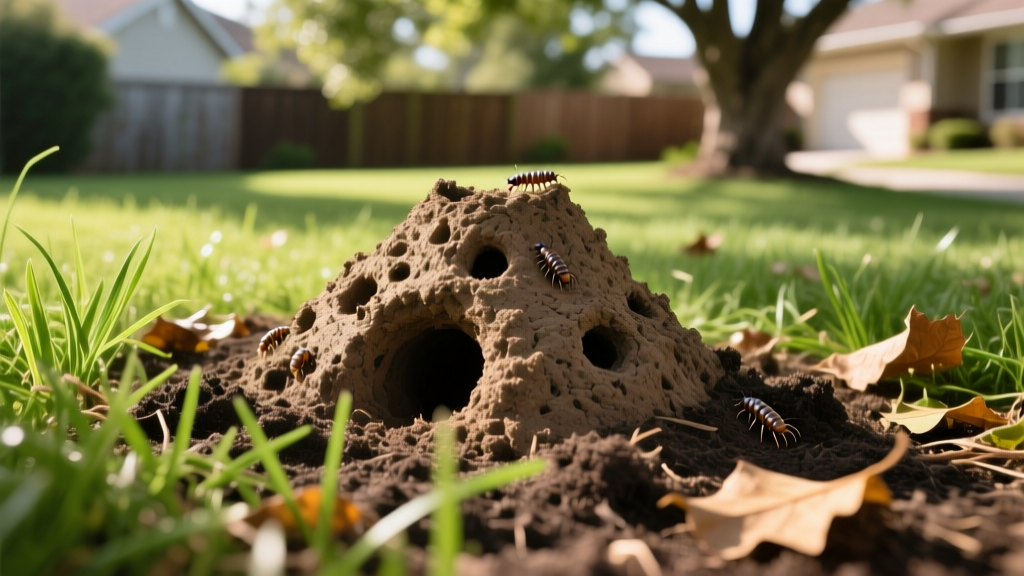
Termite Mounds in Yard: Identification and Treatment Guide
Decoding the Mound: Termites vs. Ants
Finding termite mounds in yard soil indicates an active, mature subterranean colony foraging near the surface. However, homeowners frequently misidentify ant mounds as termite structures. Native subterranean termites rarely build towering, hardened soil mounds; instead, they create low-profile foraging hubs, mud tubes, and shelter structures over exposed wood. The exception is the Formosan subterranean termite, an aggressive invasive species capable of building massive above-ground "carton nests" composed of chewed wood, soil, and saliva.
Before deploying expensive eradication protocols, verify the insect responsible for the mound. Misidentification leads to wasted chemical applications and continued structural vulnerability.
| Diagnostic Feature | Termite Foraging Hub / Carton Nest | Common Ant Hill |
|---|---|---|
| Soil Texture | Finely granulated, packed tightly with saliva/mud; feels like hardened clay. | Loose, sandy, or granular; easily crumbles when poked. |
| Structure Shape | Irregular, flat-topped, or encasing wood; lacks a distinct central crater. | Conical or dome-shaped with a distinct, symmetrical central entry hole. |
| Inhabitants | Pale, soft-bodied workers; soldiers with rectangular heads; no pinched waists. | Dark, hard-bodied; distinct pinched waist between thorax and abdomen. |
| Surface Tubes | Pencil-width mud tubes extending from the mound to wooden structures. | No mud tubes; visible ant trails carrying food particles. |
The Hidden Threat: Why Mounds Matter
A visible mound or foraging hub in your yard means the colony has likely been established for three to five years. A mature Eastern Subterranean termite colony contains 100,000 to 500,000 workers, while a Formosan colony can exceed 2 million. When these hubs appear within 20 feet of your home's foundation, the probability of structural infestation is exceptionally high.
⚠️ Structural Warning: If you find termite mounds in yard soil adjacent to your foundation, immediately inspect your crawlspace or slab perimeter. Look for mud tubes on foundation piers, hollow-sounding baseboards, and frass (droppings) near window sills. Yard mounds are satellite foraging sites; the primary nest may be under your slab.
Proven Eradication Protocols
Eliminating a mature colony requires targeting the workers and transferring the lethal agent back to the queen. Broadcast spraying the mound with over-the-counter contact killers (like Raid or Sevin) only kills surface workers and forces the colony to relocate deeper underground. Use professional-grade, non-repellent strategies.
Protocol A: Liquid Soil Trenching (Fipronil)
Liquid termiticides containing Fipronil (9.1%) or Imidacloprid create an undetectable chemical barrier. Termites tunnel through the treated soil, picking up the chemical and transferring it to the colony via grooming and trophallaxis (food sharing).
- Product Standard: Termidor SC or generic Fipronil 9.1% concentrates.
- Dilution Rate: 0.8 fluid ounces per gallon of water (0.06% active ingredient concentration).
- Application Volume: 4 gallons of finished solution per 10 linear feet of trench.
- Cost Estimate (2026): $150–$250 for DIY materials; $1,200–$2,500 for professional application.
Protocol B: Chitin Synthesis Inhibitor (CSI) Baits
Bait stations utilize slow-acting insect growth regulators that prevent termites from molting. Workers consume the bait matrix and share it with the colony. When the workers and nymphs attempt to molt, they die, eventually collapsing the colony.
- Product Standard: Sentricon (0.5% Noviflumuron) or Trelona ATBS (0.7% Novaluron).
- Placement: Stations installed 10 to 20 feet apart around the property perimeter and directly adjacent to active mounds.
- Cost Estimate: $800–$1,200 for initial installation; $300–$500 annual monitoring.
Protocol C: Biological Nematode Drench
For organic yard defense or localized mound treatment, beneficial nematodes (Steinernema carpocapsae) act as microscopic parasites. They enter the termite's body, release symbiotic bacteria that kill the host within 48 hours, and reproduce inside the carcass to hunt further.
- Application Rate: 1 to 2 million nematodes per 1,000 square feet of soil.
- Requirements: Soil temperature must be above 60°F. Apply at dusk to prevent UV degradation, and water the soil immediately to wash nematodes below the surface.
Step-by-Step Trenching Guide for Yard Perimeters
If you choose the liquid Fipronil route to eliminate the mounds and protect your home, follow this exact trenching specification to ensure the barrier is continuous and deep enough to intercept foraging tunnels.
- Utility Clearance: Call 811 at least 48 hours before digging to mark underground gas, water, and fiber-optic lines.
- Excavation: Dig a trench 6 inches wide and 6 inches deep directly against the foundation wall. Extend the trench to encircle any isolated yard mounds within 10 feet of the home.
- Soil Rodding: Use a soil rodding tool or rebar to punch holes through the bottom of the trench every 12 inches. This allows the chemical to penetrate deeper into the subsoil where primary foraging galleries exist.
- Mixing: Mix the Fipronil concentrate in a 5-gallon bucket using a dedicated pump sprayer. Agitate thoroughly to prevent the suspension from settling.
- Flooding: Apply 4 gallons of the mixed solution into every 10 linear feet of trench. Pour slowly to ensure deep soil penetration rather than surface runoff.
- Backfilling: Push the excavated soil back into the trench, mixing it with any remaining surface solution to maintain the chemical barrier at the soil surface.
Yard Defense & Moisture Control Matrix
Termites require high moisture levels to survive above ground. Eradication fails if the yard environment remains overly conducive to their survival. Implement the following moisture and wood-management protocols to prevent mound reformation.
| Yard Vulnerability | Corrective Action | Target Metric |
|---|---|---|
| Wood-to-Soil Contact | Elevate wooden fences, deck posts, and shed bases using galvanized steel post anchors. | Minimum 2-inch clearance between soil and wood. |
| Gutter Downspouts | Install corrugated downspout extenders to divert roof runoff away from the foundation. | Discharge water at least 4 feet from the foundation. |
| Mulch Accumulation | Replace cellulose-rich wood mulch near the house with inorganic alternatives or termite-resistant cedar/cypress. | Keep mulch under 2 inches deep; leave a 12-inch bare soil gap near siding. |
| Soil Grading | Add topsoil to create a positive slope away from the home to prevent puddling near the slab edge. | Drop 6 inches in elevation over the first 10 horizontal feet. |

