
Pest Control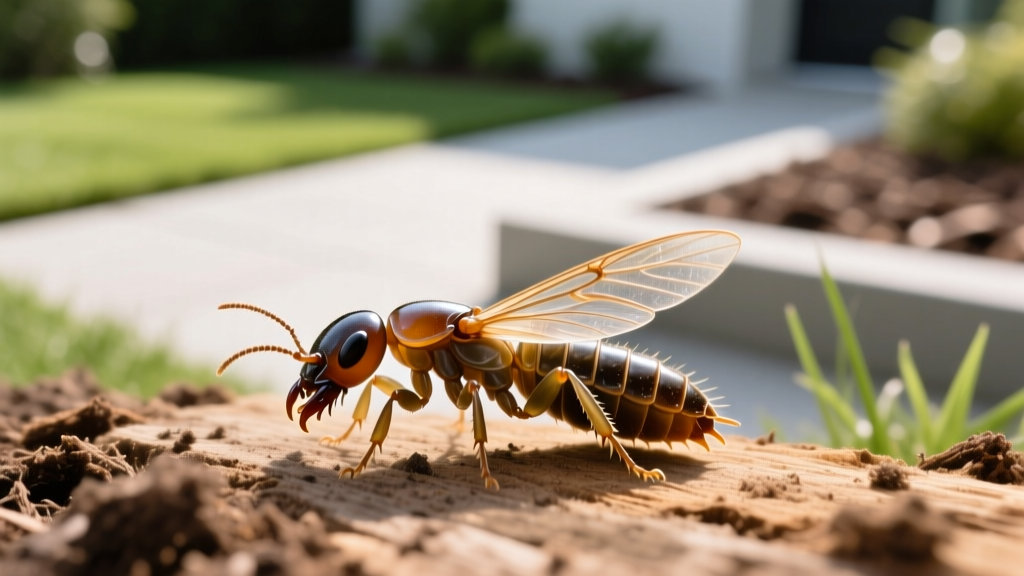
Termite Pictures Actual Size: Yard Pest Identification
The Macro Lens Deception: Why Actual Size Matters
When homeowners search for termite pictures actual size, they are usually trying to solve a critical identification problem. Most images published online are taken with extreme macro lenses, making subterranean termites appear as massive, intimidating monsters. In reality, the termites destroying your yard and home are shockingly small. Misidentifying a harmless garden insect as a termite—or worse, dismissing a termite as a harmless ant—can lead to thousands of dollars in structural damage or wasted money on ineffective pesticides.
Understanding the true dimensions of termites is the first step in effective yard defense. According to the University of California Agriculture and Natural Resources, subterranean termite workers rarely exceed 1/4 inch in length. If the insect you found in your mulch bed is over half an inch long and has a distinct, pinched waist, you are likely looking at a carpenter ant or a beetles, not a termite.
Visual Breakdown: Termite Castes in Your Yard
A mature subterranean termite colony operates through a caste system. When inspecting your yard, you will encounter three distinct forms, each with specific physical dimensions and roles.
1. Workers (The Hidden Destroyers)
- Actual Size: 1/8 to 1/4 inch long (roughly the size of a grain of long-grain white rice).
- Color: Creamy white to pale yellow.
- Yard Location: Rarely seen in the open. Found inside mud tubes, under heavy mulch, or within decaying tree stumps. They are highly sensitive to light and dry air.
2. Soldiers (The Defenders)
- Actual Size: 1/4 to 3/8 inch long.
- Color: Creamy white body with a distinct, oversized amber or dark brown head.
- Yard Location: Found alongside workers when a mud tube or wood source is breached. They use their large mandibles to defend the colony but cannot feed themselves.
3. Swarmers / Alates (The Reproductives)
- Actual Size: 3/8 to 1/2 inch long (including their two pairs of long, translucent wings).
- Color: Dark brown to black bodies.
- Yard Location: Seen in large swarms near the yard perimeter, often near porch lights or window sills in early spring. They leave behind piles of discarded, equal-length wings on patios and walkways.
Side-by-Side Comparison: Termites vs. Carpenter Ants
The most common yard defense mistake is treating for the wrong insect. Use this matrix to verify your findings against actual physical traits.
| Physical Feature | Subterranean Termite | Carpenter Ant |
|---|---|---|
| Body Length (Workers) | 1/8 to 1/4 inch | 1/4 to 1/2 inch |
| Waist Shape | Broad, straight thorax (no waist) | Narrow, pinched waist |
| Antennae | Straight, beaded (moniliform) | Elbowed (geniculate) |
| Wings (Swarmers) | Two pairs, equal in length, milky | Two pairs, front wings longer than hind wings |
| Frass (Debris) | Packed mud and soil in galleries | Dry, sawdust-like wood shavings pushed out of holes |
Yard Hotspots: Where to Inspect for Activity
Because worker termites are tiny and avoid light, you will rarely see the actual insects. Instead, you must look for the architectural evidence they leave behind in your landscape.
⚠️ Critical Warning: The Mulch Trap
Many homeowners apply thick layers of wood mulch directly against their home's foundation. Mulch retains the exact moisture levels termites require to survive above ground. Maintain a strict 6-inch gap between the top of your soil/mulch line and the bottom of your wooden siding or brick weep holes.
Many homeowners apply thick layers of wood mulch directly against their home's foundation. Mulch retains the exact moisture levels termites require to survive above ground. Maintain a strict 6-inch gap between the top of your soil/mulch line and the bottom of your wooden siding or brick weep holes.
1. Tree Stumps and Dead Roots
Subterranean termites feed on cellulose. An old, decaying tree stump in the corner of your yard acts as a primary satellite feeding station. If you break apart a stump and find pale, 1/4-inch insects scattering, the colony is active. Stump grinding is recommended, followed by a localized soil treatment.
2. Fence Posts and Deck Pilings
Wood-to-soil contact is the primary vector for yard infestations. Inspect the base of wooden fence posts. Tap the wood with a screwdriver; if it yields easily and you spot mud packed inside the hollowed galleries, termites have compromised the structural integrity.
3. Mud Tubes on Foundation Walls
Termites build shelter tubes (1/4 to 1 inch wide) out of soil, saliva, and feces to travel from the soil to the wood above ground without drying out. Break a tube open. If you see tiny, cream-colored workers swarming to repair the breach, the colony is currently active. According to the Environmental Protection Agency (EPA), finding active mud tubes requires immediate perimeter intervention.
Yard Defense Strategy: The Trench and Rod Method
If you have confirmed termite activity in your yard, surface spraying with hardware store contact killers (like Raid or Ortho Home Defense) is entirely useless. These products only kill the insects they directly touch and leave no residual protection in the soil. You must create a continuous, non-repellent chemical barrier in the soil.
Professional-Grade Soil Treatment Specifications
The industry standard for DIY and professional yard defense is a non-repellent termiticide containing Fipronil (9.1%), such as Taurus SC or Termidor SC. Because it is non-repellent, termites cannot detect it. They tunnel through the treated soil, pick up the chemical, and transfer it to the rest of the colony via grooming, eventually collapsing the entire population.
- Product Cost: $45 to $60 for a 20 oz bottle of Taurus SC (enough to treat 60 linear feet of foundation).
- Mixing Ratio: 0.8 fluid ounces of concentrate per 1 gallon of water.
- Trench Dimensions: Dig a trench 6 inches wide and 6 inches deep directly against the foundation.
- Application Rate: Apply 4 gallons of the finished solution per 10 linear feet of trench.
- Drilling (Concrete): Where patios or sidewalks abut the house, use a hammer drill with a 1/2-inch masonry bit to drill holes 6 inches from the wall, every 12 inches, and inject 0.5 gallons of solution per hole.
Cost Analysis: DIY vs. Professional Extermination
Deciding whether to handle yard termite defense yourself or hire a licensed operator depends on your property layout and physical capability.
| Factor | DIY Soil Trenching | Professional Pest Control |
|---|---|---|
| Material/Labor Cost | $150 - $350 (Chemicals + Tools) | $1,500 - $3,500 (Standard Home) |
| Warranty | None (Self-monitored) | 1 to 5-year retreatment warranties |
| Labor Intensity | High (Digging 100+ ft of trench) | Low (Crew handles all labor) |
| Bait Station Alternative | $400+ for DIY bait kits (e.g., Advance) | $800 - $1,200 annual monitoring |
For complex yards with extensive hardscaping, retaining walls, and mature landscaping, hiring a professional who utilizes advanced termiticides like Termidor HE (which requires less trenching volume due to specialized lateral diffusion) is highly recommended. The National Pest Management Association advises that structural warranties are often voided if a homeowner attempts unlicensed chemical applications near the foundation.
Frequently Asked Questions
Do yard termites bite humans or pets?
No. Termite soldiers possess mandibles designed to defend against rival insects (primarily ants), not mammalian skin. They are entirely harmless to humans and pets, though their presence indicates a threat to your wooden structures.
How fast can a yard colony destroy a wooden fence?
A mature Formosan subterranean termite colony can contain millions of individuals and consume up to 13 pounds of wood per month. A standard native subterranean colony eats roughly 1/2 pound per month. An untreated wooden fence post can be structurally compromised within a single season.
Will flooding my yard drown the termites?
No. Subterranean termites are highly adapted to soil moisture fluctuations. They will simply retreat deeper into the soil profile or seal off their mud tubes to survive temporary flooding. Water saturation is not a viable pest control strategy and will only damage your lawn's root system.

