
Pest Control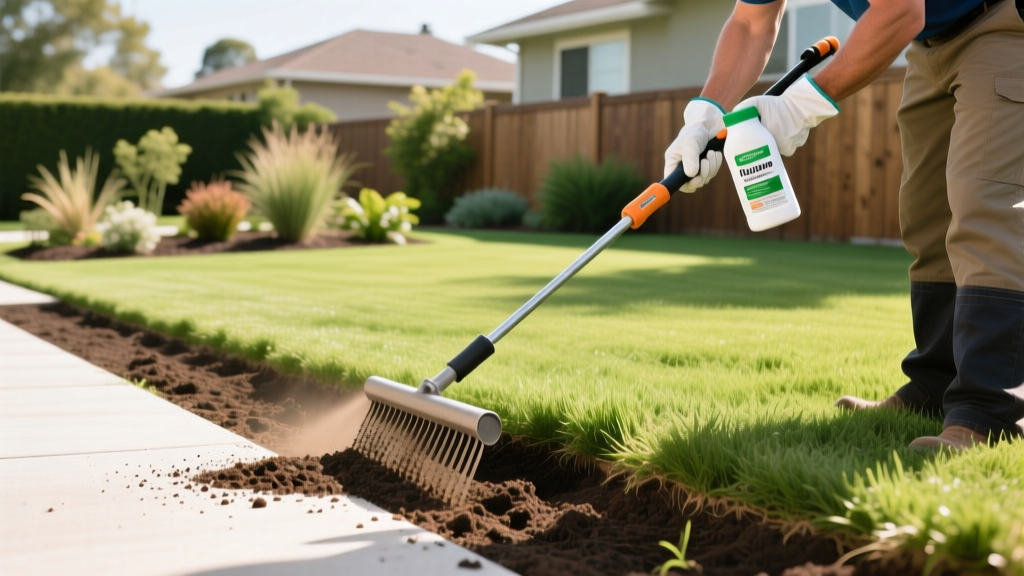
Termite Soil Treatment: Complete Yard Perimeter Defense Guide
Subterranean termites forage blindly through the soil, seeking cellulose. When your yard's perimeter is left untreated, the foundation of your home becomes an easy target, potentially resulting in tens of thousands of dollars in structural damage. A professional-grade termite soil treatment creates an invisible, continuous chemical barrier in the yard that intercepts foraging workers before they reach your home's wooden framing.
This guide details the exact chemical selections, mathematical formulas for mixing, and physical trenching specifications required to establish a long-lasting yard perimeter defense.
The Science of Soil Barriers: Non-Repellent vs. Repellent
The most common mistake homeowners make when attempting yard defense is purchasing broad-spectrum, repellent insecticides (like bifenthrin or permethrin) from local hardware stores. Repellents kill termites on contact. While this sounds effective, it actually causes the colony to detect the chemical and simply forage around the treated zone, finding untreated gaps near plumbing penetrations or under patios.
Effective termite soil treatment relies on non-repellent termiticides. These active ingredients are undetectable to termites. Workers tunnel freely through the treated soil, picking up a lethal dose. Because the chemical is slow-acting, the infected termites return to the colony and transfer the toxin to the queen and other workers through grooming and trophallaxis (food sharing). This is known as the 'Transfer Effect.'
Active Ingredient Comparison Matrix
| Product Brand | Active Ingredient | Transfer Effect | Approx. Cost (20oz) | Longevity in Soil |
|---|---|---|---|---|
| Termidor SC | Fipronil (9.1%) | Yes (High) | $75 - $90 | 10+ Years |
| Taurus SC | Fipronil (9.1%) | Yes (High) | $50 - $65 | 10+ Years |
| Premise 2 | Imidacloprid (21.4%) | Yes (Moderate) | $80 - $100 | 5 - 7 Years |
| Altriset | Chlorantraniliprole | Yes (High) | $120 - $140 | 5+ Years |
Note: Fipronil-based products (Termidor and its generic equivalent, Taurus SC) remain the industry gold standard for perimeter yard defense due to their proven decade-long soil half-life and aggressive colony elimination rates.
Calculating Your Yard's Chemical Needs
Applying the correct volume of finished solution is critical. Under-application leaves gaps in the barrier; over-application wastes expensive chemicals and violates federal environmental regulations. The industry standard for subterranean termite soil treatment is the Rule of 6.
The Rule of 6: Trenching Specs
- Trench Width: 6 inches
- Trench Depth: 6 inches (or to the bottom of the footing, whichever is shallower)
- Application Rate: 4 gallons of finished solution per 10 linear feet of trench
The Mixing Math
For Fipronil products like Termidor SC or Taurus SC, the standard mixing rate for termite barrier creation is 0.8 fluid ounces of concentrate per 1 gallon of water.
- A standard 20 oz bottle yields approximately 25 gallons of finished solution.
- Since you need 4 gallons per 10 linear feet, one 20 oz bottle treats roughly 60 linear feet of foundation perimeter.
- Measure your home's exterior perimeter. If your home is 50 feet by 30 feet, the perimeter is 160 linear feet. You will need roughly 64 gallons of mixed solution, requiring three 20 oz bottles of concentrate.
Step-by-Step Trenching and Application
Before breaking ground, always call 811 to have local utility companies mark underground gas, water, and electrical lines. Striking a utility line with a trenching shovel is a severe safety hazard.
Step 1: Clear the Perimeter
Remove all mulch, dead leaves, and dense ground cover within 12 inches of the foundation. Termites use mulch as a moisture-retaining bridge to bypass soil treatments. Ensure the final grade slopes away from the foundation to prevent pooling, which can dilute your chemical barrier.
Step 2: Dig the Trench
Use a specialized trenching shovel (which has a narrow, V-shaped blade) rather than a standard spade. Dig a continuous trench 6 inches wide and 6 inches deep directly against the foundation. If you encounter a concrete sidewalk or patio abutting the house, stop digging and transition to slab treatment (detailed below).
Step 3: Apply the Termiticide
Use a 1-gallon or 2-gallon pump sprayer for precise application. Remove the nozzle tip to apply a solid stream rather than a fine mist, which reduces wind drift and inhalation risks. Pour exactly 4 gallons of the mixed solution into the trench for every 10 linear feet. Move slowly to allow the soil to absorb the liquid without runoff.
Step 4: Backfill and Cap
Once the liquid has soaked into the trench walls and base (usually 30 to 60 minutes), push the excavated soil back into the trench. For added protection, treat the backfill soil as you shovel it in. Tamp the soil down firmly to prevent surface water from channeling directly into the treated zone.
Handling Concrete Patios and Hardscapes
Subterranean termites frequently travel under concrete slabs, using the expansion joints and plumbing penetrations to enter the home. You cannot simply spray the top of a concrete patio and expect protection. You have two options for hardscapes:
Option A: Slab Trenching (For Dirt Borders)
If the concrete patio is separated from the house foundation by a strip of dirt, trench the dirt side of the patio using the standard 6x6 rule, and trench the foundation side as well. This creates a 'chemical sandwich' that intercepts termites traveling under the slab.
Option B: Roto-Hammer Drilling (For Flush Slabs)
If the concrete patio or driveway is poured flush against the house foundation, you must drill through the slab to treat the soil beneath it.
Warning: Concrete Drilling Specs
Use an SDS rotary hammer drill with a 1/2-inch masonry bit. Drill holes exactly 12 inches apart, positioned 2 to 3 inches away from the foundation wall. Drill to a depth of 18 inches (or just below the slab thickness). Inject 0.5 to 1 gallon of finished termiticide solution into each hole using a specialized slab injection rod. Plug the holes with concrete patch or silicone caulk after treatment.
Use an SDS rotary hammer drill with a 1/2-inch masonry bit. Drill holes exactly 12 inches apart, positioned 2 to 3 inches away from the foundation wall. Drill to a depth of 18 inches (or just below the slab thickness). Inject 0.5 to 1 gallon of finished termiticide solution into each hole using a specialized slab injection rod. Plug the holes with concrete patch or silicone caulk after treatment.
Landscaping and Mulch Considerations
Your yard's aesthetic design must work in tandem with your termite soil treatment, not against it. According to entomology researchers at the University of Kentucky, improper landscaping is the leading cause of termite barrier failure in residential settings.
- The 6-Inch Rule: Maintain a minimum 6-inch gap between the top of any mulch or soil bed and the bottom edge of your home's siding or brick weep holes. This visual inspection zone allows you to spot mud tubes before they breach the structure.
- Root System Disruption: Do not trench aggressively through the root systems of large, mature shrubs planted directly against the house. Severing major roots can kill the plant and create voids in the soil where termites can tunnel undetected. Instead, use a roto-hammer to drill and inject the soil around heavy root masses.
- Edible Gardens: Fipronil and Imidacloprid are highly toxic to aquatic life and should not be used near edible crops. Keep vegetable gardens at least 10 feet away from the treated foundation perimeter. For more on safe pesticide use near food sources, consult the EPA's guidelines on termite control.
Frequently Asked Questions
Will heavy rain wash away the soil treatment?
If applied correctly, no. Fipronil binds tightly to organic matter and clay particles in the soil. However, if a heavy downpour occurs while the trench is still open and the liquid is pooling on the surface, it can cause runoff. Always check the weather forecast and ensure you have 24 hours of dry weather post-application to allow the chemical to bind to the soil matrix.
Is the treatment safe for my dogs and cats?
Non-repellent termiticides are highly toxic to pets when wet. Keep all animals and children away from the treatment zone during application and until the soil is completely dry (typically 2 to 4 hours). Once dry and bound to the soil, the chemical poses negligible risk to mammals walking on the surface.
Do I need to treat the entire yard or just the foundation?
Only the foundation perimeter requires a continuous trench. Treating the entire expanse of your lawn is unnecessary, environmentally damaging, and prohibitively expensive. The goal of yard defense is to create a localized moat around the structure, intercepting termites as they migrate from the yard toward the home's cellulose sources.

