
Pest Control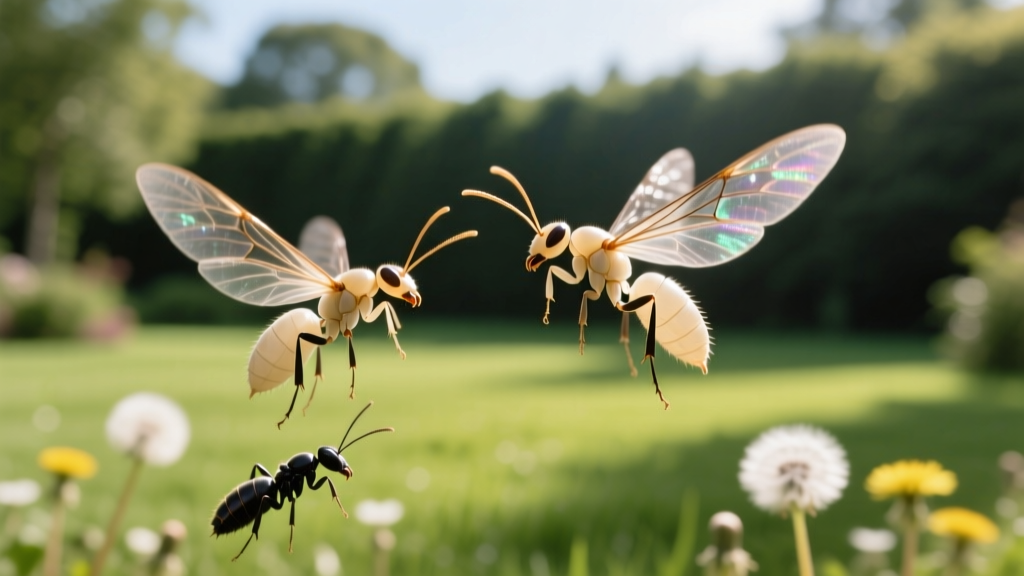
Termite Swarmers vs. Ants: What Images of Termites With Wings Reveal
When homeowners spot a sudden influx of winged insects near their foundation or patio, the immediate reaction is to search for images of termites with wings to confirm their worst fears. Identifying these pests—known scientifically as alates or swarmers—is the critical first step in protecting your property. However, visual identification from a photograph only tells half the story. Understanding the biological triggers behind a swarm, differentiating them from harmless flying ants, and implementing targeted perimeter defenses are what actually save your home's structural integrity and landscape investments.
Decoding the Visuals: Termite Swarmers vs. Flying Carpenter Ants
Relying solely on low-resolution images of termites with wings can lead to misidentification. Carpenter ants also produce winged reproductive swarmers, and both insects typically emerge during the spring or after heavy rainfall. To make an accurate diagnosis in your yard, you must examine three specific anatomical features up close.
| Anatomical Feature | Termite Swarmers | Flying Carpenter Ants |
|---|---|---|
| Wings | Four wings of equal length, milky/translucent, extending well past the abdomen. | Two pairs of unequal length (front wings larger), brownish/tinted, ending near the abdomen tip. |
| Waist | Thick, straight, and uniform (no distinct pinch between thorax and abdomen). | Narrow, pinched, and distinctly segmented (classic wasp-like waist). |
| Antennae | Straight and bead-like (moniliform). | Elbowed or bent at a distinct 45-degree angle. |
| Body Color | Uniform dark brown, black, or pale yellow depending on species. | Usually black, red, or a combination of both. |
Pro Tip: Swarmers are poor fliers. If you find piles of detached, identical wings on your windowsills, patio furniture, or spider webs, you are almost certainly looking at termite alates. Termites shed their wings immediately after mating, whereas ants retain theirs until they establish a new colony.
Why Swarmers Emerge in Your Yard
A swarm is a reproductive nuptial flight. It indicates that a mature, established colony (typically 3 to 5 years old) exists within 100 to 300 feet of where the swarmers are emerging. Soil temperature and moisture are the primary triggers. For the Eastern Subterranean termite (Reticulitermes flavipes), swarming occurs when soil temperatures reach roughly 70°F at a depth of 6 inches, usually following a significant spring rain.
Species-Specific Swarming Behaviors
- Eastern Subterranean Termites: Swarm during daylight hours in early to mid-spring. They are dark brown to black and roughly 3/8 inch long.
- Formosan Subterranean Termites: Highly destructive. Swarm at dusk or night in late spring (May/June). They are larger, pale yellowish-brown, and attracted to outdoor landscape lighting.
- Drywood Termites: Swarm in late summer or early fall. They do not require soil contact and will emerge directly from infested landscape timbers, dead trees, or attic eaves.
Tactical Yard Defense: Securing the Perimeter
If your visual inspection matches the images of termites with wings, and you have confirmed a subterranean species, your yard requires immediate chemical or bait-based intervention. The goal is to create a continuous treated zone that prevents foraging workers (which cause the actual damage) from accessing your home's foundation.
Liquid Termiticide Trenching (The Chemical Barrier)
For immediate, long-lasting protection, non-repellent liquid termiticides like Fipronil (Termidor SC) at a 0.06% finished concentration are the industry standard. Because it is non-repellent, termites cannot detect it, allowing them to tunnel through the treated soil, pick up a lethal dose, and transfer it to the colony via trophallaxis (grooming and feeding).
Warning: Precise Trenching is Mandatory
To apply Termidor SC effectively, you must dig a trench exactly 6 inches deep and 6 inches wide directly against the foundation. Apply 4 gallons of finished solution per 10 linear feet of trench. Backfill the trench with the treated soil. Improper trenching depths (e.g., 2 inches) will leave the critical sub-slab entry points completely unprotected.
To apply Termidor SC effectively, you must dig a trench exactly 6 inches deep and 6 inches wide directly against the foundation. Apply 4 gallons of finished solution per 10 linear feet of trench. Backfill the trench with the treated soil. Improper trenching depths (e.g., 2 inches) will leave the critical sub-slab entry points completely unprotected.
Bait Station Deployment
If your yard has extensive hardscaping, concrete patios, or sensitive garden beds where trenching is impossible, use a cellulose-based bait system like the Advance Termite Bait System. Install stations flush with the soil surface every 10 feet around the perimeter. The active ingredient (Diflubenzuron) is an insect growth regulator that disrupts the molting process, eventually collapsing the colony. Check and replace the bait matrix every 90 days during active season.
Landscape Modifications to Deter Colonies
Chemical treatments will fail if your yard's microclimate actively invites termite survival. Implement these structural landscape corrections immediately:
- The 12-Inch Mulch Rule: Termites thrive in the constant moisture provided by thick mulch beds. Maintain a strict 12-inch bare-soil or gravel buffer between any organic mulch and your foundation. If you must use mulch near the house, switch to inorganic options like rubber mulch or crushed stone.
- Eliminate Wood-to-Soil Contact: Wooden fence posts, retaining wall timbers, and trellis bases buried in the soil act as direct highways into your home. Set all structural landscape timbers on concrete footings or use galvanized steel post bases to elevate the wood at least 2 inches above the soil line.
- Correct Grading and Downspouts: Subterranean termites require high soil moisture to build their protective mud tubes. Ensure the soil grades away from the foundation at a minimum slope of 6 inches over the first 10 feet. Extend all downspouts at least 5 feet away from the house to prevent localized soil saturation.
Cost Analysis: DIY Perimeter Defense vs. Professional Treatment
Understanding the financial commitment helps you decide whether to tackle the perimeter yourself or hire a licensed operator. As of 2026, professional treatment costs have risen due to increased chemical regulation and labor rates.
| Treatment Method | Estimated Cost (2,000 sq ft home) | Longevity & Efficacy |
|---|---|---|
| DIY Liquid Barrier (Termidor SC) | $150 - $250 (Materials only) | 8-10 years. Highly effective if trenching specs are strictly followed. |
| DIY Bait Stations (Advance) | $400 - $600 (Initial + Year 1 bait) | Ongoing. Requires strict 90-day monitoring; slower colony elimination. |
| Professional Liquid Treatment | $1,600 - $2,800 ($8-$14/linear ft) | 8-10 years. Includes warranty, specialized rodding equipment, and slab drilling. |
| Professional Bait System (Sentricon) | $1,200 - $1,800 + $300/yr renewal | Ongoing. Excellent for monitoring; relies on tech to replace bait promptly. |
Frequently Asked Questions
Do the swarmers themselves eat my house or landscape timbers?
No. Swarmer termites (alates) do not possess the mandibles required to chew wood, nor do they have the gut protozoa necessary to digest cellulose. Their sole biological function is to mate and establish a new colony. The structural damage is caused exclusively by the blind, wingless worker caste that remains hidden underground and inside the wood.
I found wings on my patio, but I don't see any mud tubes. Am I safe?
Absolutely not. According to the Environmental Protection Agency (EPA), the presence of discarded wings confirms a mature colony is nearby. Mud tubes are often hidden beneath siding, inside crawl spaces, or under concrete slabs where homeowners cannot easily see them. You must initiate a perimeter treatment immediately.
Will standard yard insect sprays (like Bifenthrin) kill a termite colony?
No. Broad-spectrum pyrethroid sprays used for general yard pest control are highly repellent to termites. Spraying the foundation with Bifenthrin will simply cause the termites to detect the chemical barrier and tunnel deeper or find an untreated gap (like a pipe penetration) to bypass it. Furthermore, the University of California Agriculture and Natural Resources (UC ANR) specifically advises against using repellent sprays for subterranean termite management, as they fail to eliminate the primary colony and only scatter the foraging workers.

