
Pest Control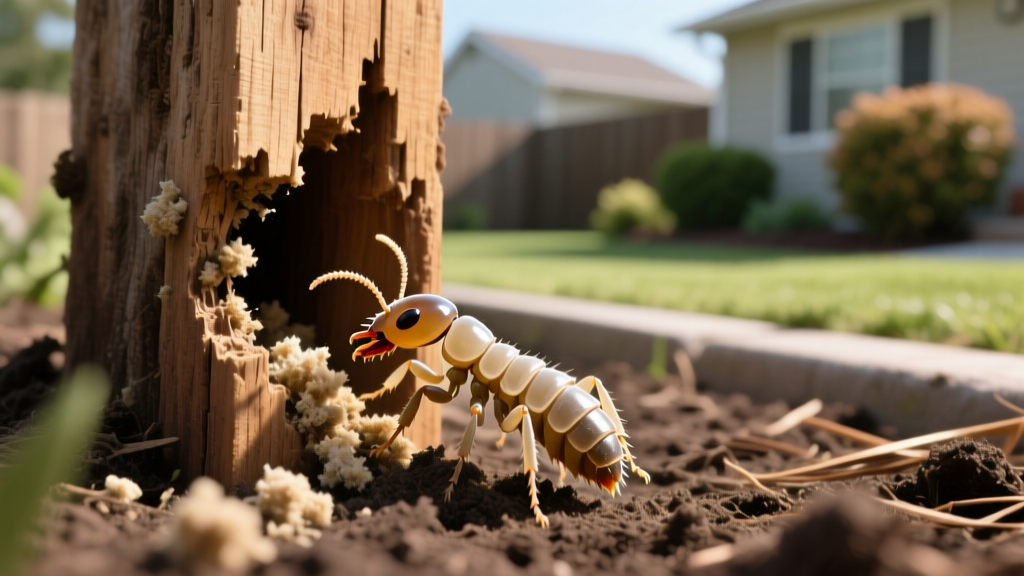
Termite Up Close: Yard Identification and Defense Guide
Termites cause over $5 billion in property damage annually in the United States, and the battle against them is won or lost in the yard. Before these wood-destroying insects compromise your home's structural integrity, they establish massive subterranean colonies in your soil, feeding on landscape timbers, tree stumps, and root systems. Examining a termite up close is the most critical skill a homeowner can develop for early detection. By understanding their morphology, caste systems, and micro-environmental preferences, you can implement targeted yard defense protocols that stop the colony before it reaches your foundation.
The Anatomy of a Yard Termite: What You See Up Close
When you unearth a termite gallery in your yard or spot an insect near your mulch beds, identifying its specific caste tells you exactly how mature the colony is and what its current objectives are. A colony typically contains three distinct castes, each with unique up-close physical characteristics.
| Caste | Size (Up Close) | Coloration | Key Morphological Features | Colony Implication |
|---|---|---|---|---|
| Workers | 1/8 inch | Creamy white, translucent | Soft-bodied, no wings, distinct chewing mouthparts visible under magnification. | Active foraging; indicates the colony is actively feeding on yard wood/cellulose. |
| Soldiers | 1/4 inch | Pale body, yellowish-brown head | Massively enlarged, armored heads with dark, scissor-like mandibles. | Colony defense; usually found near the outer edges of mud tubes or bait stations. |
| Swarmers (Alates) | 1/2 inch (with wings) | Dark brown to black | Two pairs of equal-length, translucent wings that extend far past the abdomen. | Reproductive maturity; finding these means the colony is at least 3 to 5 years old. |
⚠️ Critical ID Alert: Termite vs. Ant Up Close
Homeowners frequently mistake swarming termites for flying ants. Look closely at three features: 1. Antennae: Termites have straight, bead-like antennae; ants have distinctly elbowed (bent) antennae. 2. Waist: Termites have a broad, uniform thorax; ants have a sharply pinched waist. 3. Wings: Termite wings are identical in size and shape; ant front wings are noticeably longer than their hind wings.
Subterranean Clues: Reading the Soil and Wood
Subterranean termites require constant contact with soil moisture. When inspecting your yard, you are rarely looking for the insects themselves, but rather the architectural structures they build to maintain humidity while foraging above ground.
Mud Tube Architecture
Termites construct shelter tubes out of soil, saliva, and feces. Up close, these tubes range from 1/4 inch to 1 inch in diameter.
- Working Tubes: Thick, heavily trafficked highways connecting the soil to wood sources. If you break one open and see creamy white workers swarming to repair it within hours, the colony is highly active.
- Exploratory Tubes: Thinner, fragile, and often branching out blindly across foundation walls or landscape timbers. These indicate scouts are searching for new food sources.
- Drop Tubes: Suspended from wooden joists or deck beams down to the soil, allowing termites to transport food back to the main subterranean nest.
Gallery Patterns in Yard Wood
When you split open a rotting landscape timber or tree stump, termite damage looks distinctly different from water rot or carpenter ant damage. Termites eat along the grain, creating a honeycomb pattern. Because they pack their galleries with a mixture of soil and feces to maintain moisture, infested wood up close will look muddy and feel gritty, unlike the clean, sawdust-filled galleries of carpenter ants.
Yard Defense Protocols: Stopping the Colony Perimeter
Defending your yard requires disrupting the foraging paths before termites reach your home's sill plate. According to the Environmental Protection Agency (EPA), a combination of moisture management and targeted chemical or bait barriers provides the most reliable defense.
Strategy 1: Liquid Trenching (Non-Repellent Transfer)
Liquid termiticides create an invisible, continuous chemical barrier in the soil. Modern non-repellent active ingredients, like Fipronil (found in Termidor SC at a 9.1% concentration), are undetectable to termites. When foragers pass through the treated soil, they pick up a lethal dose and transfer it to the rest of the colony through grooming and trophallaxis (food sharing).
- Trenching Dimensions: Dig a continuous trench 6 inches wide and 6 inches deep directly against the foundation, as well as around detached structures like sheds or heavy landscape timber borders.
- Application Rate: Apply 4 gallons of diluted solution per 10 linear feet of trench. For a standard 150-foot perimeter, you will need approximately 60 gallons of finished solution.
- Cost Expectation: DIY material costs for a high-grade Fipronil concentrate range from $150 to $250, compared to $1,200+ for professional liquid applications.
Strategy 2: In-Ground Bait Stations (Chitin Inhibition)
Bait systems utilize slow-acting insect growth regulators (IGRs) like Novaluron, which is the active ingredient in Trelona HD and Advance Termite Bait stations. Novaluron inhibits chitin synthesis, preventing termites from molting. Because workers molt periodically, the colony slowly starves and collapses.
- Placement: Install stations every 10 feet around the perimeter of the home and near high-risk yard features (woodpiles, AC drip lines, tree stumps).
- Inspection Cadence: Check the wooden monitoring bases every 90 days. Once active feeding is confirmed up close inside the station, replace the monitor with the Novaluron bait cartridge.
- Cost Expectation: Expect to pay $15 to $25 per station for DIY kits. A 20-station perimeter system costs roughly $300 to $500 upfront.
Micro-Environment Management: Mulch and Moisture
Termites are highly sensitive to desiccation. Altering the yard's micro-environment makes it inhospitable for colony expansion. Research from NC State Extension emphasizes that cultural controls are just as vital as chemical barriers.
💡 The 6-Inch Mulch Rule
Never allow mulch to touch your home's siding or brick veneer. Maintain a strict 6-inch gap between the mulch line and the foundation. This exposes the soil to UV light and drying winds, forcing termites to build visible mud tubes across the gap if they attempt to breach the perimeter, making early detection significantly easier.
Mulch Selection: While no mulch is 100% termite-proof, avoid pine bark and shredded hardwood, which are highly palatable to termites. Opt for cedar or cypress heartwood mulch. These contain natural resins and compounds like thujone that act as mild repellents and degrade much slower, reducing the overall cellulose load in your yard.
Decision Matrix: DIY Yard Treatment vs. Professional Intervention
Not all yard discoveries require a professional exterminator, but misjudging the threat level can lead to catastrophic structural damage. Use this matrix to determine your next steps when you find termite evidence up close.
| Yard Evidence Found | Proximity to Home | Recommended Action | Estimated Cost |
|---|---|---|---|
| Discarded swarmer wings on patio | Anywhere in yard | Pro Inspection. Swarmers indicate a mature, hidden colony. DIY is too risky. | $75 - $150 (Inspection fee) |
| Active workers in isolated tree stump | > 30 feet from foundation | DIY Removal. Remove stump, treat soil with localized Fipronil drench. | $40 - $60 (Materials) |
| Mud tubes on fence post or shed | 10 - 30 feet from foundation | DIY Baiting. Install Trelona HD stations around the structure and home perimeter. | $200 - $400 (Bait kit) |
| Active mud tubes on home foundation | 0 feet (Touching home) | Pro Treatment. The colony has already bridged the gap. Immediate professional trenching or Sentricon installation required. | $1,500 - $3,000+ |
Inspecting a termite up close and understanding its role within the colony transforms yard maintenance from a guessing game into a precise, scientific defense strategy. By combining rigorous visual inspections with targeted chemical barriers and strict moisture management, you can protect your property's perimeter and ensure that the soil in your yard remains a barrier, rather than a breeding ground.

