
Pest Control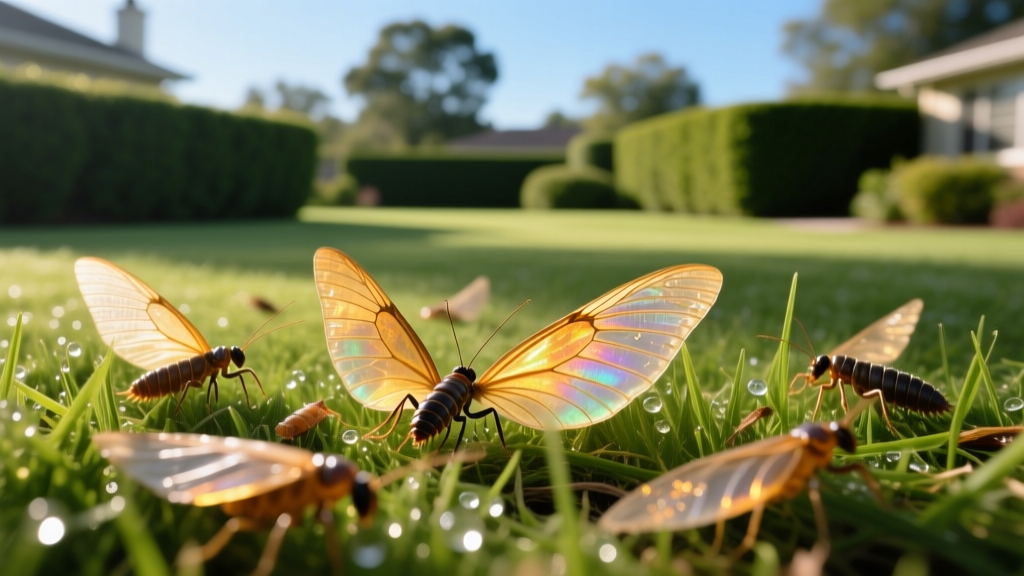
Termite Wing Identification: What Discarded Wings Mean for Your Yard
Spotting a translucent, milky-white wing on your patio, windowsill, or garden mulch is a definitive biological marker of a mature termite colony. When reproductive termites (alates) emerge for their nuptial flights, they shed their wings shortly after landing. For homeowners focused on insect and rodent yard defense, a discarded termite wing is not just debris; it is an urgent perimeter alert. Understanding the morphology of these wings, distinguishing them from other yard insects, and executing targeted defense protocols are critical to preventing structural damage.
The Anatomy of a Termite Wing: Why Swarmers Shed Them
Subterranean and drywood termite colonies produce winged reproductive members, known as swarmers or alates, once the colony reaches a certain size and maturity—typically between three to five years old. These alates emerge during specific environmental triggers, usually on warm, humid afternoons following a heavy rainstorm.
Unlike other insects that use their wings for sustained foraging, termite swarmers are notoriously weak fliers. Their sole biological objective is to mate and establish a new colony. Once they land, the wings become a hindrance for burrowing into soil or wood. The base of a termite wing features a natural fracture line, called the suture. The swarmer intentionally flexes its body to snap the wings off at this joint, leaving behind pairs of identical, uniform wings. According to entomologists at the University of Kentucky, finding piles of these discarded wings near foundation walls or yard lights is often the only visible evidence of an active subterranean termite swarm, as the insects themselves quickly seek cover and are rarely seen.
Termite Wing vs. Carpenter Ant Wing: The Backyard ID Matrix
Homeowners frequently mistake discarded carpenter ant wings for termite wings. Both insects swarm in the spring, and both shed their wings after mating. However, their morphological differences dictate entirely different yard defense strategies. Carpenter ants excavate wood to build nests but do not consume it, whereas termites consume cellulose, posing a severe threat to structural integrity.
| Feature | Termite Wing | Carpenter Ant Wing |
|---|---|---|
| Length Symmetry | Front and hind wings are exactly the same length. | Front wings are noticeably longer than hind wings. |
| Color & Opacity | Milky, opaque, or translucent white. | Clear, transparent, with a slight brownish tint. |
| Venation | Few visible veins; appears smooth and uniform. | Highly visible, complex network of dark veins. |
| Shedding Pattern | Found in large, scattered piles near light sources. | Often found singly or in small clusters near woodpiles. |
| Size | Typically 3/8 to 1/2 inch long. | Typically 1/2 to 3/4 inch long. |
What Finding Discarded Wings Means for Your Yard's Perimeter
Because termite swarmers are weak fliers, they rarely travel more than 100 yards from their parent colony, and often much less if wind conditions are poor. If you find a cluster of termite wings on your back patio or near your garden shed, the parent colony is almost certainly located within your property lines.
⚠️ Perimeter Warning: Do not assume the colony is safely outside in the yard. Swarmers are highly attracted to light and often emerge from hidden mud tubes directly beneath slab foundations, crawl spaces, or interior drywall. A pile of wings on an interior windowsill indicates an active infestation inside the home, requiring immediate professional inspection.
For yard defense, the presence of wings mandates an immediate moisture and cellulose audit. Subterranean termites require constant contact with soil moisture. Areas in your yard with poor drainage, leaking irrigation heads, or wood-to-soil contact are prime satellite colony locations. The Environmental Protection Agency (EPA) emphasizes that altering the moisture profile of your yard is the most effective non-chemical deterrent against termite establishment.
Immediate Yard Defense Protocols When Wings Are Spotted
Once you have positively identified a termite wing, implement the following targeted defense protocols to disrupt foraging and prevent new colony establishment.
1. Perimeter Trenching with Liquid Termiticides
Creating a continuous chemical barrier in the soil around your home’s foundation and detached yard structures (like sheds or pergolas) is the gold standard for DIY yard defense. The most effective non-repellent active ingredient available to consumers is Fipronil (9.1% concentration), commonly sold under the brand name Termidor SC.
- Dig the Trench: Use a trenching shovel to dig a continuous trench 6 inches wide and 6 inches deep directly against the foundation.
- Calculate Volume: The standard application rate is 4 gallons of diluted solution per 10 linear feet of trench.
- Mix and Apply: Mix 0.8 fluid ounces of Termidor SC per gallon of water. Pour the solution into the trench, allowing it to soak deeply into the soil profile.
- Backfill: Shovel the excavated soil back into the trench, mixing it lightly with the treated soil to ensure a uniform barrier.
Note on Soil Types: If your yard has heavy clay soil, the termiticide will bind tightly and remain effective for up to 10 years. In sandy soils, the chemical may leach faster, requiring reapplication every 5 to 7 years.
2. In-Ground Bait Station Deployment
If trenching is impossible due to hardscaping, concrete patios, or dense root systems, deploy in-ground bait stations. Unlike liquid barriers that repel or kill on contact, bait stations utilize slow-acting chitin synthesis inhibitors (CSIs) like Noviflumuron (Sentricon) or Novaluron (Trelona). Foraging worker termites consume the bait and share it with the colony via trophallaxis, eventually causing the colony to collapse during its next molting cycle.
- Spacing: Install stations 10 to 20 feet apart around the entire perimeter of the structure.
- Placement: Position stations 2 to 4 feet away from the foundation, avoiding areas directly under roof drip lines where heavy water runoff can flood the bait matrix.
- Monitoring: Inspect the wooden monitoring bases every 30 to 60 days. Once termite feeding is confirmed, replace the wood base with the active CSI bait cartridge.
Cost Matrix: DIY Liquid vs. Professional Baiting
Deciding between a DIY liquid trench and hiring a professional for a commercial baiting system depends on your budget, yard layout, and willingness to perform manual labor.
| Defense Method | Material / Service Cost | Labor / Time Investment | Longevity & Maintenance |
|---|---|---|---|
| DIY Fipronil Trenching | $150 - $350 (Chemicals & tools) | 8 - 12 hours of heavy digging | 5 - 10 years; no routine maintenance |
| Pro Sentricon Baiting | $1,200 - $2,500 (Initial install) | 0 hours (Technician installed) | Lifetime; requires $300-$500 annual renewal |
| DIY Novaluron Baiting | $400 - $700 (Stations & bait) | 3 - 5 hours (Installation & checks) | Indefinite; requires $150-$250 annual bait refills |
Frequently Asked Questions About Termite Swarmers
Do termite wings mean my house is currently being eaten?
Not necessarily. Swarmers are reproductive termites, not the worker caste responsible for consuming wood. Finding wings indicates a mature colony is nearby and attempting to expand. However, according to NC State Extension, the presence of a mature colony within 100 yards of your home significantly elevates the risk of worker termites eventually locating your foundation.
Should I spray the swarmers with over-the-counter bug spray?
No. Spraying visible swarmers with contact insecticides like bifenthrin or permethrin only kills the reproductive caste, which does not impact the hidden worker colony causing structural damage. Furthermore, using repellent sprays on the soil can contaminate the area, making future professional baiting or non-repellent liquid treatments less effective.
Can I just sweep up the wings and ignore them if I don't see mud tubes?
Sweeping the wings is fine for cleanup, but ignoring the event is a critical error. Subterranean termites build mud tubes in hidden areas—inside cinder block voids, behind siding, or under thick garden mulch. The wings are the only visible proof that a colony has reached the reproductive stage. You must initiate a perimeter audit and consider deploying a chemical or bait barrier immediately.

