
Pest Control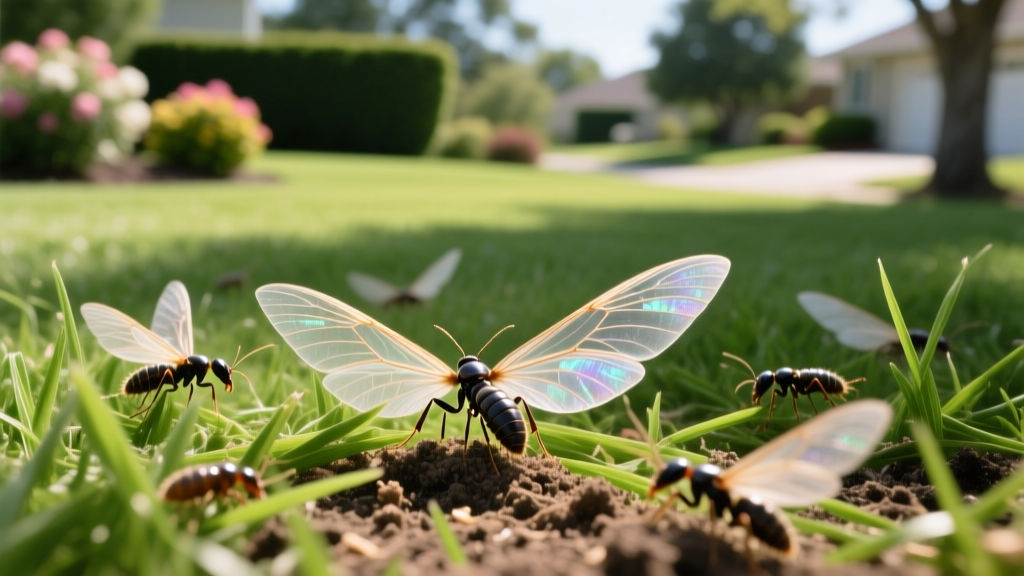
Termite Wings in the Yard: Identification and Defense Steps
The Biology of the Drop: Why Termite Wings Appear in Your Yard
Discovering a cluster of translucent, oval-shaped wings scattered across your patio, driveway, or garden beds is one of the most definitive warning signs of a mature termite colony expanding its territory. These discarded appendages belong to alates, the reproductive swarmers that leave their parent colony during a nuptial flight. Once they land, find a mate, and locate a suitable nesting site, they snap off their own wings—a process called dealation—because they will spend the rest of their lives underground or inside wood.
From a yard defense perspective, finding termite wings means a colony has reached reproductive maturity (typically 3 to 5 years old for subterranean species) and is actively attempting to establish satellite colonies near your home's foundation. The immediate goal is not just to sweep them up, but to map the drop zone and deploy perimeter defenses before the newly mated pairs can burrow into the soil.
Species Identification by Wing Morphology
Not all termite wings look the same. Identifying the species dictates your treatment timeline and chemical strategy.
- Eastern Subterranean (Reticulitermes flavipes): Wings are milky white or translucent, measuring roughly 1/4 to 3/8 inch long. They typically swarm between March and May, usually mid-morning after a heavy rain event.
- Formosan Subterranean (Coptotermes formosanus): Wings are significantly larger (up to 1/2 inch), smoky gray, and feature distinct, heavy venation. They swarm from May to July at dusk and are fiercely attracted to exterior porch lights and window glare.
- Drywood Termites (Incisitermes minor): Wings have a complex network of three to four heavy veins along the leading edge. Swarms usually occur in late summer or early fall, and wings are often found piled on windowsills or near attic vents rather than in the soil.
Visual Matrix: Termite Swarmers vs. Flying Ants
Homeowners frequently confuse swarming termites with swarming carpenter ants. Misidentification leads to wasted money on the wrong pesticides. Use this diagnostic matrix when examining the insects or their discarded wings near your foundation.
| Feature | Swarming Termites (Alates) | Swarming Carpenter Ants |
|---|---|---|
| Wing Size | Both pairs of wings are equal in length and shape. | Front wings are noticeably longer than hind wings. |
| Wing Color/Texture | Translucent, milky, or smoky gray; easily break off. | Clear or slightly tinted brown; remain attached firmly. |
| Antennae | Straight, bead-like (moniliform). | Elbowed (geniculate) with a distinct 90-degree bend. |
| Waist/Thorax | Broad, uniform width from head to abdomen. | Pinched, narrow pedicel (hourglass shape). |
Mapping the Drop Zone: The 20-Foot Perimeter Rule
According to research from the University of Florida IFAS Extension, subterranean termites forage and swarm in patterns heavily dictated by soil moisture and wood-to-soil contact points. When you find termite wings in the yard, you must map the concentration.
Critical Warning: If you find a heavy concentration of wings near your AC condenser drip line, a leaky exterior spigot, or a downspout discharge point, assume the soil in that exact location is highly attractive to foraging workers. Moisture is the primary catalyst for subterranean colony expansion.
Conduct a grid search extending 20 feet outward from your foundation. Note the exact locations of wing clusters. Pay special attention to:
- Fence posts set directly into the soil.
- Wooden retaining walls or railroad tie garden borders.
- Mulch beds piled higher than 3 inches against the siding.
- Stump grinds or buried construction debris left by builders.
Immediate Yard Defense Protocols
Once you have confirmed the presence of termite wings and mapped the moisture hotspots, you must establish a defensive perimeter. The U.S. Environmental Protection Agency (EPA) emphasizes that soil-applied liquid termiticides and monitored bait systems are the two primary methods for protecting structural perimeters.
Protocol A: Trenching and Liquid Barrier Application
For immediate, aggressive knockdown and long-term soil poisoning, a non-repellent liquid termiticide like Termidor SC (9.1% Fipronil) is the industry standard. Because it is non-repellent, foraging workers cannot detect it, allowing them to track the chemical back to the main colony and spread it via trophallaxis (food sharing).
- The Trench: Dig a continuous trench 6 inches wide and 6 inches deep directly against the foundation.
- The Dilution: Mix 0.8 fluid ounces of Termidor SC per gallon of water to achieve a 0.06% finished dilution.
- The Application Rate: Apply exactly 4 gallons of finished solution per 10 linear feet of trench.
- Drilling: If your home has a concrete slab patio or driveway abutting the house, you must drill 1/2-inch holes every 12 inches through the concrete and inject the solution into the sub-slab soil.
Protocol B: Advanced Bait Station Geometry
If trenching is impossible due to landscaping, hardscaping, or environmental concerns near a well, use an in-ground bait system like the Trelona ATBS (Active Termite Bait System) or Sentricon Always Active. These stations contain a chitin synthesis inhibitor (Noviflumuron) that prevents molting, eventually collapsing the colony.
- Placement: Install stations flush with the soil surface every 10 to 15 feet around the entire perimeter.
- Proximity: Place stations within 12 to 24 inches of the foundation wall.
- Monitoring: Inspect stations every 30 to 90 days. If termites are feeding, replace the monitoring base with the active bait cartridge.
Cost and Thresholds: Liquid vs. Baiting Systems
Choosing between a liquid barrier and a baiting system depends on your yard's topography, your budget, and the severity of the swarm. Below is a breakdown of average 2026 market pricing for a standard 2,500-square-foot home footprint.
| Defense Method | Initial Cost Range | Annual Maintenance | Speed of Control | Best Yard Scenario |
|---|---|---|---|---|
| Liquid Trench (Fipronil) | $1,400 - $2,200 | $150 - $250 (Warranty renewal) | Fast (Weeks) | Flat yards, bare soil perimeters, immediate threat. |
| Bait Stations (Noviflumuron) | $1,800 - $2,600 | $350 - $500 (Monitoring & Bait) | Slow (Months) | Complex landscaping, near wells/water, concrete patios. |
Expert Insight: 'Finding termite wings does not automatically mean your house is currently infested indoors. It means a mature colony is in the soil of your yard, and the alates are attempting to start new satellite colonies. Treating the soil perimeter immediately upon discovering wings is the most cost-effective way to prevent structural damage, which averages $3,000 to $8,000 to repair.'
Frequently Asked Questions
Do discarded termite wings mean the swarm is over?
Yes, the immediate flight is over. The swarmers that dropped the wings have either paired up and burrowed into the soil to start a new colony, or they have died from exposure and predation. However, a single mature colony can release tens of thousands of alates over multiple swarming events throughout a single season.
Can I just spray the wings and the soil with over-the-counter bug spray?
No. Hardware store repellent sprays (like those containing Bifenthrin or Permethrin) will only kill the surface insects and create a localized repellent barrier. This forces the subterranean colony to simply tunnel under the treated zone and enter your home through an untreated gap, often resulting in hidden, severe structural damage.
Should I remove mulch if I find termite wings in my garden beds?
You do not need to remove all mulch, but you must enforce the 12-inch rule. Keep all wood-based mulch at least 12 inches away from your foundation wall, and ensure the mulch layer is no thicker than 2 to 3 inches. Consider switching to inorganic ground covers like gravel or rubber mulch in the critical perimeter zone.

