
Pest Control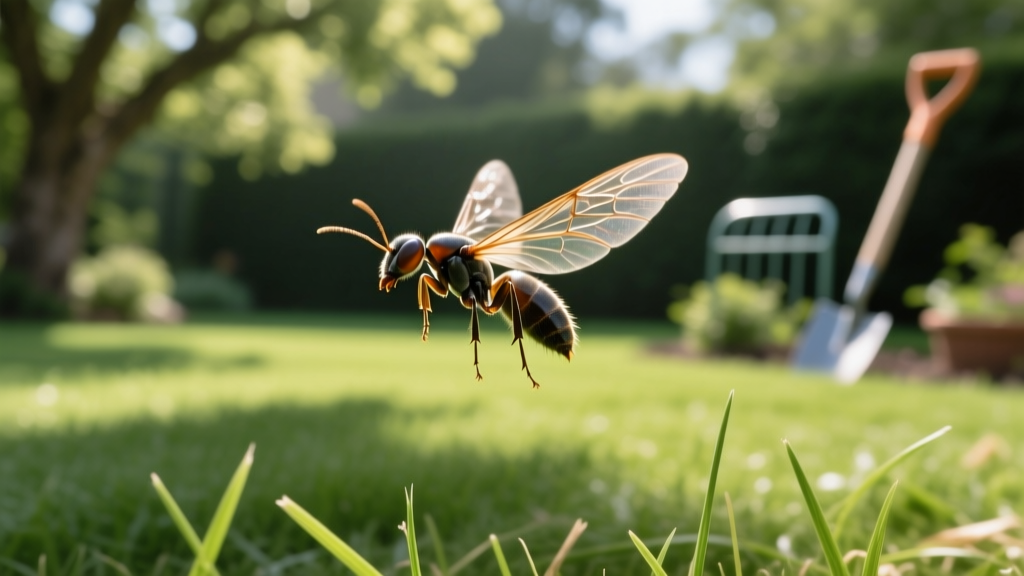
Found a Termite with Wings? Yard Defense & Treatment Guide
Discovering a termite with wings in your yard is a critical biological indicator. These winged reproductive termites, scientifically known as alates or swarmers, emerge from mature subterranean colonies to mate and establish new nests. While the swarmers themselves do not chew wood, their presence confirms that a mature, wood-destroying colony is actively foraging within a 100-foot radius of your property. Effective yard defense requires shifting focus from the visible swarmers to the hidden worker caste beneath the soil.
Identifying the Threat: Termite Swarmers vs. Flying Ants
Homeowners frequently confuse winged termites with carpenter ants or standard flying ants during spring nuptial flights. Misidentification leads to incorrect treatment protocols. Termites belong to the order Blattodea, while ants are Hymenoptera, resulting in distinct morphological differences visible to the naked eye.
| Feature | Termite with Wings (Alate) | Flying Carpenter Ant |
|---|---|---|
| Wings | Two pairs of equal-length, translucent wings that extend far past the abdomen. | Two pairs of unequal-length wings; front wings are longer than hind wings, tinted brown. |
| Antennae | Straight, bead-like (moniliform) antennae. | Elbowed (geniculate) antennae with a distinct bend. |
| Waist | Broad, uniform waist (no constriction between thorax and abdomen). | Narrow, pinched waist (petiole) between thorax and abdomen. |
| Swarm Behavior | Weak flyers; often shed wings shortly after landing, leaving piles of discarded wings. | Strong, directed flight; do not shed wings after landing. |
According to the Environmental Protection Agency (EPA), finding piles of discarded, identical wings on window sills, patios, or near exterior foundation walls is the most reliable visual confirmation of a termite swarm.
The Swarming Calendar: When to Expect Winged Termites
Swarming is highly dependent on species, geography, and microclimate conditions. Swarmers typically emerge when soil temperatures reach 70°F at a depth of 2 inches, usually following a significant spring rain.
- Eastern Subterranean Termites (Reticulitermes flavipes): Swarm during daylight hours from late February through May.
- Formosan Subterranean Termites (Coptotermes formosanus): Swarm aggressively at dusk from May through June, often drawn to exterior porch lights.
- Drywood Termites (Incisitermes minor): Swarm in the late evening during late summer and early fall (August to November).
Yard Defense Protocol: Starving the Colony
Subterranean termites require constant contact with soil moisture to survive. Your primary yard defense strategy must focus on moisture eradication and eliminating wood-to-soil pathways. The North Carolina State Extension emphasizes that cultural yard modifications are mandatory before applying chemical barriers.
Mulch and Soil Grading Specifications
Wood mulch retains moisture and provides a hidden highway for foraging workers. If you use organic mulch in garden beds adjacent to the house, adhere to these strict parameters:
- The 6-Inch Rule: Maintain a minimum 6-inch vertical gap between the top of the mulch and the bottom edge of your exterior siding or brick weep holes.
- Depth Limit: Never exceed 2 inches of mulch depth near the foundation. Deep mulch traps soil moisture and shields shelter tubes from visual inspection.
- Material Selection: Switch to inorganic gravel, river rock, or cedar/cypress heartwood mulch, which contains natural resins (thujone) that deter termite foraging.
Moisture Eradication Tactics
Termites will bypass chemical barriers if a superior moisture source is available. Inspect your yard for the following failure points:
- Downspout Dumping: Extend all gutter downspouts a minimum of 4 feet away from the foundation using solid PVC or corrugated piping. Splash blocks are insufficient as they allow water to pool near the footer.
- AC Condensate Lines: Route air conditioning condensation drain lines into the yard or a dry well, never allowing them to drip directly against the foundation.
- Positive Grading: Ensure the soil slopes away from the foundation at a minimum grade of 6 inches of drop over the first 10 horizontal feet.
⚠️ CRITICAL WARNING: Firewood and Lumber Storage
Never stack firewood, lumber, or organic debris against the exterior of your home. Storing wood on soil directly against siding creates an unmonitored bridge over your soil treatment zone. Store firewood at least 20 feet from the house, elevated on metal racks or concrete blocks.
Chemical and Bait Perimeters: Securing the Yard Boundary
Once the yard environment is corrected, establishing a perimeter defense is necessary to intercept foraging workers before they reach the structure. Modern termite control relies on two primary methodologies: non-repellent liquid termiticides and chitin synthesis inhibitor bait stations.
| Feature | Liquid Non-Repellent (e.g., Termidor SC) | Advanced Bait Stations (e.g., Trelona ATBS) |
|---|---|---|
| Active Ingredient | Fipronil (9.1%) | Novaluron (0.05%) |
| Mechanism of Action | Transfer effect: Termites pass through the treated soil, pick up the chemical, and transfer it to the colony via grooming. | Chitin synthesis inhibitor: Prevents termites from molting, eventually causing colony collapse. |
| Speed of Control | Fast (Colony elimination typically within 90 days). | Slower (Can take 6 to 12 months depending on foraging activity). |
| Yard Disruption | High: Requires trenching 6' wide by 6' deep around the entire perimeter. | Low: Stations are installed every 10 feet with minimal soil coring. |
| DIY Feasibility | Moderate: Requires heavy trenching and precise gallon-per-foot calculations. | Low: Professional monitoring and cartridge replacement usually required. |
DIY Liquid Trenching Specifications
If applying a Fipronil-based liquid termiticide yourself, precision is mandatory. A standard application requires 4 gallons of finished solution per 10 linear feet of foundation. For a home with 200 linear feet of perimeter, you must mix and apply 80 gallons of solution. Dig a trench 6 inches wide and 6 inches deep directly against the foundation. Pour the solution into the trench, then backfill the soil. Failure to trench to the proper depth leaves the bottom of the footer unprotected, allowing termites to tunnel underneath the chemical barrier.
Professional vs. DIY: Cost and Efficacy Breakdown
While DIY yard treatments can save money upfront, the University of Minnesota Extension notes that professional applications come with structural damage warranties that DIY products cannot provide.
- Professional Liquid Barrier: Costs between $8 and $12 per linear foot. For a 200-linear-foot home, expect to pay $1,600 to $2,400. This typically includes an annual inspection and a 10-year structural repair warranty.
- Professional Bait System: Initial installation ranges from $1,200 to $2,500, with mandatory annual monitoring fees of $250 to $400.
- DIY Liquid Application: Purchasing generic Fipronil 9.1% concentrate and trenching the yard yourself will cost between $300 and $500 in materials, plus 10 to 15 hours of intense physical labor. However, you assume 100% of the financial risk if the colony breaches the barrier and damages the home.
Frequently Asked Questions
Do flying termites mean my house is already infested?
Not necessarily. Swarmers are poor flyers and usually travel less than 100 yards from their parent colony. Seeing them in your yard indicates a mature colony is nearby—potentially in a neighbor's yard, a dead tree stump, or a wooden fence line. However, if you see swarmers emerging from the soil directly adjacent to your foundation, or emerging from interior baseboards, an active structural infestation is highly likely.
Should I spray the swarmers with insecticide?
Spraying visible swarmers with over-the-counter aerosol insecticides (like Raid) is a waste of chemicals. Swarmers die naturally within 24 hours if they fail to find a mate and suitable soil to start a colony. Furthermore, spraying repellent chemicals on the exterior soil can disrupt the transfer effect of professional non-repellent soil treatments, reducing their overall efficacy.
How long does a termite swarm last?
A single swarm event is brief, typically lasting only 30 to 45 minutes. However, a mature colony will release multiple swarms over a period of several weeks during the spring season, usually triggered by warm, humid weather immediately following rainfall.

