
Pest Control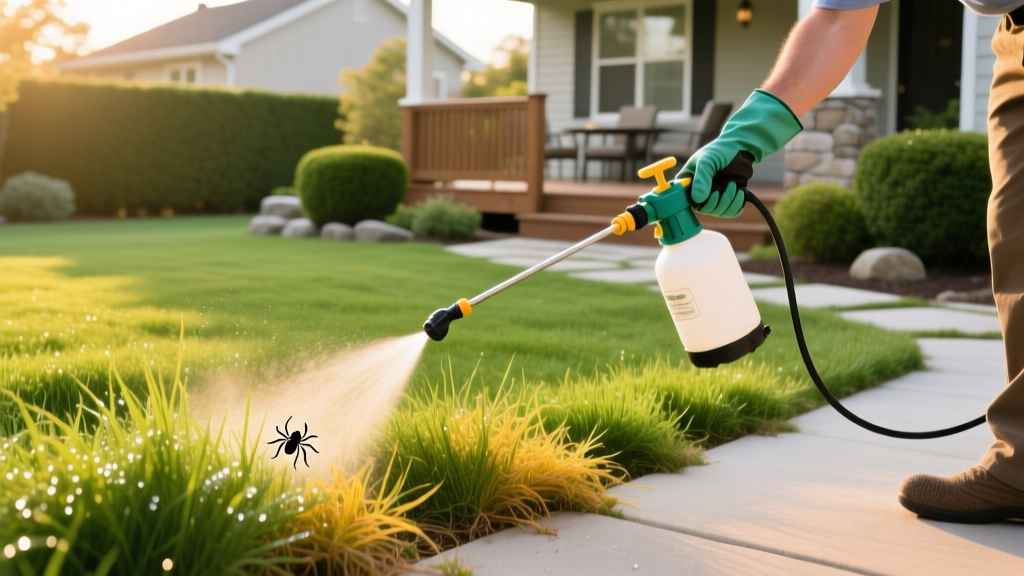
Proven Tick Grass Treatment Methods for Yard Defense
The Hidden Threat in Your Turfgrass
Ticks do not jump from trees or fly through the air; they quest. This means they climb to the tips of grass blades and shrubs, waiting to latch onto passing hosts. For homeowners, this biological reality makes targeted tick grass treatment the most critical component of any comprehensive yard defense strategy. According to the Centers for Disease Control and Prevention (CDC), over 80% of human tick encounters occur in residential yards, specifically in transitional zones where manicured turf meets wooded edges or tall grass.
Effective yard defense requires moving beyond generic pesticide broadcasting. It demands an integrated approach that addresses the microclimate of your turfgrass, the specific active ingredients required to penetrate the thatch layer, and the rodent vectors that continuously reintroduce ticks to your property.
Understanding Tick Microclimates in Turf
Ticks are highly susceptible to desiccation. They require ambient humidity levels above 80% to survive off a host. Your lawn's microclimate dictates tick survival rates. When grass is allowed to grow beyond 3.5 inches, the dense canopy traps moisture at the soil level, creating an ideal refuge for blacklegged ticks (Ixodes scapularis) and American dog ticks (Dermacentor variabilis).
Before applying any chemical or organic treatment, you must alter the physical environment. Mowing your lawn to a strict 2.5-inch height exposes the soil surface to ultraviolet light and wind, naturally desiccating tick eggs and nymphs. Furthermore, removing the thatch layer—a dense mat of dead organic matter between the soil and green grass—is non-negotiable. Ticks use thatch as a primary daytime shelter. If your thatch exceeds 0.5 inches in depth, core aeration and dethatching must precede your tick grass treatment protocol.
Tick Grass Treatment Comparison Matrix
Choosing the right active ingredient depends on your property's ecology, pet usage, and budget. Below is a technical comparison of the most effective treatments available for turfgrass application.
| Active Ingredient | Type | Residual Life | Cost per 1,000 sq ft | Best Use Case |
|---|---|---|---|---|
| Bifenthrin (e.g., Talstar P) | Synthetic Pyrethroid | 30–45 Days | $0.005 - $0.008 | High-infestation perimeter defense |
| Permethrin (e.g., Martin's 10%) | Synthetic Pyrethroid | 21–30 Days | $0.004 - $0.007 | Broad-spectrum insect & rodent defense |
| Metarhizium brunneum (Met52 EC) | Entomopathogenic Fungus | 14–21 Days | $0.030 - $0.045 | Organic lawns, pollinator-safe zones |
| Cedarwood & Garlic Oil Blend | Botanical Repellent | 7–14 Days | $0.020 - $0.035 | Low-infestation maintenance, pet-safe |
Expert Insight: Bifenthrin remains the gold standard for rapid knockdown and long residual control in turfgrass. However, it is highly toxic to aquatic life and bees during application. If your property borders a pond or features blooming clover in the turf, you must utilize Metarhizium brunneum, a naturally occurring soil fungus that infects and kills ticks without harming pollinators or aquatic ecosystems.
Integrating Rodent Defense: Breaking the Hitchhiker Cycle
A critical failure in most DIY tick control plans is ignoring the primary vector: the white-footed mouse. Ticks do not breed in your grass; they are dropped there by hosts. White-footed mice are the primary reservoir for Lyme disease and the main transport for tick larvae and nymphs. Treating the grass alone is a temporary fix if rodents continuously reseed your lawn with infected ticks.
The Tick Tube Protocol
To achieve true insect and rodent yard defense, deploy tick tubes alongside your grass treatment. Tick tubes are biodegradable cardboard cylinders filled with cotton treated with 7.4% permethrin. Mice gather this cotton for their nests. The permethrin transfers to the mouse's fur, killing any ticks that attempt to feed on the rodent before they can drop into your grass.
- Placement: Position tubes every 10 feet along stone walls, woodpiles, and the perimeter of your lawn.
- Timing: Deploy in early spring (April) to target nymphs, and again in mid-summer (July) to target larvae.
- Volume: A standard 1/2-acre suburban lot requires approximately 24 to 30 tick tubes per deployment cycle.
Precision Application Protocol for Turfgrass
Applying tick grass treatment is not the same as applying lawn fertilizer. Ticks hide deep in the thatch and at the base of the grass blade. A light misting will fail. Follow this exact protocol for maximum efficacy:
- Calibrate for Volume, Not Just Area: Set your hose-end or pump sprayer to deliver 1.5 to 2.0 gallons of finished solution per 1,000 square feet. This high water volume acts as a carrier, pushing the active ingredient past the grass canopy and down into the thatch layer where ticks reside.
- Target the Perimeter Buffer: According to research highlighted by URI TickEncounter, 85% of yard ticks are found within 3 yards of the lawn's edge. Concentrate 70% of your chemical application on this transitional perimeter, specifically where turf meets leaf litter, stonewalls, or dense brush.
- Establish a Hardscape Barrier: After spraying, lay down a 3-foot-wide barrier of coarse wood chips or gravel between your treated grass and adjacent wooded areas. Ticks physically struggle to crawl across dry, coarse mulch, creating a mechanical dead zone that complements your chemical treatment.
- Manage Reentry Times: For synthetic pyrethroids like bifenthrin, keep humans and pets off the treated grass until the spray has completely dried to the touch (typically 2 to 4 hours depending on humidity). Once dry, the chemical binds to the plant tissue and is virtually non-transferable.
⚠️ Pollinator Warning: Never apply synthetic tick treatments to blooming weeds within your turfgrass, such as white clover or dandelions. Mow the lawn and remove flower heads immediately prior to treatment to prevent foraging bees from contacting wet pesticides.
Common Tick Grass Treatment Failure Modes
If you have applied treatments but continue to find ticks on your clothing or pets, you are likely experiencing one of the following edge cases:
- Inadequate Thatch Penetration: If you applied less than 1 gallon per 1,000 sq ft, the spray likely evaporated on the grass blades and never reached the soil-level thatch where ticks quest. Increase your water carrier volume.
- Deer Intrusion: While mice carry nymphs, adult deer carry adult ticks. If deer are crossing your lawn nightly, no grass treatment will keep up with the biological load. You must install physical deer fencing (minimum 8 feet high) or apply deer repellents containing putrescent egg solids to the lawn perimeter.
- Alkaline Tank Water: Pyrethroids undergo alkaline hydrolysis (rapid breakdown) if mixed with water that has a pH above 7.5. If you are using well water for your sprayer, test the pH and add a water buffer/acidifier to bring the tank mix pH down to 5.5–6.0 before adding your bifenthrin or permethrin.
Frequently Asked Questions
How often should I apply tick grass treatment?
For synthetic treatments like bifenthrin, apply every 30 to 45 days during peak tick season (April through October). For organic fungal treatments like Met52, reapply every 14 to 21 days, as UV degradation and microbial competition reduce its residual lifespan.
Will watering my lawn wash away the tick treatment?
Once a synthetic pyrethroid has fully dried on the grass blade (usually 24 hours post-application), it is highly rainfast and will not wash away with standard irrigation. However, avoid watering the lawn for at least 24 hours after application to allow the chemical to bind to the plant cuticle.
Is cedar oil effective for severe tick infestations?
Cedar oil acts primarily as a contact killer and spatial repellent. While excellent for low-level maintenance and safe for immediate pet reentry, it lacks the residual activity required to break the life cycle in heavily infested properties bordering dense woodlands. Reserve botanical oils for mid-season touch-ups rather than primary spring knockdown treatments.

