
Pest Control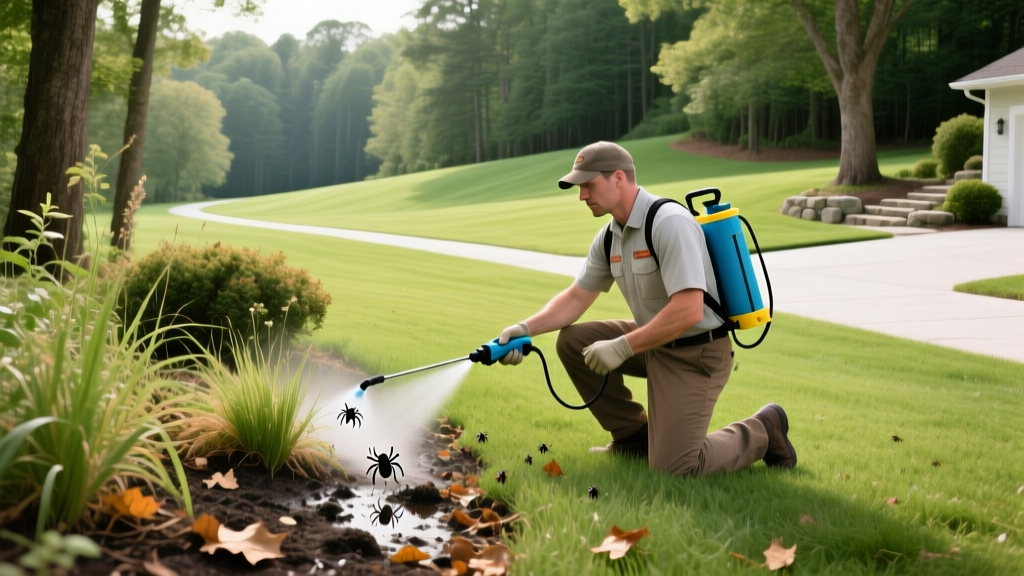
How to Get Rid of Ticks on Large Property: The Acreage Playbook
The Acreage Challenge: Why Suburban Tactics Fail
Figuring out how to get rid of ticks on large property layouts (1 to 10+ acres) requires abandoning the blanket-spray mentality used on quarter-acre suburban lawns. Treating five acres of mixed woodland, transitional brush, and manicured turf with broad-spectrum synthetic pyrethroids is not only financially ruinous—costing upwards of $500 per application—but it also decimates local pollinator populations and disrupts the ecological balance of your land.
Black-legged ticks (Ixodes scapularis) and Lone Star ticks (Amblyomma americanum) do not distribute evenly across large tracts of land. They require specific microclimates: high humidity, dense leaf litter, and shaded transition zones. By adopting a targeted, multi-zone integrated pest management (IPM) strategy, you can reduce tick populations by over 80% while treating only a fraction of your total acreage.
The 3-Zone Tick Defense Strategy
According to landscape entomology frameworks championed by the University of Rhode Island TickEncounter, large properties should be divided into three distinct management zones based on human usage and tick habitat suitability.
Zone 1: The Core Living Area (0-30 feet from structures)
This high-traffic zone includes patios, playsets, and primary lawns. Ticks rarely thrive here if the turf is properly maintained, but they will migrate inward from the edges. The goal in Zone 1 is absolute exclusion and biological safety. Avoid harsh synthetics here if children or pets frequent the grass. Instead, rely on physical barriers, rigorous mowing (keep grass at exactly 3 inches to allow sunlight to penetrate and dry the soil), and targeted organic botanical sprays like Essentria IC3 (rosemary and peppermint oil) applied every 14 days during peak spring and fall seasons.
Zone 2: The Transition Zone (30-100 feet from structures)
This is the most critical battleground. The transition zone includes garden beds, ornamental shrubs, and the edges of wooded areas where shade meets sunlight. This is where white-footed mice and deer—the primary vectors for tick transport—forage. Zone 2 requires aggressive intervention: deploying permethrin-treated tick tubes, installing physical mulch barriers, and applying targeted synthetic or fungal biopesticides to the understory foliage.
Zone 3: The Perimeter and Wild Edges (100+ feet)
Deep woods, unmapped brush, and distant property lines fall into Zone 3. Do not attempt to chemically treat this zone. It is ecologically impossible and financially wasteful. Instead, manage Zone 3 through macro-landscaping: clearing deadfall, removing invasive brush like Japanese barberry (which creates the exact humid microclimate ticks love), and establishing wide, mowed perimeter trails to create a natural desiccation barrier that ticks cannot cross.
Treatment Matrix: Chemical, Biological, and Physical Options
Selecting the right treatment depends on your zone, budget, and ecological priorities. Below is a comparative breakdown of the most effective acreage-scale treatments available in 2026.
| Treatment Type | Active Ingredient / Method | Est. Cost Per Acre | Best Application Zone | Reapplication Interval |
|---|---|---|---|---|
| Synthetic Pyrethroid | Bifenthrin 7.9% (e.g., Bifen IT) | $90 - $120 | Zone 2 (Tree lines, brush) | 21-30 Days |
| Botanical Contact Kill | Eugenol, Rosemary Oil (Essentria IC3) | $150 - $180 | Zone 1 (Lawns, play areas) | 10-14 Days |
| Fungal Biopesticide | Metarhizium brunneum (TickKillz) | $200 - $250 | Zone 1 & 2 (Organic estates) | 30-45 Days |
| Rodent-Targeted | Permethrin-treated cotton (Tick Tubes) | $120 - $150 (materials) | Zone 2 (Stonewalls, woodpiles) | Twice yearly (Spring/Fall) |
| Physical Exclusion | Cedar/Bark Mulch Barrier (3 ft wide) | $300 - $500 (initial install) | Zone 1/2 Boundary | Annual top-up |
Equipment Selection for Acreage Application
You cannot effectively treat a 3-acre property with a standard $30 plastic pump sprayer. The limiting factor in tick control is not the chemical; it is the droplet size and foliage penetration. Ticks reside on the underside of leaves and in the thatch layer. To achieve proper coverage on large properties, you must upgrade your application equipment.
- Backpack Mistblowers (The Gold Standard): Units like the Stihl SR 450 or Echo PB-8010 (retailing between $650 and $850) generate a high-velocity airstream that turns the liquid into a fine mist (50-100 microns). This mist penetrates deep into the canopy of shrubs and flips leaves to coat the underside where ticks harbor. A 4-gallon tank can cover up to 1.5 acres of targeted transition zones in a single fill.
- Tow-Behind Boom Sprayers: For open Zone 1 turf areas, a 15-gallon tow-behind sprayer pulled by an ATV or riding mower is highly efficient. Use flat-fan nozzles calibrated to deliver 1.5 gallons per 1,000 square feet to ensure the chemical reaches the soil-thatch interface.
- Granular Spreaders: While granular Bifenthrin is an option, it is generally inferior for tick control because ticks rarely drop to the bare soil; they quest on low vegetation. Stick to liquid mist applications for foliage.
The Tick Tube Protocol: Disrupting the Rodent Lifecycle
The Environmental Protection Agency (EPA) notes that targeting the host is often more effective than targeting the pest directly. Up to 90% of nymphal ticks (the most dangerous stage for Lyme disease transmission) contract the pathogen from white-footed mice. Tick tubes exploit this by turning the mice into pest-control agents.
Deployment Strategy:
- Purchase commercial tick tubes or construct your own using 1-inch PVC pipe cut into 4-inch lengths.
- Stuff the tubes with permethrin-treated cotton batting.
- Place tubes every 10 to 15 linear feet along stonewalls, woodpiles, and the bases of large trees in Zone 2.
- Mice will harvest the treated cotton for their nests. The permethrin binds to their fur, killing any larval ticks that attempt to feed on them, effectively breaking the reproductive cycle.
For a 3-acre property with a dense wooded perimeter, expect to deploy 150 to 200 tubes. The material cost is roughly $150, and they must be replaced in early April and late September to align with mouse nesting behaviors.
Warning: Common Failure Modes on Large Lots
- Ignoring Japanese Barberry: This invasive shrub creates a humid, shaded microclimate at ground level that acts as a tick incubator. Spraying chemicals without first mechanically removing or treating barberry stands will result in a 100% failure rate.
- Over-mowing Zone 1: Cutting grass below 2.5 inches stresses the turf, reduces soil moisture retention, and ironically forces ticks to quest higher on the remaining grass blades to find a host. Maintain a strict 3-inch cutting height.
- Applying Synthetics Before Rain: Bifenthrin requires 24 hours to bind to the plant cuticle. Applying a $120 chemical load right before a heavy spring washout is a common and expensive mistake.
Seasonal Monitoring and Maintenance Schedule
Tick management is not a one-and-done event; it is a seasonal discipline. Nymphal ticks peak in May and June, while adults peak in October and November. Your playbook must adapt to these biological clocks.
- March: Clear winter leaf litter from Zone 1 and Zone 2 boundaries. Install or refresh the 3-foot wide woodchip or gravel barrier between the lawn and the woods. Deploy spring tick tubes.
- April - May: Begin bi-weekly botanical sprays in Zone 1. Apply the first round of synthetic or fungal treatments to the Zone 2 understory using a backpack mistblower.
- June - August: Maintain mowing schedules. Monitor tick populations using the 'drag cloth' method (pulling a 1-yard square of white corduroy over transition zones to count questing ticks). If drag counts exceed 3 ticks per 100 meters, increase Zone 2 spray frequency.
- September: Deploy fall tick tubes. Apply a final heavy-duty synthetic barrier treatment to Zone 2 to target the emerging adult tick population before winter dormancy.
By compartmentalizing your land and applying the right treatment to the right zone, you can reclaim your acreage. The goal is not total eradication—an ecological impossibility on large rural tracts—but the creation of safe, defensible zones where your family and pets can thrive without the constant threat of tick-borne illness.

