
Pest Control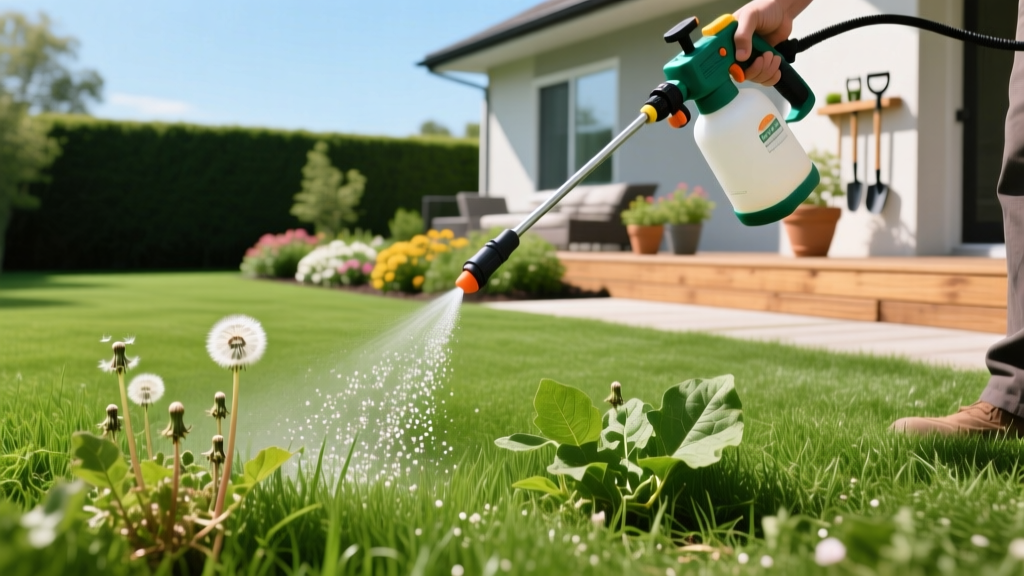
How to Time a Selective Herbicide for Grass With Your Fertilizer Schedule
The Nutrient Competition: Why Weeds Starve Your Soil
A comprehensive lawn care strategy requires viewing weed control and soil nutrition as a single, interconnected system. Weeds are not merely aesthetic nuisances; they are aggressive biological competitors that hijack the nitrogen, phosphorus, and potassium (N-P-K) you apply to your soil. Broadleaf weeds like white clover and dandelions possess deep taproots and rapid cellular division rates that allow them to outcompete turfgrass for water-soluble nutrients. Applying a selective herbicide for grass clears this biological competition, ensuring that your expensive fertilizer applications are absorbed exclusively by your desired turf species. However, the timing of these two applications is critical. Mismanaging the interval between herbicide and fertilizer applications can result in herbicide failure, turf phytotoxicity, and wasted nutrients.
Selective Herbicide Active Ingredients and Soil Interactions
Not all selective herbicides interact with soil nutrients and fertilizer schedules in the same way. Understanding the active ingredients in your herbicide dictates how you must structure your fertilization timeline. According to University of Minnesota Extension, selecting the correct chemical based on your specific weed pressure and grass type is the first step in preventing turf damage.
| Active Ingredient | Target Weeds | Soil Half-Life | Fertilizer Interaction Profile |
|---|---|---|---|
| 2,4-D + Dicamba + MCPP (3-Way Amine) | Broadleaf (Dandelion, Clover, Plantain) | 7-14 days | High sensitivity to fast-release nitrogen; requires a 7-day buffer. |
| Quinclorac (Drive XLR8) | Grassy (Crabgrass) & Broadleaf | 30+ days | Low interaction; can be applied near fertilization, but requires methylated seed oil (MSO) surfactant. |
| Mesotrione (Tenacity) | Broadleaf & Grassy (Nimblewill, Chickweed) | 15-20 days | Safe to mix directly with starter fertilizers (high phosphorus) during overseeding. |
| Fluazifop-P-butyl (Fusilade II) | Grassy (Bermudagrass in Fescue) | 7-10 days | Moderate sensitivity; avoid application during high-nitrogen growth flushes. |
The Biochemical Clash: Why Fast-Release Nitrogen Defeats Systemic Herbicides
The most common failure mode in DIY lawn care is applying a systemic selective herbicide for grass simultaneously with a fast-release nitrogen fertilizer (such as urea or ammonium sulfate). To understand why this fails, you must understand plant physiology.
Systemic herbicides like 2,4-D and Dicamba are absorbed through the leaf cuticle and must translocate through the plant's phloem to reach and destroy the root system. When you apply high levels of fast-release nitrogen, the weed enters a state of rapid cellular elongation and lush top-growth. This rapid growth dilutes the herbicide concentration within the phloem tissue. The result is 'top-kill': the weed's leaves curl, necrotize, and die, but the root system survives because the lethal dose of herbicide never reached it. Within three weeks, the weed regenerates from the crown. To prevent this, you must starve the weed of nitrogen for at least 5 to 7 days before and after applying a systemic selective herbicide.
⚠️ Warning: The 'Weed and Feed' Dilemma
Granular 'Weed and Feed' products combine fertilizer and herbicide in one bag, but they require contradictory environmental conditions to work. The herbicide granules must stick to wet weed leaves to be absorbed, while the fertilizer granules need to be watered into dry soil to reach the roots without burning the grass. For precision turf management, always separate your liquid herbicide and granular fertilizer applications.
Step-by-Step Integration Protocol
To maximize both weed eradication and soil nutrient uptake, follow this 14-day integration protocol. This schedule assumes you are using a standard 3-way selective herbicide for grass (e.g., Trimec or SpeedZone) on cool-season turf like Kentucky Bluegrass or Tall Fescue.
- Day 1: Mow and Assess. Mow the lawn to 2.5 inches. Do not bag the clippings if the weeds have not yet gone to seed. Ensure the soil is slightly moist but the grass blades are completely dry.
- Day 2: Apply Liquid Selective Herbicide. Mix your 3-way herbicide at the label rate (typically 1.5 fl oz per 1,000 sq ft). Add a non-ionic surfactant (0.25% v/v) to break the leaf surface tension. Spray evenly using a battery-powered backpack sprayer.
- Days 3-6: The Translocation Window. Do not mow, water heavily, or apply any soil amendments. Allow the herbicide 96 hours to translocate from the weed leaves down to the root crown. You will notice the weeds twisting and cupping—this is the auxin-mimic herbicide working.
- Day 7: Core Aeration (Optional but Recommended). If your soil is compacted, core aerate now. This relieves soil compaction and prepares the soil profile for deep nutrient penetration.
- Day 8: Apply Granular Fertilizer. Apply a slow-release, polymer-coated nitrogen fertilizer (e.g., 24-0-10 with 50% slow-release N). The slow-release mechanism prevents the sudden nitrogen spike that would otherwise revive stressed weeds.
- Day 9: Water Deeply. Apply 0.5 inches of irrigation to dissolve the fertilizer granules and carry the nutrients into the root zone.
Troubleshooting Phytotoxicity and Failure Modes
Even with precise timing, environmental variables can cause herbicide and fertilizer interactions to damage your turf. The NC State Extension notes that temperature and soil pH heavily influence chemical efficacy and turf safety.
- Symptom: Turfgrass Yellowing (Chlorosis) after Application.
Cause: Applying a selective herbicide containing Quinclorac or Sulfentrazone when soil pH is above 7.5. High pH increases the bioavailability of certain herbicide molecules, causing them to act non-selectively and damage the grass.
Fix: Test soil pH before application. If pH is high, switch to a pH-neutral herbicide like Mesotrione or apply elemental sulfur to lower soil pH over the preceding season. - Symptom: Weed Leaves Turn Brown but Roots Survive.
Cause: Herbicide was applied during a drought-stress period, or mixed with a liquid nitrogen fertilizer (like UAN 28%). The weed closed its stomata to conserve water, blocking herbicide uptake, or the nitrogen caused rapid growth dilution.
Fix: Irrigate the lawn deeply 24 hours before application to ensure weeds are actively growing and stomata are open. Never mix liquid fertilizer and liquid herbicide in the same tank. - Symptom: 'Pac-Man' Leaf Cupping on Desired Grass.
Cause: Herbicide drift or volatilization. Dicamba is notorious for volatilizing (turning into a gas) when temperatures exceed 85°F, drifting onto and damaging nearby desirable plants and turf.
Fix: Restrict selective herbicide applications to early morning when temperatures are below 80°F and wind speeds are under 5 mph.
Frequently Asked Questions
Can I apply a pre-emergent herbicide and fertilizer at the same time?
Yes. Unlike post-emergent selective herbicides for grass, pre-emergents (like Prodiamine or Dithiopyr) work by creating a chemical barrier in the top inch of soil to stop weed seeds from germinating. They do not rely on leaf absorption. You can safely apply a pre-emergent and a spring starter fertilizer simultaneously, provided the fertilizer does not contain high levels of fast-release nitrogen that would push weed seeds through the barrier.
How much does professional-grade selective herbicide cost compared to store-bought?
Consumer-grade ready-to-spray hoses cost roughly $25-$35 and cover only 5,000 square feet, yielding a cost of $5.00 to $7.00 per 1,000 sq ft. Professional concentrates like Trimec Classic (3-way amine) cost about $45 per gallon. At a dilution rate of 1.5 oz per 1,000 sq ft, a single gallon covers roughly 85,000 square feet, dropping the cost to approximately $0.53 per 1,000 sq ft. The initial investment in a backpack sprayer and concentrate pays for itself in a single season.
Does a selective herbicide harm the soil microbiome?
Modern selective herbicides have relatively short soil half-lives and are broken down by soil microbes. However, repeatedly applying high doses of synthetic chemicals can temporarily suppress mycorrhizal fungi. To mitigate this, integrate liquid kelp extracts or humic acid into your fertilizer schedule 14 days after your herbicide application to stimulate microbial recovery and improve soil cation exchange capacity (CEC).

