
Pest Control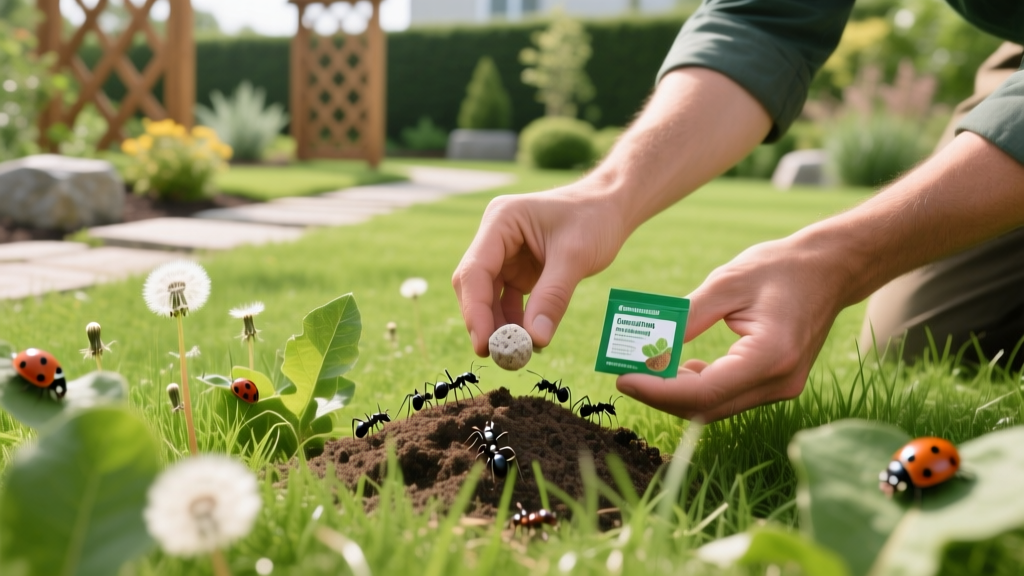
How to Treat Ants Naturally: Organic Lawn & Garden Guide
Managing ant populations in outdoor spaces requires a strategic shift from reactive surface spraying to proactive colony elimination. While ants provide minor ecological benefits like soil aeration, unchecked colonies farm aphids, protect scale insects, and undermine turfgrass root systems. For homeowners prioritizing soil microbiome health and pet safety, understanding how to treat ants naturally is essential. Organic pest management relies on disrupting the colony's life cycle using botanical neurotoxins, desiccant minerals, and biological predators rather than broad-spectrum synthetic pyrethroids that devastate beneficial soil nematodes and earthworms.
The Colony Hierarchy: Why Surface Sprays Fail
The most common mistake in organic ant control is targeting foraging workers. A mature pavement ant (Tetramorium caespitum) or fire ant (Solenopsis invicta) colony contains anywhere from 10,000 to 500,000 workers. Spraying a botanical repellent like peppermint oil on a visible trail only kills the 5% of the colony currently foraging. The remaining 95%, including the brood and the queen, simply seal off that tunnel and open a new one.
The Queen Factor: A single fire ant queen can lay up to 1,500 eggs per day. To successfully eradicate a colony using natural methods, the active ingredient must be carried back to the nest by foragers and fed to the queen. Contact killers will never achieve this.
Step-by-Step Protocol for Natural Eradication
Effective organic treatment requires a two-phase approach: disrupting pheromone trails and deploying slow-acting organic baits.
Phase 1: Trail Disruption and Deterrence
Before laying baits, you must erase the chemical highways ants use to navigate. Mix a 50/50 solution of white vinegar and water in a pump sprayer. Apply this directly to ant trails, patio cracks, and foundation perimeters. The acetic acid neutralizes the pheromone trails, forcing scouts to wander and eventually discover your organic baits. Do not use essential oils during this phase, as strong botanical odors can mask the bait attractants.
Phase 2: Deploying Slow-Acting Organic Baits
Once trails are disrupted, place OMRI-listed (Organic Materials Review Institute) baits near the perimeter of the mounds or along foundation lines. Spinosad-based baits are the gold standard for organic lawn care. Spinosad is a natural substance made from soil-dwelling bacteria (Saccharopolyspora spinosa) that acts as a slow-acting neurotoxin in insects but is highly safe for mammals and birds once dried.
Organic Ant Control Matrix: Matching Solution to Species
Different ant species exhibit distinct foraging behaviors and nesting preferences. Selecting the correct organic treatment requires accurate species identification.
| Ant Species | Nesting Location | Preferred Organic Treatment | Application Timing |
|---|---|---|---|
| Fire Ants | Deep soil mounds, full sun | Spinosad broadcast bait + Nematodes | Early spring & late fall |
| Carpenter Ants | Moist, decaying wood, tree stumps | Borate-based sugar baits + DE dust | Dusk (peak foraging) |
| Pavement Ants | Under concrete, driveway cracks | Liquid borax/sugar stations | Mid-spring |
| Field Ants | Shallow soil mounds, turfgrass | Beneficial Nematodes (S. carpocapsae) | When soil reaches 60°F |
Top Mineral and Biological Treatments (2026 Efficacy Data)
When formulating an organic pest control strategy, rely on these proven, non-synthetic interventions. Pricing reflects average 2026 retail costs for residential quantities.
- Food-Grade Diatomaceous Earth (DE): Composed of fossilized diatoms, DE acts as a microscopic desiccant, slicing the waxy exoskeleton of ants and causing them to dehydrate. Cost: ~$14 for a 4 lb bag (e.g., Harris brand). Failure Mode: DE is completely ineffective when wet. If soil moisture exceeds 60% or after a rain event, the silica particles clump and lose their abrasive properties. Reapply only to dry, sheltered areas like under deck lattices or inside wall voids.
- Spinosad Granular Baits: Products like Monterey Garden Insect Spray or organic bait stations utilize naturally derived Spinosad. Cost: ~$24 for 16 oz. Advantage: Foragers consume the bait and share it via trophallaxis (regurgitation feeding), effectively poisoning the queen within 48 to 72 hours without triggering colony alarm.
- Beneficial Nematodes (Steinernema carpocapsae): These microscopic, unsegmented worms actively seek out ant pupae and larvae in the soil, entering their bodies and releasing lethal bacteria (Xenorhabdus). Cost: ~$38 for 10 million nematodes (covers ~2,000 sq ft). Application Rule: Must be applied at dusk to prevent UV degradation, and soil temperature must be strictly between 55°F and 85°F for the nematodes to remain active.
Warning: The Essential Oil 'Budding' Trap
Applying high concentrations of clove, cinnamon, or peppermint oil directly to a mound will not kill the colony; it will only irritate them. According to entomologists, severe stress from repellents triggers 'budding'—a survival mechanism where the colony splits into multiple satellite nests with new queens. This turns one manageable mound into four distributed colonies. Use essential oils only as perimeter deterrents, never as direct mound treatments.
Applying high concentrations of clove, cinnamon, or peppermint oil directly to a mound will not kill the colony; it will only irritate them. According to entomologists, severe stress from repellents triggers 'budding'—a survival mechanism where the colony splits into multiple satellite nests with new queens. This turns one manageable mound into four distributed colonies. Use essential oils only as perimeter deterrents, never as direct mound treatments.
Cultural Controls: Starving the Colony
Chemical and biological controls will fail if the environment continues to provide unlimited resources. Ants are primarily drawn to lawns for two reasons: honeydew-producing insects and excessive thatch.
1. Eradicate Aphids and Scale: Ants act as ranchers, protecting aphids and scale insects from ladybugs in exchange for the sugary honeydew they excrete. If you have a persistent ant problem in your ornamental beds, inspect the underside of leaves for aphids. Treat the plants with insecticidal soap or horticultural oil to cut off the ants' food supply.
2. Dethatch the Lawn: A thatch layer thicker than 0.5 inches provides ideal, temperature-regulated nesting habitat for field ants and protects them from surface-applied biological controls like nematodes. Core aerate and power rake your turf annually in the fall to reduce thatch accumulation and expose ant colonies to natural predators and environmental stressors.
3. Moisture Management: Carpenter ants and moisture ants require damp wood to establish galleries. Ensure sprinkler heads are not misting onto wooden fences, siding, or tree trunks. Grade soil away from the foundation to prevent water pooling near structural timbers.
Frequently Asked Questions
Is borax considered a natural ant treatment?
Yes, borax (sodium tetraborate) is a naturally occurring mineral salt. When mixed with a sugar attractant, it acts as a slow-acting stomach poison that disrupts the ant's digestive system. While natural, borax can be toxic to pets and children if ingested in large quantities, so it must be deployed inside tamper-resistant bait stations rather than broadcast across the lawn.
How long does it take for organic treatments to eliminate a colony?
Unlike synthetic contact killers that provide instant gratification, organic baits and biological controls take time. Expect to see a reduction in foraging activity within 3 to 5 days, with total colony collapse occurring between 14 and 21 days. Patience is critical; disturbing the mound during this period will disrupt the bait-sharing process.
Can I use boiling water to treat fire ant mounds naturally?
Pouring 2 to 3 gallons of boiling water directly onto a fire ant mound can achieve a 60% to 70% kill rate, according to Texas A&M AgriLife Extension. However, this method only works if the water penetrates deep enough to reach the queen's chamber, and it will instantly sterilize the soil and kill the grass directly above the mound. It is a viable spot-treatment for isolated mounds in non-turf areas, but not recommended for broad lawn application.
For comprehensive guidelines on identifying minimum-risk natural pesticides, homeowners should consult the Environmental Protection Agency's 25(b) exempt list, which outlines botanical ingredients that are safe for use around humans and pets without federal registration. Additionally, the University of California Statewide Integrated Pest Management Program provides localized, species-specific data on ant behavior and organic management thresholds.

