
Pest Control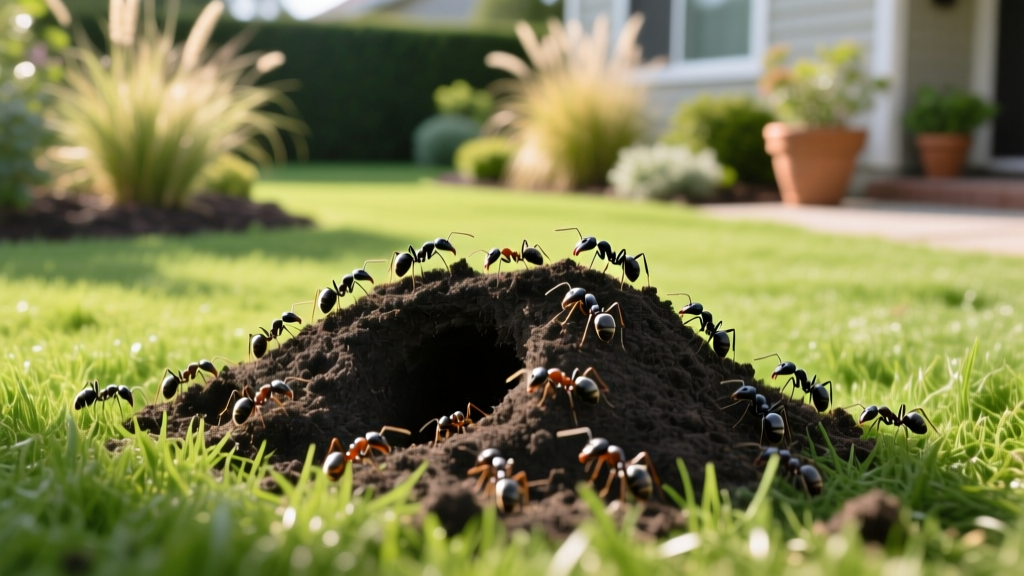
Black Ant Mounds in Yard: Identification, Treatment & Prevention
The Anatomy of a Black Ant Mound
Black ants, primarily species like the pavement ant (Tetramorium caespitum) or the common black garden ant (Lasius niger), are relentless excavators. While they provide minor ecological benefits by aerating compacted soil, the black ant mounds in yard spaces create uneven turf, smother surrounding grass blades, and disrupt the visual uniformity of a manicured lawn. Unlike earthworm castings, which present as small, granular pellets of topsoil, black ant mounds feature fine, powdery soil particles arranged in a distinct crater-like or volcano shape with a central entry hole.
Before initiating any treatment, accurate identification is critical. According to the UC Agriculture and Natural Resources Pest Notes, misidentifying ant species often leads to the selection of ineffective baits, as different species have vastly different dietary preferences (protein vs. carbohydrate) depending on the season and colony life cycle.
⚠️ CRITICAL WARNING: The Repellent Mistake
Never apply contact repellent sprays (such as bifenthrin, permethrin, or standard hardware store aerosols) directly onto black ant mounds in yard environments. Repellents kill only the surface foragers and trigger a survival mechanism called colony budding. The surviving queens will split the colony into three or four satellite nests, effectively multiplying your mound problem by 300% within a single season.
Treatment Decision Matrix: Baits vs. Drenches vs. Biologicals
Effective eradication requires targeting the queen, which resides deep within the subterranean gallery system. Below is a 2026 field-tested comparison of the most reliable treatment methodologies for residential lawns.
| Method | Active Ingredient | Avg. Cost (2026) | Time to Kill | Best Use Case |
|---|---|---|---|---|
| Gel Bait | Indoxacarb (0.05%) | $25 (4-tube pack) | 3–7 Days | Foraging trails near hardscapes |
| Mound Drench | Spinosad | $22 (16 oz bottle) | 24–48 Hours | Visible, active mounds in turf |
| Non-Repellent Spray | Dinotefuran (Alpine WSG) | $45 (10g packets) | 7–14 Days | Heavy perimeter infestations |
| Biological Control | Steinernema feltiae Nematodes | $35 (1 Million count) | 5–10 Days | Organic lawns, pet-safe zones |
Step-by-Step Mound Drenching Protocol
For immediate elimination of existing black ant mounds in yard areas without triggering budding, a liquid drench using a Spinosad-based concentrate (such as Monterey Garden Insect Spray) is the industry standard. Spinosad is derived from soil-dwelling bacteria and is highly effective via ingestion and contact, yet it breaks down quickly in sunlight, minimizing long-term environmental impact.
- Mow and Clear: Mow the lawn to a standard height (2.5 to 3 inches) and gently rake away loose debris from the immediate vicinity of the mound to expose the central crater.
- Mix the Solution: In a 2-gallon pump sprayer, mix 2 fluid ounces of Spinosad concentrate per gallon of water. Add a non-ionic surfactant (1/2 teaspoon per gallon) to break the water's surface tension, allowing the liquid to penetrate deep into the hydrophobic soil galleries.
- The Slow Drench: Apply exactly 1.5 to 2 gallons of the mixed solution directly over the mound. Crucial technique: Spray slowly. If you apply it too fast, the liquid will run off the sides of the mound and pool in the surrounding grass, failing to reach the deep queen chambers.
- The Waiting Period: Do not irrigate the lawn or allow rainfall to hit the treated mounds for at least 24 hours. The colony will carry the tainted moisture and soil particles deep into the nest, distributing the active ingredient to the brood and queen.
The Aphid Mutualism: Solving the Root Cause
If you successfully eliminate the mounds but notice them returning weeks later, the issue is likely agricultural rather than structural. Black ants are notorious farmers. They actively herd and protect aphids, scale insects, and mealybugs on your ornamental plants to harvest the sugary excretion known as honeydew.
According to University of Minnesota Extension, managing the honeydew-producing insects on nearby trees and shrubs is a mandatory secondary step. If the food source remains, neighboring ant colonies will simply expand their foraging territory into your yard to claim it.
Actionable Fix: Inspect the underside of leaves on shrubs bordering your lawn. If aphids are present, treat the foliage with a potassium salts of fatty acids solution (insecticidal soap) or apply a systemic imidacloprid soil drench to the base of the ornamentals in early spring. Starving the ants of their honeydew supply forces them to forage further away, naturally reducing mound density in your turf.
Long-Term Yard Defense & Microclimate Alteration
Black ants thrive in specific microclimates. They prefer soil that is moderately moist, protected by thick thatch layers, and situated near heat-retaining hardscapes (like concrete driveways or stone patios). Altering the yard environment makes it inhospitable to new queens seeking to establish colonies.
1. Thatch Management
A thatch layer exceeding 0.5 inches provides perfect thermal insulation and physical protection for ant galleries. Perform core aeration and dethatching in the early fall. This not only disrupts shallow nests but also improves soil drainage, removing the excess moisture that black ants require for brood development.
2. Irrigation Auditing
Leaky sprinkler heads or overwatered zones create localized swampy areas that attract moisture-seeking pests. Audit your irrigation system to ensure you are delivering exactly 1 to 1.5 inches of water per week, divided into two deep watering sessions rather than daily shallow sprinkles. Deep watering encourages deep grass roots while allowing the top 2 inches of soil to dry out between cycles, deterring surface-nesting ants.
3. Perimeter Non-Repellent Barriers
For homes with chronic, recurring infestations, applying a non-repellent termiticide/insecticide like Alpine WSG (Dinotefuran) in a 3-foot band around the foundation and adjacent hardscapes creates an invisible transfer-effect barrier. Because the ants cannot detect the chemical, they walk through it, pick up a lethal dose, and transfer it to nestmates via grooming. This method provides up to 60 days of residual control and prevents outdoor colonies from migrating indoors during late-summer mating flights.

