
Pest Control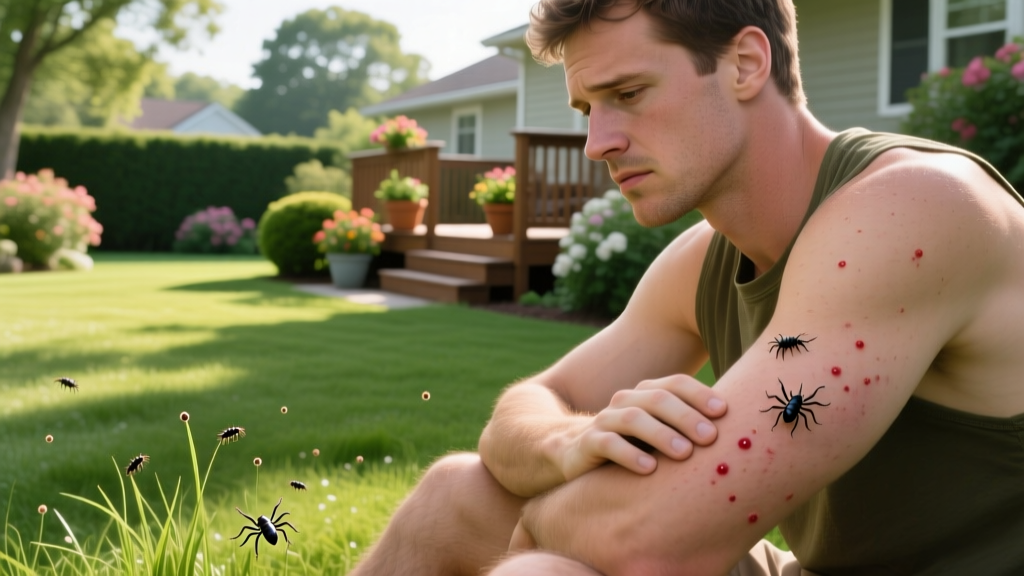
How to Treat Chigger Bite Symptoms and Defend Your Yard
Few things ruin a weekend of yard work or outdoor relaxation faster than the intense, relentless itch of chigger bites. Chiggers (the larval stage of mites in the Trombiculidae family) are microscopic pests that thrive in overgrown, shaded areas of your lawn. Unlike ticks or mosquitoes, chiggers do not burrow under your skin or suck blood. Instead, they inject powerful digestive enzymes into your pores that liquefy skin cells, creating a feeding tube called a stylostome. It is your body's allergic reaction to these enzymes that causes the severe itching and raised red welts.
To truly solve the problem, you need a dual-pronged approach: immediately treat the physical symptoms on your skin, and simultaneously eradicate the chigger habitats in your landscape. Below is a comprehensive, expert-backed guide to managing both the bites and the backyard infestation.
Immediate Relief: How to Treat Chigger Bite Symptoms
When you realize you have been bitten, time is of the essence. The stylostome formation process takes a few hours, and early intervention can minimize the severity of the allergic response. Forget the old folklore remedies; here is the clinical approach to finding relief.
⚠️ Myth-Busting Warning: Do NOT apply clear nail polish, rubbing alcohol, or bleach to chigger bites. Because chiggers do not burrow under the skin, these suffocation methods are entirely useless. Furthermore, harsh chemicals like bleach will cause contact dermatitis, compounding your skin irritation and increasing the risk of secondary bacterial infections from scratching.
Step 1: The Hot Shower and Scrub
As soon as you come indoors, take a warm shower using a heavy-lathering soap (like Dawn dish soap or a standard antibacterial body wash). Use a washcloth to vigorously scrub your lower legs, ankles, waistline, and behind the knees. This physically dislodges any unattached larvae or larvae that are still in the early stages of attaching before the stylostome fully forms.
Step 2: Topical Corticosteroids
To calm the localized immune response, apply an over-the-counter Hydrocortisone 1% cream (such as Cortizone-10) directly to the welts. Apply a thin layer 2 to 3 times daily. For severe clusters, a dermatologist may prescribe a stronger topical steroid like Triamcinolone acetonide 0.1%.
Step 3: Systemic Antihistamines
Topical creams only go so deep. To block the histamine release causing the systemic itch, take a non-drowsy oral antihistamine. Cetirizine (Zyrtec) 10mg or Fexofenadine (Allegra) 180mg taken once daily will significantly reduce the urge to scratch, which is critical for preventing staph infections.
💡 Pro-Tip for Nighttime Itching: Chigger bites often feel worse at night when your body's natural cortisol levels drop. If the itch prevents sleep, switch to a first-generation antihistamine like Diphenhydramine (Benadryl) 25-50mg about 30 minutes before bed. The mild sedative effect will help you sleep through the itch cycle.
Yard Defense: Eradicating Chigger Microclimates
Treating your skin is only half the battle. If you do not modify your yard's environment, chiggers will continue to breed and wait for their next host. Chiggers require high humidity, shade, and dense vegetation to survive; they quickly desiccate and die in direct, hot sunlight. According to entomologists at the University of Kentucky, modifying the landscape to reduce shade and moisture is the most effective long-term control strategy.
Cultural Controls: Landscaping Tweaks
- Eliminate Transition Zone Overgrowth: Chiggers congregate in the "ecotone"—the border where your manicured lawn meets wooded areas or tall weeds. Keep a 3-foot buffer zone of closely mowed grass or mulch between woods and recreational areas.
- Prune Lower Branches: Trim tree canopies and shrubs to allow direct sunlight to hit the soil. UV radiation and soil drying are lethal to chigger larvae.
- Manage Thatch and Moisture: Dethatch your lawn if the thatch layer exceeds 0.5 inches. Fix leaky irrigation heads and regrade low spots where water pools, as damp soil creates ideal chigger nurseries.
Chemical and Organic Treatment Matrix
When cultural controls are not enough, targeted barrier sprays are required. Focus applications on shaded fence lines, the edges of patios, and under the canopies of dense shrubs. You do not need to spray the entire sun-drenched lawn.
| Treatment Type | Active Ingredient | Brand Example (2026 Pricing) | Mix Rate & Coverage | Pet & Environmental Safety |
|---|---|---|---|---|
| Synthetic Barrier | Bifenthrin (7.9%) | Bifen IT (~$45 / 32 oz) | 1 fl oz per gallon of water; covers 1,000 sq ft. | Highly toxic to fish/aquatic life. Safe for pets once completely dry (usually 2-4 hours). |
| Synthetic Barrier | Permethrin (36.8%) | Martins Permethrin SFR (~$35 / 32 oz) | 1.67 fl oz per gallon of water; covers 1,000 sq ft. | Highly toxic to cats while wet. Safe for dogs and humans once dry. |
| Organic Biological | Beneficial Nematodes (Steinernema feltiae) | Scanmask / Arbico Organics (~$35 / 10M count) | Apply via hose-end sprayer; requires moist soil and soil temps above 55°F. | 100% safe for pets, humans, and beneficial pollinators. Targets soil-dwelling pests. |
| Organic Desiccant | Diatomaceous Earth (Food Grade) | Harris Food Grade DE (~$15 / 32 oz) | Dust lightly over dry, shaded soil and perimeter cracks. | Safe for pets, but avoid inhaling dust during application. Loses efficacy when wet. |
Note: When applying liquid bifenthrin or permethrin, use a pump sprayer and apply in the early morning or late evening to avoid harming foraging bees. For detailed safety guidelines on handling these pesticides, always consult the EPA's Safe Pest Control guidelines.
Personal Protection Gear for Yard Work
While you are working to eradicate the infestation, you must protect yourself from the existing population. Standard bug sprays often fail against chiggers because they crawl up from the soil and find gaps in your clothing.
Permethrin-Treated Clothing
The gold standard for yard defense is clothing treated with 0.5% Permethrin. You can buy pre-treated apparel (like Insect Shield) or treat your own yard-work pants and boots using Sawyer Products Premium Permethrin Insect Repellent (approx. $15 for a 24 oz spray bottle). Spray the fabric outdoors, let it dry completely for 24 hours, and it will remain effective through 6 washings. This creates an impenetrable barrier that kills chiggers on contact.
Skin Repellents: DEET vs. Picaridin
For exposed skin (like your hands and neck), use a proven EPA-registered repellent. According to research from Texas A&M AgriLife Extension, formulations containing 20% to 30% DEET (like OFF! Deep Woods) are highly effective. However, DEET can degrade plastics, synthetics, and watch crystals. A modern, equally effective alternative is 20% Picaridin (like Sawyer Picaridin or Natrapel). Picaridin is odorless, non-greasy, and safe for use on synthetic clothing and gear, making it the superior choice for landscapers and avid gardeners.
Frequently Asked Questions
Can chiggers infest my house or bed?
No. Chiggers require a specific outdoor microclimate (high humidity, shade, soil contact) to survive. If a chigger hitches a ride indoors on your clothing, it will quickly desiccate and die in the dry, climate-controlled environment of your home. They do not reproduce indoors or infest carpets and bedding like fleas or bedbugs.
How long does the itch from a chigger bite last?
Because the itch is caused by an allergic reaction to the digestive enzymes and the physical presence of the stylostome, the welts typically peak in intensity at 24 to 48 hours. Without treatment, the itching can persist for 1 to 2 weeks as your body slowly breaks down the feeding tube. Consistent use of hydrocortisone and oral antihistamines can reduce this timeline to 3 to 5 days.
What time of year are chiggers most active?
In most of the United States, chigger larvae are most active from late spring through early fall, peaking when ground temperatures consistently sit between 77°F and 86°F. In southern, subtropical climates, they can remain a year-round nuisance.

