
Pest Control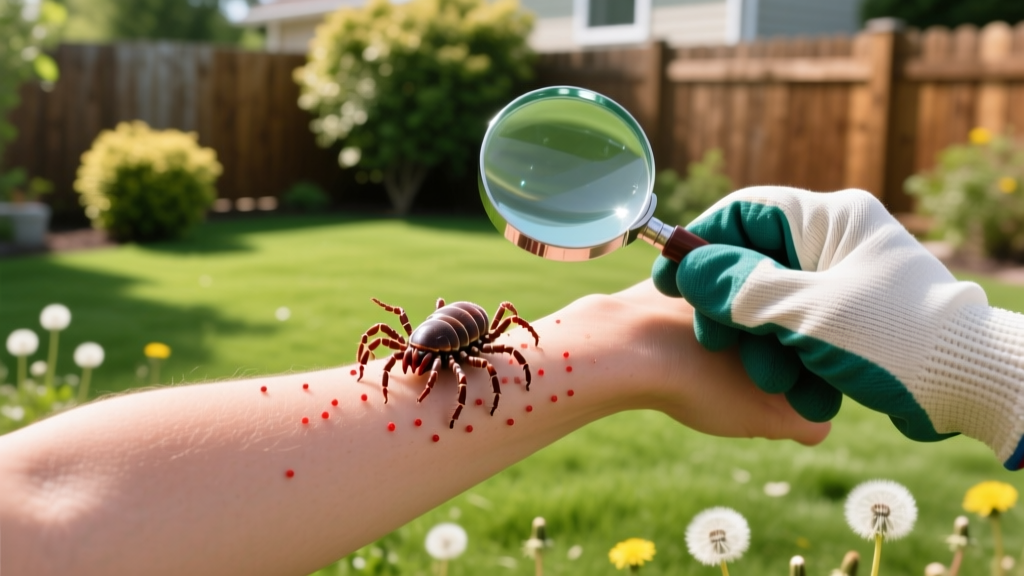
How to Get Rid of Chiggers on Your Body and Defend Your Yard
There are few outdoor experiences more miserable than returning from a walk through tall grass only to discover dozens of intensely itchy, red welts clustered around your ankles and waistline. If you are dealing with an active infestation of bites, knowing how to get rid of chiggers on your body is only half the battle. Because these pests originate in your landscape, a comprehensive approach requires both immediate dermatological relief and targeted yard defense to prevent re-exposure.
Chiggers are not insects; they are the microscopic larval stage of trombiculid mites. Measuring just 0.15 to 0.3 millimeters, they are nearly invisible to the naked eye. To permanently solve a chigger problem, you must treat the symptoms on your skin while simultaneously disrupting their life cycle in your lawn's transitional zones.
The Biology of a Chigger Bite: Debunking the Burrowing Myth
Before treating the bites, it is critical to understand what is actually happening to your skin. A pervasive myth suggests that chiggers burrow under your skin and lay eggs, requiring you to suffocate them with nail polish or bleach. This is entirely false. According to University of Kentucky Entomology, chiggers do not burrow into the skin, nor do they drink blood.
Instead, the larval mite uses its mouthparts to pierce the outer layer of your epidermis and inject digestive enzymes. These enzymes liquefy your skin cells, and the mite forms a hardened tube called a stylostome to feed on the dissolved tissue. The intense itching and red welts are an allergic reaction to these digestive enzymes and the stylostome itself. Once the mite finishes feeding (usually after 2 to 4 days), it simply drops off. Therefore, the goal of treatment is not to extract a bug, but to neutralize the enzymes, manage the immune response, and prevent secondary bacterial infections from scratching.
Step-by-Step: How to Get Rid of Chiggers on Your Body
If you suspect you have walked through a chigger-infested area, immediate action can stop unattached larvae from feeding and mitigate the severity of the bites.
Step 1: The Degreasing Shower
Do not take a lukewarm bath, as this can allow mites to float and attach to other parts of your body. Instead, take a hot shower using a heavy-duty, degreasing soap. Standard beauty bars are often too mild. Use a dish soap like Dawn or a salicylic acid-based body wash (such as CeraVe SA Body Wash, ~$14 for 10 oz). Use a washcloth to physically scrub your skin, which dislodges any unattached larvae and breaks down the oily enzyme residue left on the skin's surface.
Step 2: Thermal Decontamination of Clothing
Chiggers can survive on your clothes for hours waiting to find exposed skin. Immediately place your worn clothing, socks, and shoes into a washing machine. Wash on the hottest water setting your fabrics can tolerate, followed by a minimum of 45 minutes in a high-heat dryer. The combination of hot water and high-heat drying is 100% lethal to all life stages of the trombiculid mite.
Step 3: Targeted Topical Relief
Once clean and dry, apply targeted anti-itch treatments. Avoid scratching at all costs; breaking the skin introduces Staphylococcus and Streptococcus bacteria, leading to painful secondary infections like impetigo.
OTC Treatment Comparison: Stopping the Itch
Not all anti-itch creams are formulated for the specific type of tissue irritation caused by chigger enzymes. The American Academy of Dermatology recommends specific active ingredients for arthropod bites. Below is a comparison of the most effective over-the-counter options available in 2026.
| Active Ingredient | Product Example | Mechanism of Action | Best Use Case | Avg. Cost |
|---|---|---|---|---|
| Hydrocortisone 1% | Cortizone-10 | Mild steroid that reduces localized inflammation and immune response. | Small clusters of highly inflamed, swollen welts. | $6 - $9 |
| Pramoxine HCl | Sarna Sensitive | Topical anesthetic that temporarily numbs the nerve endings in the skin. | Widespread itching over large areas (legs, back). | $10 - $13 |
| Calamine Lotion | Humco Calamine | Zinc oxide mixture that dries out weeping blisters and provides a cooling sensation. | Bites that have been scratched open and are weeping fluid. | $4 - $7 |
| Cetirizine (Oral) | Zyrtec 10mg | Systemic H1-receptor antagonist that blocks histamine production. | Severe allergic reactions or when itching disrupts sleep. | $15 - $20 |
⚠️ Medical Warning: If your bites develop yellow crusting, begin oozing pus, or if you develop a fever and swollen lymph nodes, seek medical attention immediately. These are hallmark signs of a secondary bacterial infection that requires prescription oral antibiotics like Cephalexin.
Yard Defense: Eradicating Chiggers at the Source
Treating your body is a temporary fix. If your yard harbors a chigger population, you will be re-bitten every time you step outside. Chiggers thrive in damp, shaded, overgrown transitional zones—specifically where your manicured lawn meets wooded areas, fence lines, or brush piles. They require high humidity at the soil level to survive.
Cultural Controls: Altering the Microclimate
Chiggers are highly susceptible to desiccation (drying out). You can make your yard inhospitable by altering the microclimate:
- Establish a Dry Barrier: Create a 24-inch wide border of dry wood mulch, gravel, or crushed stone between your lawn and any adjacent wooded areas or tall brush. Chiggers cannot easily cross this dry, hot barrier.
- Optimize Mowing Height: Keep your turfgrass mowed to a uniform 2.5 to 3 inches. This height allows sunlight to penetrate the canopy and dry the soil surface, while still protecting the grass roots.
- Eliminate Rodent Hosts: Chiggers rely on small mammals (mice, voles, chipmunks) as primary hosts. Remove brush piles, seal gaps in sheds, and use bait stations to control the rodent population that transports mites into your yard.
Chemical and Organic Acaricide Applications
When cultural controls are insufficient, targeted chemical intervention is necessary. According to the Environmental Protection Agency (EPA), specific acaricides are highly effective against mite larvae when applied correctly.
- Conventional Acaricides (Bifenthrin): Products containing Bifenthrin (such as Talstar P Professional Insecticide, ~$45 for a 3/4 gallon concentrate) are the gold standard for chigger control. Mix at a rate of 1 fl oz per gallon of water. Apply using a pump sprayer, focusing heavily on the perimeter of the yard, shaded fence lines, and under decks. Pro-Tip: Apply at dusk to avoid harming foraging pollinators, and allow the spray to dry completely before allowing pets or children back into the treated zone.
- Organic Biological Control (Beneficial Nematodes): For organic lawns, apply Steinernema feltiae beneficial nematodes (e.g., NemaShield, ~$35 for 10 million nematodes). These microscopic worms actively seek out and infect soil-dwelling pests, including mite larvae. Apply via hose-end sprayer when soil temperatures are consistently above 60°F. Failure Mode: Nematodes are destroyed by UV light. You must apply them in the early evening and water the lawn immediately afterward to wash them into the soil profile.
Personal Protection: Repellents and Clothing
While treating your yard, you must protect yourself from the existing population. Standard mosquito repellents are not always sufficient for mites. For maximum defense, utilize a dual-layer approach:
- Skin Repellents: Use an EPA-registered repellent containing 25% to 30% DEET or 20% Picaridin. Picaridin (found in Sawyer Picaridin 20%, ~$12 for 6 oz) is highly recommended as it does not degrade synthetic fabrics or plastics like DEET does.
- Permethrin-Treated Gear: Treat your yard work boots, socks, and pant legs with 0.5% Permethrin spray (e.g., Sawyer Premium Insect Repellent, ~$16 for 24 oz). Permethrin is an insecticide, not just a repellent; it actually kills chiggers on contact when they crawl onto your clothing. Allow clothing to dry completely before wearing. Alternatively, invest in factory-treated Insect Shield apparel, which retains its efficacy for up to 70 washes.
By combining immediate, science-backed dermatological treatment with aggressive microclimate alteration and targeted acaricide applications, you can effectively eliminate chiggers from both your body and your property.

