
Pest Control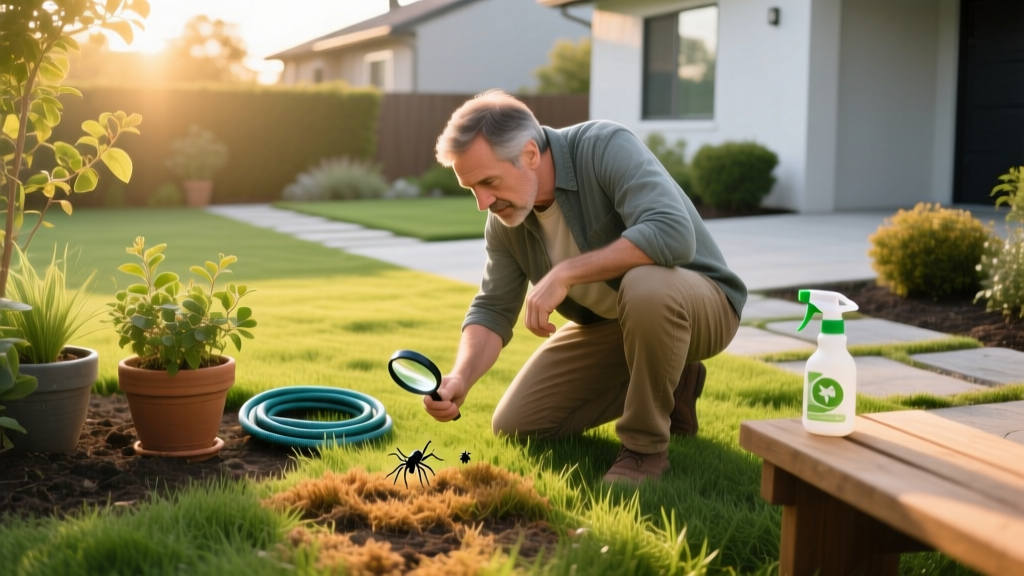
How to Treat Fleas in Home and Yard: The Complete Defense Guide
The Outdoor-Indoor Pipeline: Why Yard Defense is Step One
Attempting to solve a flea infestation by only treating the interior of your house is a mathematical losing battle. According to entomological data, adult fleas living on your pets account for only 5% of the total population. The remaining 95%—comprising eggs, larvae, and pupae—reside in the environment, primarily in shaded outdoor areas and indoor carpets. If you want to know how to treat fleas in home environments effectively, you must first sever the supply line originating in your yard.
Fleas thrive in outdoor microclimates that offer high humidity (above 50%) and temperatures between 70°F and 85°F. In a typical suburban yard, these conditions are found under decks, along fence lines, in dog runs, and beneath dense shrubbery. By implementing a dual-phase perimeter defense and interior eradication strategy, you can collapse the flea life cycle in 21 to 30 days.
Phase 1: Eradicating the Outdoor Flea Reservoir
Before applying indoor treatments, establish an outdoor chemical and biological barrier. Focus your application strictly on shaded, high-traffic pet areas; broadcasting insecticides across sun-baked open lawns is ineffective, as UV light and heat naturally destroy flea larvae.
Selecting the Right Active Ingredients
A successful yard treatment requires a two-pronged approach: an adulticide to kill emerging fleas and an Insect Growth Regulator (IGR) to stop eggs and larvae from maturing. Below is a breakdown of the most effective active ingredients available to homeowners in 2026.
| Active Ingredient | Product Example | Function | Avg. Cost (2026) | Pet Re-entry Time |
|---|---|---|---|---|
| Lambda-cyhalothrin | Demand CS | Adulticide (Micro-encapsulated) | $50 - $60 / 8oz | Once dry (approx. 2 hrs) |
| Permethrin | Permethrin SFR 36.8% | Adulticide (Broad spectrum) | $35 - $45 / 32oz | Once dry (Highly toxic to cats) |
| Pyriproxyfen | Archer IGR | IGR (Stops egg/larval development) | $45 - $55 / 8oz | Once dry (Safe for pets) |
| Cedrus atlantica (Cedar Oil) | Wondercide Outdoor | Organic Repellent/Adulticide | $35 - $40 / 16oz RTU | Immediate (Safe for pets) |
CRITICAL SAFETY WARNING: Never use Permethrin-based products in homes or yards where cats roam. Permethrin is highly toxic to felines and can cause fatal neurological seizures. Always opt for Pyriproxyfen or Lambda-cyhalothrin if cats are present in your environment.
Application Protocol: Mix 1 oz of Lambda-cyhalothrin and 1 oz of Pyriproxyfen per gallon of water. Using a 1-gallon or 2-gallon pump sprayer, apply the mixture to 1,000 square feet of shaded outdoor area. Do not water the lawn for 24 hours post-application to allow the micro-capsules to bind to the soil and vegetation.
Phase 2: How to Treat Fleas in Home Interiors
Once the outdoor reservoir is managed, shift focus indoors. The goal here is not just to kill adult fleas, but to trigger the emergence of pupae so they can be eliminated before reproducing.
The 4-Step Indoor Eradication Protocol
- Mechanical Removal (Vacuuming): Vacuum all carpets, rugs, and upholstery using a machine with a motorized beater bar. The vibration stimulates pre-emerged adult fleas to hatch from their protective pupal cocoons. Crucial step: Immediately seal the vacuum bag or empty the canister into an outdoor trash bin. Fleas will crawl back out if left inside.
- Thermal Washing: Wash all pet bedding, removable slipcovers, and throw blankets in hot water. The water temperature must reach a minimum of 140°F for at least 10 minutes to guarantee the destruction of flea eggs and larvae.
- Indoor IGR and Adulticide Application: Apply an indoor-specific aerosol IGR, such as PT Ultracide (containing Permethrin and Pyriproxyfen), to carpets and baseboards. Hold the can 12 to 18 inches from the surface and apply a fine, even mist. Do not soak the carpet.
- The 14-Day Re-Treatment: Because flea pupae are encased in a sticky cocoon that is impervious to chemical sprays, some adults will continue to hatch for up to two weeks after the initial treatment. Repeat the vacuuming and spot-spray protocol exactly 14 days after the first application to catch these late-emerging adults.
Pro Tip: Place a flea trap (a small light source over a sticky pad) in the center of each treated room at night. This serves two purposes: it catches emerging adults, and it acts as a monitoring tool to tell you exactly when the infestation has been fully eradicated.
Breaking the Life Cycle: The 70% Rule of IGRs
Many homeowners fail in their eradication efforts because they rely solely on adulticides. According to the University of California Statewide Integrated Pest Management Program, the use of Insect Growth Regulators (IGRs) is the cornerstone of long-term flea management. IGRs like Pyriproxyfen and Methoprene mimic juvenile hormones, preventing larvae from molting into adults.
"Without an IGR, a single surviving female flea can lay up to 50 eggs a day, rapidly rebuilding the population. IGRs provide a residual effect that lasts up to 7 months indoors, effectively breaking the reproductive cycle even if adult fleas are reintroduced by wildlife." — Companion Animal Parasite Council (CAPC) Guidelines
Cost Analysis: Professional Extermination vs. DIY Defense
Deciding between hiring a licensed pest control operator (PCO) and executing a DIY strategy depends on the severity of the infestation and the square footage of your property. Below is a comparative cost matrix for a standard 2,000 sq. ft. home with a 5,000 sq. ft. yard in 2026.
| Factor | DIY Chemical Defense | Professional Extermination (PCO) |
|---|---|---|
| Upfront Material Cost | $90 - $130 (Adulticide + IGR + Sprayer) | $250 - $450 (Includes labor and materials) |
| Time Investment | 4-6 hours (Mixing, spraying, vacuuming) | 1-2 hours (Prep and post-treatment wait) |
| Warranty / Guarantee | None (Dependent on user execution) | Typically 30 to 90-day re-treatment guarantee |
| Best Use Case | Mild to moderate infestations; routine prevention | Severe infestations; multi-unit dwellings; time-poor homeowners |
Rodent and Wildlife Exclusion: Stopping the Flea Taxis
You can spray your yard and home perfectly, but if local wildlife continually deposits new fleas onto your property, the cycle will never end. Opossums, feral cats, raccoons, and rodents act as 'flea taxis,' dropping thousands of eggs into your yard as they forage at night.
Implement these structural defenses to deny wildlife access to your flea-safe zones:
- Crawl Space and Deck Sealing: Bury 1/4-inch galvanized hardware cloth at least 6 inches into the soil and bend it outward in an 'L' shape to prevent rodents and opossums from digging under decks or sheds.
- Canopy Management: Trim tree branches so they are at least 6 feet away from your roofline. This prevents roof rats and squirrels from bypassing ground-level barriers and nesting in your attic, which leads to indoor flea drops.
- Sanitation: Secure trash cans with bungee cords and remove fallen fruit from trees. Eliminating food sources forces wildlife to forage in neighboring, non-treated properties.
Frequently Asked Questions
Can I use outdoor flea sprays inside my house?
No. Outdoor concentrates like Permethrin SFR or Demand CS are formulated with solvents that can stain indoor fabrics, damage hardwood finishes, and create hazardous indoor air quality issues. Always use indoor-specific aerosols or water-based IGR formulations labeled explicitly for indoor use.
Why am I still seeing fleas two weeks after treating my home and yard?
This is known as the 'pupal window.' The pupal stage of the flea life cycle is protected by a sticky, fibrous cocoon that is completely resistant to chemical insecticides. These pupae can remain dormant for weeks, hatching only when they detect the heat and carbon dioxide of a passing host. Continued vacuuming and a secondary IGR application on day 14 will eliminate these late hatchers.
Do natural remedies like diatomaceous earth (DE) work for yard defense?
Food-grade Diatomaceous Earth can kill adult fleas by desiccating their exoskeletons, but it is highly impractical for outdoor yard defense. DE loses its efficacy the moment it becomes damp from morning dew, rain, or irrigation. For outdoor environments, micro-encapsulated synthetic IGRs remain the only reliable, weather-resistant solution.

