
Pest Control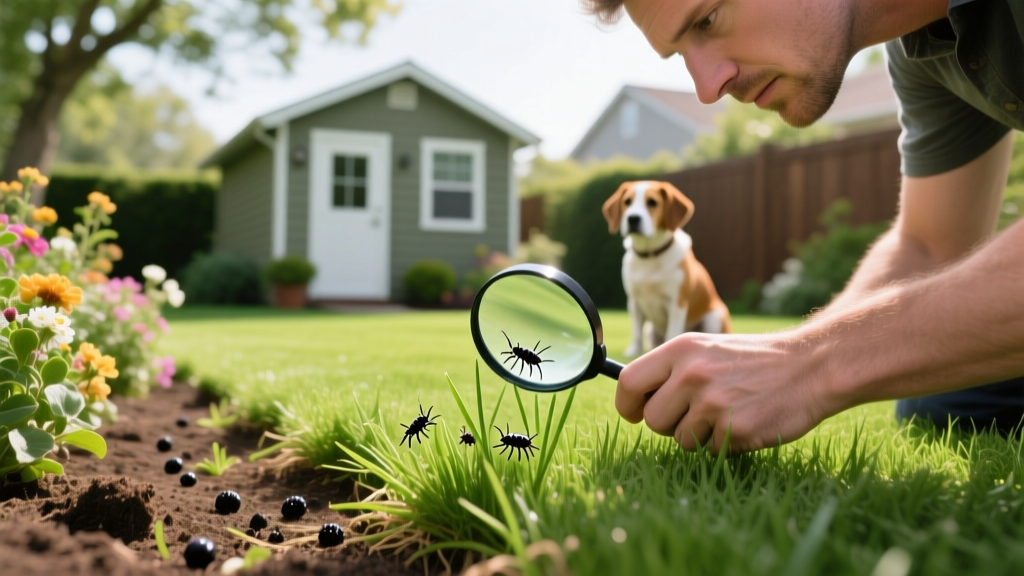
How to Treat Fleas in House and Stop Yard Reinfection
The Hidden Source: Why Indoor Flea Treatments Fail
If you are researching how to treat fleas in house environments, you are likely trapped in the "pupal window"—a frustrating phase where adult fleas continue to emerge weeks after you have sprayed, vacuumed, and washed every fabric in sight. The harsh reality of Ctenocephalides felis (the cat flea, which accounts for over 95% of canine and household infestations) is that your home is merely the incubator. The yard is the reservoir.
Treating only the interior of your home without establishing a perimeter defense in your yard guarantees reinfection. Fleas hitchhike indoors on pets, rodents, and even your clothing. To achieve total eradication, you must execute a synchronized three-front war: indoor environmental treatment, yard perimeter defense, and host (pet) systemic medication.
Understanding the Pupal Vault and the 14-Day Rule
Adult fleas represent only 5% of an active infestation. The remaining 95% exists as eggs (50%), larvae (35%), and pupae (10%). The pupal stage is the ultimate survival mechanism. Flea pupae spin a sticky cocoon that camouflages with carpet fibers and is entirely impermeable to chemical insecticides.
⚠️ The Pupal Window Warning: No chemical on the market can kill flea pupae. They must hatch into adults to be killed. This biological reality means 100% eradication takes a minimum of 14 to 30 days. If you see fleas two weeks after treatment, the treatment did not fail; the pupae are simply hatching and encountering the residual Insect Growth Regulator (IGR) you applied.
Phase 1: Indoor Eradication Protocol
Effective indoor treatment requires a combination of an adulticide (to kill emerging adults) and an Insect Growth Regulator (IGR) to prevent eggs and larvae from molting.
Step 1: Mechanical Stimulation (Vacuuming)
Vacuum all carpets, rugs, and upholstery using a beater-bar attachment. The physical vibration and heat generated by the vacuum mimic the presence of a host, stimulating up to 30% of dormant pupae to hatch within 24 hours, exposing them to your chemical treatment. Immediately seal and discard the vacuum bag or empty the canister outside.
Step 2: Apply an IGR and Adulticide Blend
Avoid aerosol "bug bombs" (foggers). They fail to penetrate carpet fibers and leave toxic residue on surfaces. Instead, use a pump sprayer or targeted aerosol containing Permethrin (adulticide) and Pyriproxyfen (IGR).
- Top Product Pick: Precor 2000 Plus Aerosol or a mixed pump solution of Nyguard IGR (Pyriproxyfen) and Onslaught FastCap.
- Application Rate: One 16 oz can of Precor 2000 covers approximately 2,600 square feet.
- Cost: ~$25 to $35 per can.
🚨 CRITICAL CAT TOXICITY ALERT: Permethrin is highly toxic and potentially fatal to cats. If you have felines, you MUST use a Permethrin-free alternative like Indorex Household Flea Spray (which uses Permethrin alternatives) or rely strictly on Pyriproxyfen-based IGRs paired with non-pyrethroid adulticides. Always keep cats out of the house until treated surfaces are 100% dry.
Phase 2: Yard Defense & Perimeter Treatment
According to the Companion Animal Parasite Council (CAPC), outdoor environments with high humidity, shade, and organic debris serve as primary flea breeding grounds. Fleas cannot survive in direct, scorching sunlight; they harbor in shaded areas under decks, along fence lines, and in crawl spaces.
Comparing Yard Treatment Modalities
| Treatment Type | Active Ingredient / Agent | Efficacy & Longevity | Estimated Cost (per 5,000 sq ft) |
|---|---|---|---|
| Chemical Residual | Bifenthrin 7.9% (e.g., Talstar P) | High. Kills adults on contact. Lasts 30-45 days. | $45 - $60 |
| Biological Control | Beneficial Nematodes (S. carpocapsae) | Moderate-High. Parasitizes larvae in soil. Requires moisture. | $30 - $40 |
| Botanical Repellent | Cedarwood Oil (e.g., Wondercide) | Low-Moderate. Repels and desiccates. Requires weekly reapplication. | $35 - $50 |
Executing the Yard Spray
For severe infestations, a synthetic pyrethroid like Bifenthrin is the industry standard. Mix 1 oz of Bifenthrin concentrate per gallon of water. Apply using a pump sprayer or hose-end attachment, focusing heavily on shaded zones, dog runs, and the perimeter of the home. Keep pets and children off the lawn until the application is completely dry (usually 1-2 hours).
Phase 3: Breaking the Host Cycle (Pet Treatment)
The FDA emphasizes that over-the-counter (OTC) topical treatments containing pyrethrins are increasingly ineffective due to widespread genetic resistance in flea populations. Furthermore, OTC products often fail to distribute evenly across the pet's lipid layer.
To break the cycle, you must use prescription Isoxazoline oral medications or advanced topicals that disrupt the flea's nervous system upon biting the host.
- Oral Options: Bravecto (Fluralaner) provides 12 weeks of coverage; NexGard (Afoxolaner) provides 30 days. Cost: $25–$35 per dose.
- Topical Options: Revolution Plus (Selamectin + Sarolaner) is excellent for multi-pet households with both cats and dogs. Cost: $20–$30 per dose.
"Treating the pet without treating the environment is like bailing water out of a sinking boat without plugging the hole. The host medication catches the adults, but the IGR in the carpet stops the next generation."
— Board-Certified Veterinary Entomologist
The 14-Day Eradication Timeline
Follow this strict schedule to ensure you do not abandon the treatment prematurely during the pupal window.
- Day 1 (Prep): Wash all pet bedding, throw blankets, and slipcovers in hot water (minimum 140°F) and dry on high heat for 30 minutes. Administer oral Isoxazoline medication to all dogs and cats in the home.
- Day 2 (Indoor & Outdoor Attack): Vacuum thoroughly. Apply Permethrin/Pyriproxyfen spray to carpets and baseboards. Apply Bifenthrin to shaded yard areas. Keep pets away until dry.
- Day 3-13 (Maintenance): Vacuum high-traffic areas every 48 hours to stimulate pupal hatching. Empty the vacuum outside immediately. You will still see fleas; this is normal.
- Day 14 (Evaluation & Retreat): Assess the adult flea burden. If emerging fleas are still numerous, apply a second round of yard treatment. The indoor IGR will continue working for up to 7 months, so indoor retreatment is rarely necessary unless the initial application was blocked by furniture.
Common Failure Modes to Avoid
Even with the right chemicals, homeowners often sabotage their own efforts. Avoid these critical errors:
- Washing Floors with Ammonia or Pine-Sol: Harsh cleaners can degrade the residual IGR barrier on hard surfaces. Stick to mild detergents.
- Ignoring Rodent Vectors: If you have a mouse or rat problem in the crawlspace or attic, they are continually seeding your home with fleas. You must integrate rodent trapping alongside flea treatment.
- Under-dosing Yard Sprays: Bifenthrin requires adequate water volume to penetrate the thatch layer of the lawn. If you spray a light mist on dry grass, the chemical will degrade in the UV light before it reaches the soil where larvae live. Apply at least 1.5 gallons of mixed solution per 1,000 square feet.
By understanding the biological constraints of the flea life cycle and treating the yard as the primary battlefield, you can permanently reclaim your home. For further guidance on safe pesticide handling around pets, consult the EPA's guidelines on pesticides and pets before beginning your eradication protocol.

