
Pest Control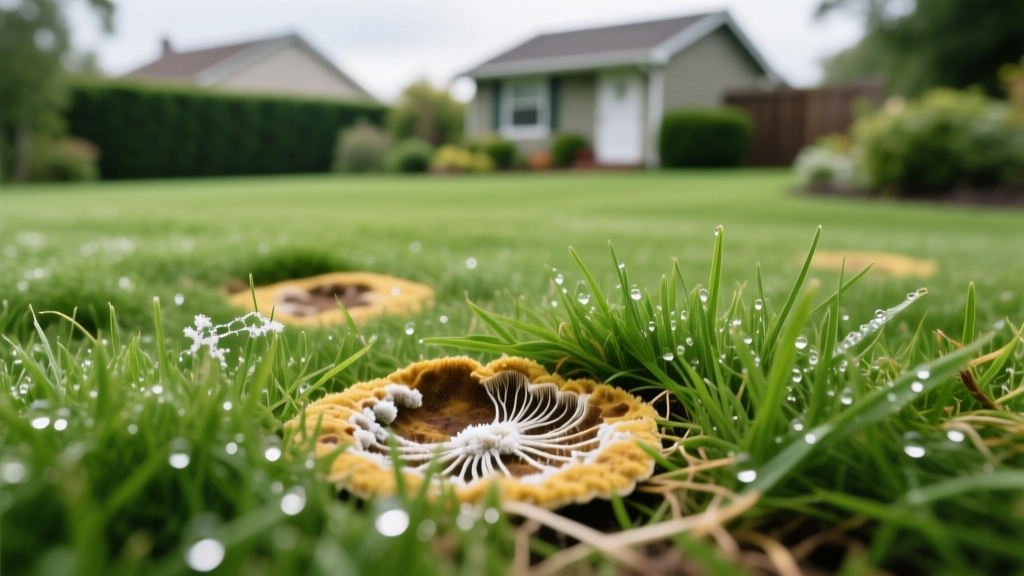
How to Treat Grass With Fungus: Symptom Diagnosis & Rescue Fixes
The 4-Step Fungal Triage Protocol
Fungal pathogens can destroy a healthy turf canopy in 72 hours under optimal humidity and temperature conditions. Knowing how to treat grass with fungus requires moving beyond generic spray-and-pray methods. Effective rescue relies on precise symptom identification, selecting the correct Fungicide Resistance Action Committee (FRAC) chemical class, and executing immediate cultural corrections. According to NC State Extension TurfFiles, misidentifying a turf disease and applying the wrong active ingredient not only wastes money but accelerates chemical resistance, leaving the lawn vulnerable to secondary infections.
This diagnostic and rescue framework isolates the four most destructive turf fungi and provides exact chemical and cultural interventions to halt spread and restore canopy health.
Symptom Matrix: Identify Your Lawn Fungus
Before purchasing a fungicide, cross-reference your lawn's visual symptoms and environmental triggers with the diagnostic matrix below. Applying a contact fungicide to a systemic root disease will result in total treatment failure.
| Disease Pathogen | Visual Symptoms & Lesion Patterns | Optimal Trigger Conditions | Primary Grass Targets |
|---|---|---|---|
| Brown Patch (Rhizoctonia solani) | Circular patches (6 inches to several feet) with dark 'smoke rings' at the margins in early morning. Individual blades show irregular tan lesions with dark borders. | Nighttime temps > 68°F, high humidity, > 10 hours of leaf wetness. | Tall Fescue, Perennial Ryegrass, Bermudagrass, Zoysia. |
| Dollar Spot (Clarireedia jacksonii) | Silver-dollar-sized straw-colored spots that merge into large blighted areas. Hourglass-shaped lesions with bleached centers and reddish-brown margins on individual blades. | Temps 60°F–85°F, high humidity, low soil nitrogen, drought stress. | Bentgrass, Bermudagrass, Zoysia, Fescue, Bluegrass. |
| Pythium Blight (Pythium spp.) | Greasy, dark, water-soaked patches that rapidly turn brown and collapse. Cottony white mycelium visible in early morning. Patches often follow water drainage paths. | Daytime > 85°F, nighttime > 68°F, saturated soils, poor drainage. | Perennial Ryegrass, Annual Bluegrass, Bentgrass, Fescue. |
| Snow Mold (Typhula / Microdochium) | Circular, matted, straw-colored patches appearing immediately after snowmelt. Pink or gray webbing at the edges. Sclerotia (hard resting bodies) visible on Typhula. | Prolonged snow cover on unfrozen ground, late fall nitrogen applications. | Kentucky Bluegrass, Fescue, Ryegrass, Bermudagrass. |
Rescue Fixes: How to Treat Grass With Fungus by Type
Once the pathogen is identified, select a fungicide based on its mode of action. Turf fungicides fall into two primary categories: systemic (absorbed into the plant tissue) and contact (remains on the leaf surface). For active rescue situations where the disease is already spreading, systemic fungicides offer superior curative action.
Targeted Chemical Interventions
- Strobilurins (FRAC Code 11): Active ingredients like Azoxystrobin (found in Scotts DiseaseEx Lawn Fungicide) provide excellent broad-spectrum curative and preventive control for Brown Patch and Dollar Spot. Apply at a rate of 2 to 4 lbs per 1,000 sq ft depending on the granular formulation. Cost: ~$18–$24 per 5,000 sq ft coverage.
- Triazoles / DMIs (FRAC Code 3): Active ingredients like Propiconazole (found in BioAdvanced Fungus Control Plus) are highly systemic, moving upward through the xylem. They are the gold standard for curative Dollar Spot and Rust treatments. Apply liquid formulations at 1.5 to 2.0 fl oz per 1,000 sq ft mixed in 1 to 2 gallons of water. Cost: ~$25–$35 per 10,000 sq ft coverage.
- Nitriles (FRAC Code M5): Chlorothalonil is a multi-site contact fungicide. It is strictly preventive and will not cure an active Pythium Blight infection already inside the leaf tissue, but it is critical for tank-mixing to prevent resistance buildup in strobilurins.
Resistance Warning: Never apply a FRAC 11 (Strobilurin) fungicide more than twice consecutively. Pathogens rapidly mutate to survive single-site mode-of-action chemicals. Always rotate with a FRAC 3 (Triazole) or FRAC 7 (SDHI) product for subsequent applications, as recommended by Penn State Extension turfgrass pathology guidelines.
Cultural Rescue Tactics (Non-Chemical Triage)
Chemical applications will fail if the microclimate continues to favor fungal sporulation. Implement these cultural fixes simultaneously with your fungicide application:
- Throttle Nitrogen Inputs: Halt all quick-release nitrogen (like urea or ammonium sulfate) applications during active Brown Patch or Pythium outbreaks. Excess nitrogen forces rapid, succulent leaf growth that is highly susceptible to cellular penetration by Rhizoctonia hyphae.
- Adjust Irrigation Timing: Shift watering schedules to finish before 10:00 AM. Fungal spores require 8 to 12 hours of continuous leaf wetness to germinate and infect. Watering in the evening extends leaf wetness through the night, guaranteeing disease expansion.
- Bag Clippings in Active Zones: While mulching is generally beneficial, mowing over active Dollar Spot or Brown Patch patches and leaving clippings distributes millions of spores and infected tissue across healthy turf. Use a bagger until the disease is suppressed.
- Raise Mowing Height: Scalping stressed turf removes the photosynthetic canopy the plant needs to generate new tissue and fight off infection. Raise your deck by 0.5 inches during peak summer stress periods.
Cost Breakdown: DIY Fungicide Application vs. Professional Treatment
Understanding the financial commitment of a full curative rotation helps homeowners decide between DIY granular applications and hiring a licensed turf professional. Prices below reflect 2026 market averages for residential lawn care.
| Treatment Method | Cost per 1,000 Sq Ft | Pros & Cons | Best For |
|---|---|---|---|
| DIY Granular (e.g., Scotts DiseaseEx) | $3.50 – $5.00 | Easy to apply with a broadcast spreader; lower active ingredient concentration requires heavier product volume. | Preventive programs and mild early-stage Brown Patch. |
| DIY Liquid Concentrate (e.g., Propiconazole 14.3) | $1.50 – $3.00 | Highly cost-effective; requires a pump sprayer, precise calibration, and strict PPE adherence. | Curative rescue for Dollar Spot and Rust; advanced DIYers. |
| Professional Lawn Care Service | $12.00 – $22.00 | Access to restricted-use commercial chemistry (e.g., Interface, Heritage TL); precise boom-sprayer application. | Severe Pythium Blight, large properties (>10k sq ft), or failed DIY attempts. |
Common Application Mistakes That Cause Treatment Failure
Even the most expensive commercial fungicide will fail if the application mechanics are flawed. Avoid these critical errors during your rescue protocol:
- Failing to Water-In Systemic Granules: Granular strobilurins and triazoles must be watered into the soil profile (approx. 0.25 to 0.5 inches of irrigation) to activate root uptake and crown penetration. Leaving them on the leaf surface degrades the active ingredient via UV exposure and renders them useless against crown rot.
- Incorrect Nozzle Selection for Liquids: When spraying liquid contact fungicides for foliar diseases like Dollar Spot, use an Air Induction (AI) nozzle that produces coarse droplets. Fine mist nozzles create drift, failing to deliver the chemical to the lower canopy and soil surface where the pathogen resides.
- Ignoring Soil pH and Thatch: A thatch layer exceeding 0.5 inches acts as a physical barrier, intercepting fungicides before they reach the soil and crown. Core aerate and dethatch prior to the peak fungal season to ensure chemical penetration.
Post-Treatment Recovery Timeline
Patience is required after executing a rescue fix. Fungicides halt the spread of the pathogen, but they do not instantly regenerate dead turf.
- Days 1–3: The 'smoke rings' or active mycelium margins will dry up and cease expanding. The disease is arrested.
- Days 7–14: Existing lesions on the blades will remain visible, but new growth emerging from the crown will be completely green and disease-free.
- Days 21–30: As regular mowing cycles remove the old, scarred leaf tips, the canopy will regain a uniform, healthy appearance. If bare spots larger than 4 inches remain from severe Pythium or Brown Patch necrosis, spot-seed with a disease-resistant turfgrass cultivar after the fungicide residual has expired (check the product label, typically 14–21 days post-application).

