
Pest Control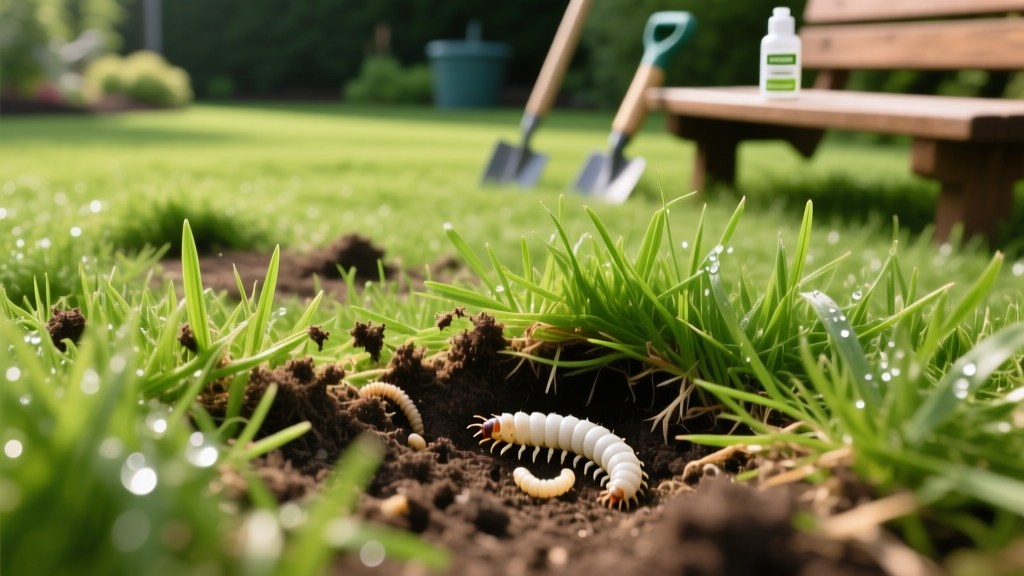
How to Treat Grubs in Grass: Preventative and Curative Tactics
The Grub Threat: Identifying the Root Destroyers
White grubs are the larval stage of scarab beetles, including Japanese beetles, June bugs, and European chafers. These C-shaped, cream-colored insects live just below the soil surface, severing grass roots from the soil profile. When roots are destroyed, the turf detaches, feeling spongy underfoot and rolling back like loose carpet. Before learning how to treat grubs in grass, you must confirm an active infestation. According to University of Minnesota Extension, treatment is only economically justified if you find a threshold of 5 to 10 grubs per square foot. To test, use a flat-edged shovel to cut a 12-by-12-inch square of sod, peel it back, and count the grubs in the top three inches of soil.
Yard Defense Insight: Grub damage is frequently confused with drought stress. If your brown patches do not respond to deep irrigation, and the grass pulls up effortlessly without root resistance, you are likely dealing with a grub infestation rather than a watering issue.
Preventative vs. Curative: Selecting Your Strategy
Understanding how to treat grubs in grass requires matching the chemical intervention to the grub's life cycle. Grubs feed most aggressively in late summer and early fall (August to October), then burrow deep to overwinter, returning to the root zone in spring. Your treatment window dictates the active ingredient you must use.
| Strategy | Active Ingredient | Application Window | Cost per 5,000 sq ft |
|---|---|---|---|
| Preventative | Chlorantraniliprole (e.g., Scotts GrubEx) | April to Early June | $25 - $35 |
| Preventative | Imidacloprid (e.g., Bayer Advanced) | June to July | $20 - $30 |
| Curative | Trichlorfon (e.g., Dylox) | August to October (Active feeding) | $45 - $60 |
| Biological | Heterorhabditis bacteriophora Nematodes | Late Summer (Soil > 60°F) | $35 - $50 |
Executing a Curative Treatment for Active Infestations
If you discover an active infestation in late summer or early fall, preventative chemicals will not work. You need a fast-acting contact insecticide. Trichlorfon (commonly sold under the brand name Dylox) is the industry standard for curative grub control. It degrades rapidly in the soil, making it highly effective at killing active grubs within 24 to 48 hours without leaving long-term chemical residues.
Step-by-Step Curative Application
- Mow the Lawn Short: Cut your grass to a height of 1.5 to 2 inches. This reduces the thatch barrier and allows the granules to reach the soil surface directly.
- Calibrate Your Spreader: Set your rotary spreader to the exact rate specified on the Dylox label (typically setting 4 or 5 on a Scotts spreader for a rate of 1.15 lbs per 1,000 sq ft).
- Apply Evenly: Walk at a steady pace, overlapping your wheel tracks slightly to ensure uniform coverage.
- Water Immediately: This is the most critical step. Trichlorfon must be washed into the top inch of soil where the grubs are feeding. Apply exactly 0.25 to 0.5 inches of water immediately after spreading. Use a rain gauge to measure; insufficient watering will leave the chemical trapped in the thatch, rendering it useless.
Warning: Never apply Trichlorfon to lawns with a thatch layer thicker than 0.5 inches. The chemical will bind to the organic matter and never reach the soil. Dethatch or core aerate before application if your thatch is excessive.
Executing a Preventative Defense Strategy
For long-term yard defense, preventative treatments are vastly superior. Chlorantraniliprole (the active ingredient in Scotts GrubEx) is a systemic insecticide that takes 60 to 90 days to fully activate in the soil. When applied between April and early June, it sits in the root zone and kills young, newly hatched grubs in July and August before they can grow large enough to cause significant root damage.
Apply preventative granules to a dry lawn and water them in with 0.25 inches of water to move the chemical past the thatch layer. Unlike older neonicotinoids like Imidacloprid, Chlorantraniliprole has a highly favorable environmental profile and poses minimal risk to pollinators when applied correctly and watered in, as noted by University of Kentucky Entomology.
The Rodent Connection: Secondary Pest Defense
Treating grubs is not just about saving your grass; it is a foundational element of rodent yard defense. Moles, skunks, raccoons, and armadillos actively forage for white grubs. A severe grub infestation acts as an all-you-can-eat buffet, drawing these digging mammals into your yard. Moles will tunnel through the root zone, lifting the sod and causing secondary desiccation, while skunks and raccoons will tear up large chunks of turf overnight to access the larvae.
By eliminating the grub population, you remove the primary food source driving this foraging behavior. If you are currently battling mole tunnels or skunk damage, applying a curative Trichlorfon treatment followed by a preventative Chlorantraniliprole application the next spring is the most effective way to break the cycle and force these rodents to forage elsewhere.
Biological Controls: Beneficial Nematodes
For homeowners managing organic lawns or those looking to avoid synthetic chemicals, beneficial nematodes offer a highly effective biological alternative. Specifically, you must source the Heterorhabditis bacteriophora (Hb) species, as it actively seeks out and infects white grubs. Other species, like Steinernema feltiae, are ineffective against scarab larvae.
Nematode Application Rules
- Timing: Apply in late summer when soil temperatures are consistently above 60°F but below 85°F.
- Light Sensitivity: Nematodes are destroyed by UV light. Apply them at dusk or on a heavily overcast day.
- Hydration: The soil must be moist before application. Water the lawn the day before, apply the nematode suspension via a hose-end sprayer, and water again immediately after to wash them into the soil profile.
- Viability: Purchase nematodes from reputable biological suppliers and ensure they are kept refrigerated until the exact moment of application. Dead nematodes provide zero pest control.
Post-Treatment Lawn Recovery Protocol
Killing the grubs does not instantly repair the severed roots. Once the infestation is neutralized, you must stimulate rapid root regeneration. Apply a high-phosphorus starter fertilizer (such as a 10-18-10 NPK ratio) at a rate of 1 lb of nitrogen per 1,000 square feet. Phosphorus is critical for rebuilding the destroyed root mass. For areas where the turf has completely detached and died, rake out the dead material, loosen the top inch of soil, and overseed with a shade- or sun-appropriate grass seed mix, keeping the seedbed constantly moist for 14 days.
Frequently Asked Questions
Does milky spore effectively treat grubs?
Milky spore (Paenibacillus popilliae) is a biological bacteria that only targets Japanese beetle grubs. It is completely ineffective against June bug or European chafer grubs. Furthermore, it can take 2 to 4 years to establish in the soil to provide meaningful control, making it a poor choice for immediate yard defense.
Will treating for grubs kill the moles in my yard?
Not directly. Grub treatment removes the moles' food source, which will eventually cause them to relocate. However, if your yard has a high population of earthworms, moles may stay even after the grubs are gone, as earthworms make up the majority of a mole's diet.
Can I apply grub control and grass seed at the same time?
Yes, if you are using Chlorantraniliprole or Trichlorfon, these chemicals will not inhibit grass seed germination. However, avoid using preventative products containing Mesotrione (often found in crabgrass preventers) when seeding, as it will kill emerging grass seedlings.

