
Pest Control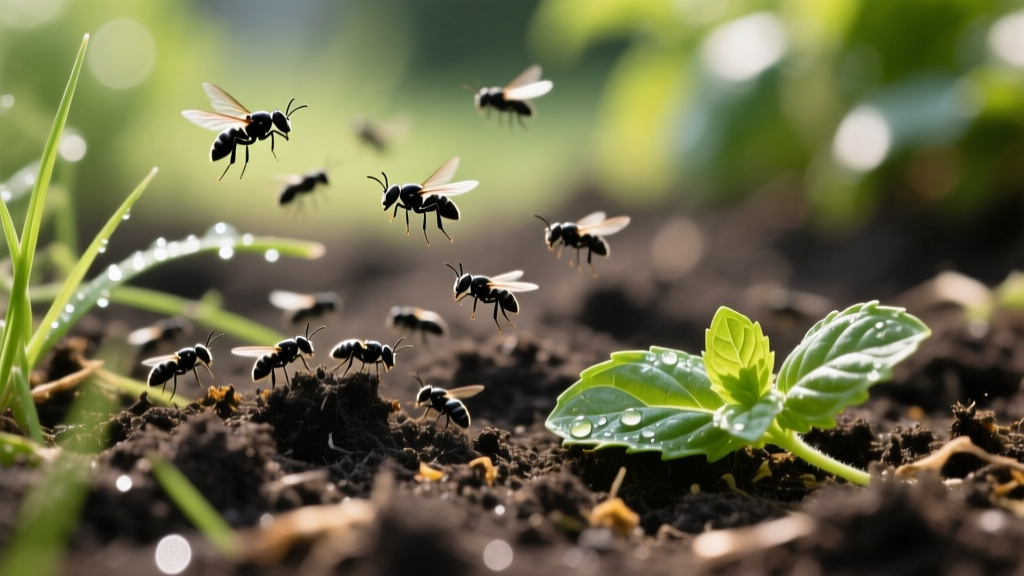
How to Eradicate Small Black Flying Insects in Garden Soil
The small black flying insects hovering over your garden beds, compost piles, or indoor seedling trays are almost certainly fungus gnats (family Sciaridae, primarily Bradysia species). While the adults are a nuisance, the real threat lies beneath the soil surface. Fungus gnat larvae feed on fine root hairs and organic matter, severely stunting seedling growth and vectoring destructive soil-borne pathogens like Pythium and Fusarium.
Eradicating these pests requires a multi-phase approach targeting both the adult flight cycle and the subterranean larval stage. Broad-spectrum insect sprays are entirely ineffective against soil-dwelling larvae. This guide details a precise, biologically driven protocol to eliminate small black flying insects from your garden soil and protect your root systems.
The Identification Matrix: Fungus Gnats vs. Lookalikes
Before deploying treatments, confirm you are dealing with fungus gnats. Misidentifying the pest leads to wasted money and ineffective chemical applications. Use this diagnostic matrix to differentiate the three most common small black flying insects found in and around garden environments.
| Insect Type | Size & Appearance | Flight Pattern | Primary Breeding Ground | Root Damage Risk |
|---|---|---|---|---|
| Fungus Gnats | 1/8 inch, dark grey/black, long legs, Y-shaped wing veins | Weak, erratic, mostly running on soil surface | Damp potting mix, decaying organic matter, compost | High (Larvae eat root hairs) |
| Fruit Flies | 1/8 inch, tan/brown body, distinct red eyes | Strong, direct, hovers around fruit/ferments | Overripe fruit, unsealed compost bins, fermenting sap | None |
| Drain Flies | 1/16 inch, fuzzy/moth-like, dark grey, heart-shaped wings | Short, hopping flights, rests on walls | Gelatinous buildup in outdoor drains, sewer lines | None |
Why Moisture Management Dictates Treatment Success
Fungus gnats require consistently moist topsoil to reproduce. A single female can lay up to 200 eggs in damp organic media, which hatch in 3 to 4 days. If the top two inches of your garden soil or seedling trays remain saturated, the life cycle accelerates, and biological treatments will be overwhelmed by the sheer volume of new larvae.
Critical Failure Point: Applying biological larvicides to waterlogged soil dilutes the active ingredients and creates anaerobic conditions that kill beneficial soil microbes. You must initiate a dry-out phase before applying any soil drenches.
The 3-Phase Eradication Protocol
This protocol utilizes Bacillus thuringiensis israelensis (Bti) and beneficial nematodes to break the reproductive cycle without harming earthworms, pollinators, or plant roots.
Phase 1: The Dry-Out and Trap Phase (Days 1–4)
- Cease Top Watering: Allow the top 2 inches of soil to dry out completely. This desiccates newly laid eggs and early-instar larvae.
- Deploy Sticky Traps: Insert yellow sticky cards (such as Bonide Yellow Sticky Traps, approx. $8 for 10 cards) just above the soil line. The color yellow specifically attracts adult fungus gnats. This prevents adults from laying new eggs while you treat the soil.
- Switch to Bottom Watering: For potted seedlings, place pots in a tray with 1 inch of water for 20 minutes, allowing capillary action to hydrate the roots while keeping the topsoil bone-dry.
Phase 2: Bti Larvicide Drench (Day 5)
Bacillus thuringiensis israelensis (Bti) is a naturally occurring bacterium that produces crystal proteins. When ingested by fungus gnat larvae, these proteins bind to the alkaline gut lining, causing fatal ruptures. It is entirely safe for mammals, birds, and aquatic life.
- Product Selection: Summit Mosquito Bits (contains 2.86% Bti). As of 2026, a 30-ounce canister retails for approximately $16.
- Preparation: Steep 4 tablespoons of Mosquito Bits in 1 gallon of lukewarm water for 24 hours. Strain out the solid bits to prevent clogging your watering can, retaining the Bti-infused liquid.
- Application: Drench the soil thoroughly until liquid runs out of the drainage holes or penetrates 4 inches deep in garden beds. Apply once a week for three consecutive weeks to catch all hatching cohorts.
Phase 3: Nematode Deployment (Day 12)
For severe infestations or high-value garden beds, introduce Steinernema feltiae nematodes. These microscopic roundworms actively hunt fungus gnat larvae, entering their bodies and releasing Xenorhabdus bacteria, which kills the host within 48 hours.
- Product Selection: Nemasys F or Arbico Organics Nematodes (approx. $35 for 5 million nematodes, treating up to 2,000 sq. ft.).
- Temperature Constraints: Soil temperature must be between 50°F and 86°F. Do not apply if the soil is cold or baking in direct midday sun.
- Application: Mix the nematode powder into water according to package rates and apply immediately. Steinernema feltiae will die within hours if left sitting in a mixing bucket. Water the soil lightly immediately after application to help them migrate below the surface.
Common Treatment Failures and Edge Cases
According to integrated pest management guidelines from UC Agriculture and Natural Resources, the most common reason for recurring gnat populations is the reintroduction of infested media or the failure to treat adjacent microclimates.
Edge Case: The Compost Bin Reservoir
If you treat your garden beds but ignore an adjacent compost bin, adult gnats will simply fly back in. Ensure compost bins are sealed, or apply a 2-inch layer of dry, shredded cardboard to the top of the compost pile to create a physical barrier that prevents adults from accessing the moist interior to lay eggs.
If you treat your garden beds but ignore an adjacent compost bin, adult gnats will simply fly back in. Ensure compost bins are sealed, or apply a 2-inch layer of dry, shredded cardboard to the top of the compost pile to create a physical barrier that prevents adults from accessing the moist interior to lay eggs.
Another frequent error is using chemical pyrethroid sprays (like Raid or Sevin) on the soil surface. As noted by Penn State Extension, contact insecticides do not penetrate the soil profile deeply enough to reach the larvae, and they indiscriminately kill predatory soil mites (Hypoaspis milesii) that naturally keep gnat populations in check.
Long-Term Preventative Soil Management
Once the life cycle is broken, alter your soil architecture to prevent future colonization. Fungus gnats cannot penetrate coarse, fast-draining surfaces.
- Sand Top-Dressing: Apply a 1/2-inch layer of coarse horticultural sand (not fine play sand, which compacts and retains moisture) to the surface of seedling trays. This creates a dry, abrasive physical barrier that deters egg-laying.
- Organic Matter Ratios: Reduce the percentage of peat moss in your garden beds. Peat holds immense moisture and breaks down into the exact fungal food source gnat larvae require. Substitute 20% of your peat with coir or fine pine bark fines to improve drainage while maintaining water retention deeper in the root zone.
- Sterilize Reused Pots: If reusing plastic nursery pots, scrub them with a 10% bleach solution to destroy lingering pupae and fungal spores before adding fresh soil.
By combining strict moisture control, targeted Bti drenches, and biological nematode predators, you will permanently eradicate small black flying insects from your soil ecosystem without resorting to toxic synthetic pesticides.

