
Pest Control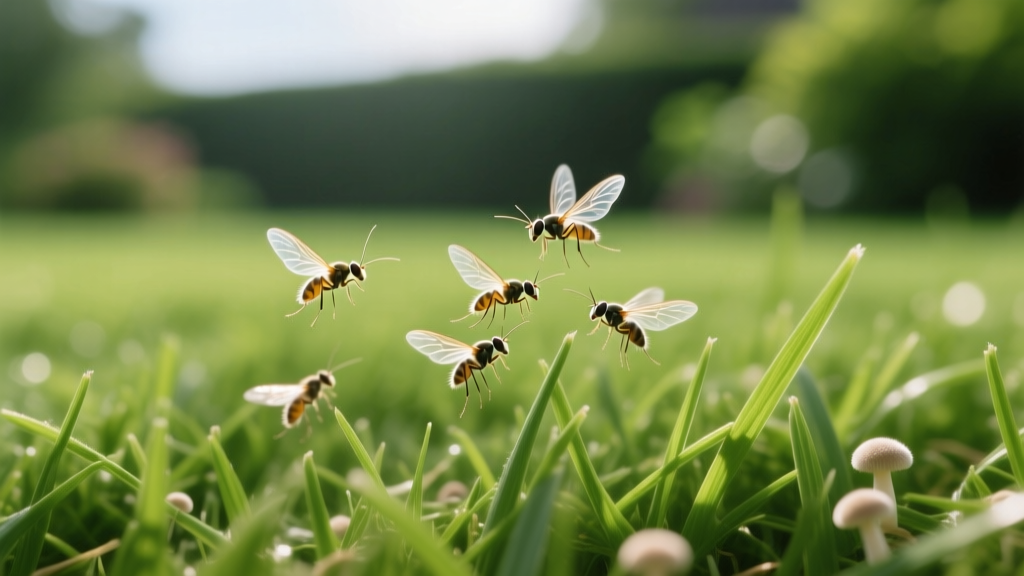
How to Identify and Treat Very Small Flying Insects in Lawns
The Beginner's Guide to Micro-Pests in Your Yard
When you notice a cloud of tiny bugs erupting from your lawn, garden beds, or potted plants, the immediate reaction is often to reach for a broad-spectrum aerosol spray. This is a critical mistake. The category of 'very small flying insects' encompasses dozens of distinct species with entirely different life cycles, habitats, and vulnerabilities. Misidentifying a 1/16-inch pest can lead to wasted money, chemical resistance, and the destruction of beneficial predatory insects that naturally keep your garden balanced.
For homeowners and beginner gardeners, mastering the identification and targeted eradication of these micro-pests is essential. This guide breaks down the most common very small flying insects found in North American lawns and gardens, providing exact product recommendations, biological control metrics, and cultural prevention protocols to reclaim your outdoor space.
Quick Diagnostic Rule: If the insects swarm your face and eyes, they are likely moisture-seeking midges or gnats. If they erupt from the undersides of leaves when you brush past a plant, they are whiteflies. If they hover just above the soil line when you water, they are fungus gnats.
Identification Matrix: The Usual Suspects
Before purchasing any treatment, you must accurately identify the pest. Use this comparison matrix to narrow down the culprit based on visual characteristics and behavioral patterns.
| Insect Type | Average Size | Color / Appearance | Primary Habitat | Damage / Nuisance Level |
|---|---|---|---|---|
| Fungus Gnats (Bradysia spp.) | 1/8 inch | Dark gray/black, long legs, Y-wing vein | Damp soil, compost piles, overwatered lawns | Low (adults); High (larvae feed on roots) |
| Whiteflies (Trialeurodes spp.) | 1/16 inch | Powdery white, triangular, moth-like | Undersides of broadleaf plants, tomatoes, hibiscus | High (sap-sucking, honeydew, sooty mold) |
| Thrips (Frankliniella spp.) | 1/25 inch | Pale yellow to dark brown, slender, fringed wings | Inside flower blossoms, new leaf buds | High (silvering of leaves, vector for viruses) |
| Biting Midges (Culicoides spp.) | 1/8 inch | Gray, mottled wings, humpbacked | Marshy lawn edges, decaying organic matter | High (painful bites to humans/pets) |
Fungus Gnats: The Moisture-Loving Nuisance
Fungus gnats are the most common complaint among gardeners dealing with very small flying insects. While the adults are merely a nuisance, hovering around your face and windows, the real threat lies beneath the soil. The translucent, black-headed larvae feed on soil fungi and delicate plant root hairs, causing seedlings to damp off and mature plants to stunt or yellow.
According to Penn State Extension, overwatering is the primary catalyst for fungus gnat infestations. The top two inches of soil must dry out between waterings to break the reproductive cycle, which takes approximately 21 to 28 days at room temperature.
Targeted Eradication Protocol
- Biological Larvicide (Bti): Use products containing Bacillus thuringiensis var. israelensis (such as Summit Mosquito Bits). The National Pesticide Information Center notes that Bti produces proteins that specifically target the alkaline guts of fly larvae, leaving earthworms and beneficial soil microbes unharmed. Dosage: Steep 4 tablespoons of Bti granules in 1 gallon of water for 24 hours, then use this tea to drench the affected soil.
- Beneficial Nematodes: Apply Steinernema feltiae (commercially sold as Nemasys). These microscopic worms hunt gnat larvae in the soil. Cost & Coverage: Expect to pay $35 to $45 for a 5-million count pouch, which treats up to 2,000 square feet of garden beds or lawn. Apply via a hose-end sprayer in the early evening when UV degradation is lowest.
Whiteflies and Thrips: The Sap-Sucking Destroyers
Unlike gnats, whiteflies and thrips are direct agricultural threats. Whiteflies congregate on the undersides of leaves, using piercing-sucking mouthparts to drain plant phloem. They excrete a sticky residue called honeydew, which rapidly cultivates black sooty mold, blocking photosynthesis. Thrips are even smaller and more elusive, rasping the surface of leaves and flowers, leaving behind a distinct silvery, scarred appearance.
Warning on Pyrethroids: Avoid using broad-spectrum synthetic pyrethroids (like bifenthrin or permethrin) for whiteflies. These pests reproduce via parthenogenesis (females cloning themselves) and develop chemical resistance in as few as three generations. Furthermore, pyrethroids will wipe out the parasitic wasps (Encarsia formosa) that naturally control whitefly populations.
Botanical and Biological Controls
For active whitefly and thrip infestations, rotate between two distinct modes of action to prevent resistance:
- Insecticidal Soaps (Potassium Salts of Fatty Acids): These work on contact by dissolving the insect's waxy outer cuticle, causing rapid dehydration. Mix a 1.5% to 2% solution and spray directly on the undersides of leaves at dusk. This will not harm pollinators once the spray has dried.
- Spinosad: Derived from the soil bacterium Saccharopolyspora spinosa, Spinosad (found in Monterey Garden Insect Spray) is highly effective against thrips and whitefly larvae. It acts on the insect's nervous system. Apply at a rate of 2 ounces per gallon of water, limiting applications to three times per season to maintain efficacy.
Biting Midges (No-See-Ums): The Outdoor Annoyance
If your lawn borders a wetland, pond, or heavily shaded, poorly drained area, you may be dealing with biting midges. Often called 'no-see-ums' due to their microscopic size, these insects breed in the moist, decaying organic matter at the soil surface. While they do not harm plants, their bites cause intensely itchy welts on humans and pets, rendering the yard unusable during dawn and dusk.
Treatment requires environmental modification. Because midges breed in the top layer of damp thatch, aerating your lawn and applying a 1/4-inch layer of coarse sand to poorly drained areas can drastically reduce larval survival rates. For standing water features that cannot be drained, floating Bti dunks (Mosquito Dunks) will control midge larvae alongside mosquito larvae.
The 3-Step Beginner Eradication Framework
When facing an outbreak of very small flying insects, follow this sequential framework to ensure long-term control rather than a temporary fix.
Step 1: Trap and Quantify
Deploy colored sticky traps to monitor population levels. Use yellow traps for whiteflies, aphids, and fungus gnats. Use blue traps specifically for thrips, as they are highly attracted to the blue spectrum. Place traps at the soil line and just above the plant canopy. Check them weekly; a sudden spike indicates a new generation has hatched.
Step 2: Alter the Microclimate
Insects thrive in specific humidity and moisture bands. Reduce irrigation frequency by 20% and switch to deep, infrequent watering. Prune dense canopy foliage to increase airflow and UV penetration to the soil surface, which naturally desiccates pupating insects and surface fungi.
Step 3: Execute a Targeted Strike
Deploy biological controls (Bti, Nematodes, Spinosad) precisely when sticky traps indicate a peak in adult activity. This ensures you are interrupting the mating cycle and targeting the subsequent larval generation before they can cause structural damage to your plants.
'The presence of very small flying insects is rarely the core problem; it is a symptom of an ecological imbalance, usually driven by excess moisture or a lack of predatory biodiversity in the soil food web.' — Integrated Pest Management Principles
By shifting your perspective from 'bug killing' to 'habitat management,' you will naturally suppress populations of gnats, midges, and whiteflies. Consistent monitoring, precise biological applications, and disciplined watering practices will keep your lawn and garden thriving without the need for harsh, disruptive chemicals.

