
Pest Control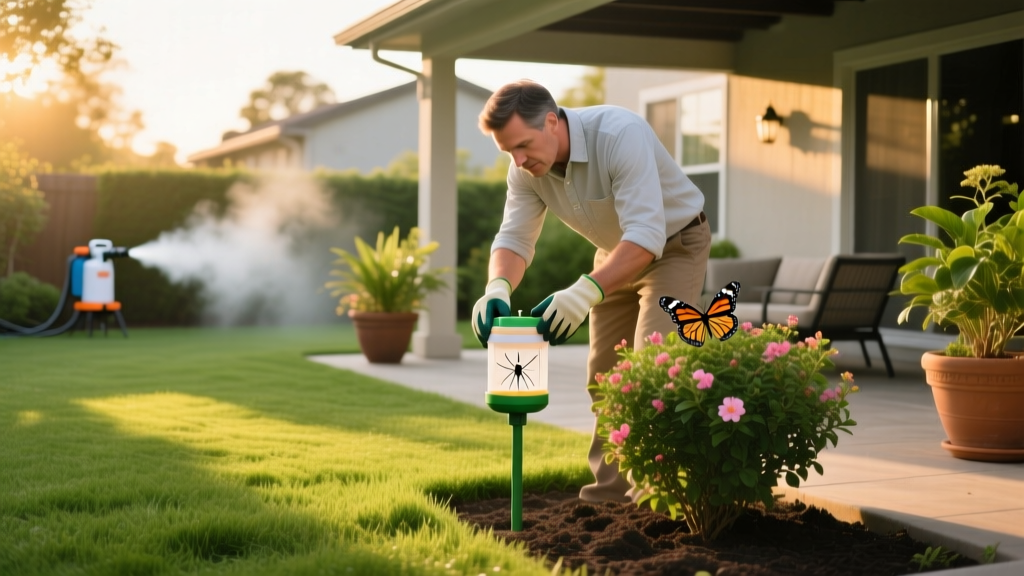
How to Treat Yard for Mosquitoes: A Proven Defense Strategy
The Biology of Backyard Breeding: Why They Target Your Property
Female mosquitoes require standing water to complete their reproductive cycle, but the volume required is drastically underestimated by most homeowners. A single female can lay up to 300 eggs in a space no larger than a bottle cap. Over a 90-day summer season, a localized population can explode into the tens of thousands if left unchecked. Understanding how to treat yard for mosquitoes requires shifting from reactive swatting to proactive, integrated pest management (IPM) that targets both the aquatic larval stage and the terrestrial adult stage.
CRITICAL WARNING: The UV Zapper Myth
Do not rely on ultraviolet bug zappers for mosquito defense. Research published by the American Mosquito Control Association confirms that UV light traps primarily kill beneficial, non-biting insects like moths and beetles. Mosquitoes are not attracted to UV light; they track carbon dioxide, body heat, and specific chemical signatures like octenol. Investing $150 in a zapper yields near-zero mosquito reduction.
Phase 1: Source Reduction and the 48-Hour Rule
The foundation of any yard defense strategy is eliminating the nursery. Mosquito eggs can hatch in as little as 48 hours under optimal summer temperatures (80°F to 90°F). A thorough perimeter audit is your first line of defense.
Hidden Breeding Hotspots Often Missed by Homeowners
- Corrugated Landscape Drain Pipes: The ridges inside flexible black drain pipes hold water indefinitely. Cap the ends or replace them with smooth-walled PVC.
- AC Condensate Drip Lines: If your HVAC drip line terminates in a shallow depression against your foundation, it creates a permanent, shaded micro-pool. Extend the line 5 feet into a graded drainage area.
- Tire Swings and Tarps: Drill a 1/2-inch drainage hole at the lowest point of any tire swing. Ensure pool covers and winter tarps are pulled taut to prevent center-sag pooling.
- Bromeliads and Elephant Ears: These ornamental plants naturally cup water in their leaf axils. Flush them with a hose weekly or treat them directly with biological larvicides.
Phase 2: Biological Warfare with Bti Larvicides
For water features that cannot be drained—such as birdbaths, koi ponds, rain barrels, and retention swales—chemical adulticides are toxic and ineffective. Instead, deploy Bacillus thuringiensis israelensis (Bti). Bti is a naturally occurring soil bacterium that produces proteins toxic only to the digestive systems of mosquito, black fly, and fungus gnat larvae. It is completely safe for fish, birds, pets, and pollinators, a fact corroborated by the Environmental Protection Agency's mosquito control guidelines.
Bti Deployment Strategy and Pricing
The industry standard product is Summit Mosquito Dunks (approx. $12 for a 6-pack). A single dunk treats 100 square feet of water surface area for 30 days. However, most backyard water sources are smaller than this.
- Birdbaths & Plant Saucers: Break a dunk into quarters. One quarter is sufficient for up to 25 square feet of water.
- Rain Barrels: Use one whole dunk per standard 55-gallon barrel.
- Shallow Swales & Ditches: Switch to Mosquito Bits (the granular form of Bti). Apply 1 tablespoon per 9 square feet of water surface. Bits provide a faster initial kill (24 hours) but only last 7 to 14 days, making them ideal for rapid knockdown before transitioning to dunks for long-term maintenance.
Phase 3: Chemical Barrier Treatments for Adult Mosquitoes
While Bti stops the next generation, you must eliminate the existing adult population resting in your yard's foliage. Adult mosquitoes rest on the undersides of leaves in shaded, humid areas during the heat of the day. Applying a residual synthetic pyrethroid barrier spray to these resting sites is the most effective method for immediate yard reclamation.
Active Ingredient Comparison Matrix
| Active Ingredient | Commercial Product Example | Residual Life | Cost per 1,000 sq ft | Pollinator Risk |
|---|---|---|---|---|
| Bifenthrin | Talstar P Professional | 21 - 30 Days | $1.50 - $2.50 | High (if sprayed on blooms) |
| Permethrin | Martin's Permethrin SFR | 14 - 21 Days | $1.00 - $1.80 | High (highly toxic to bees) |
| Lambda-Cyhalothrin | Demand CS | 30 - 45 Days | $3.00 - $4.50 | Moderate (micro-encapsulated) |
Precision Application Techniques
To treat a standard 5,000 square foot yard using Bifenthrin (Talstar P), you will need a 1-gallon pump sprayer or a motorized backpack mist blower. The standard dilution rate for heavy mosquito pressure is 1 fluid ounce of Talstar P per gallon of water, which covers 1,000 square feet.
The Dusk Mandate: Synthetic pyrethroids are highly toxic to foraging honeybees. You must apply barrier sprays at dusk or just before dawn when bees are inside the hive and mosquitoes are actively seeking hosts. Spray the undersides of leaves on dense shrubbery, ivy, hostas, and the lower 3 feet of tree canopies. Never spray open blossoms or flowering weeds like clover and dandelions.
Automated Misting Systems vs. Manual Backpack Spraying
Homeowners with budgets exceeding $2,500 often consider automated mosquito misting systems. These systems feature a 55-gallon reservoir of insecticide (typically pyrethrum or permethrin) connected to a network of 1/4-inch nylon tubing and brass nozzles hidden in the landscaping. The system is programmed to mist for 60 to 90 seconds, two to three times daily.
ROI Analysis: Automated vs. Manual
- Automated Misting: Initial installation costs $2,500 to $4,000. Annual refill and maintenance costs average $400. Drawback: Prone to wind drift, which can coat patio furniture and kill beneficial insects if the wind sensors fail or are improperly calibrated.
- Manual Backpack Mist Blower: A commercial-grade gas-powered mist blower (like the Stihl SR 450) costs roughly $750. Chemical costs for a full season are under $150. Advantage: Total control over application targeting, zero drift waste, and significantly lower pollinator exposure risk.
The 30-Day Integrated Mosquito Eradication Calendar
According to entomological data referenced by the Centers for Disease Control and Prevention (CDC), breaking the reproductive cycle requires consistent, timed interventions. Follow this 30-day protocol at the start of the mosquito season (typically when evening temperatures consistently exceed 65°F).
Week 1: Source Reduction and Biological Knockdown
- Conduct the property audit and eliminate all dispensable standing water.
- Deploy Bti dunks in all permanent water features, rain barrels, and drainage swales.
- Clean gutters and flush out corrugated downspout extensions.
Week 2: The Initial Chemical Barrier
- Wait until late evening. Apply a Bifenthrin barrier spray to all shaded foliage, perimeter shrubbery, and ground cover.
- Allow the spray to dry completely (usually 1 to 2 hours) before allowing pets or children back into the treated zones.
Week 3: Inspection and Spot Treatment
- Inspect the yard after any heavy rainfall. Rain can create new depressions and wash away granular Bti bits.
- Re-apply Bti bits to any newly formed puddles or flushed drainage areas.
Week 4: The Maintenance Barrier
- Apply the second round of Bifenthrin barrier spray. Synthetic pyrethroids degrade under UV exposure and heavy rain, so a 21-to-30-day reapplication cycle is mandatory to maintain the adulticidal shield.
- Replace Bti dunks in permanent water features every 30 days throughout the summer.
By combining aggressive source reduction, targeted biological larvicides, and precisely timed chemical barrier applications, you can reclaim your outdoor spaces and establish a robust, long-term defense against mosquito populations.

