
Pest Control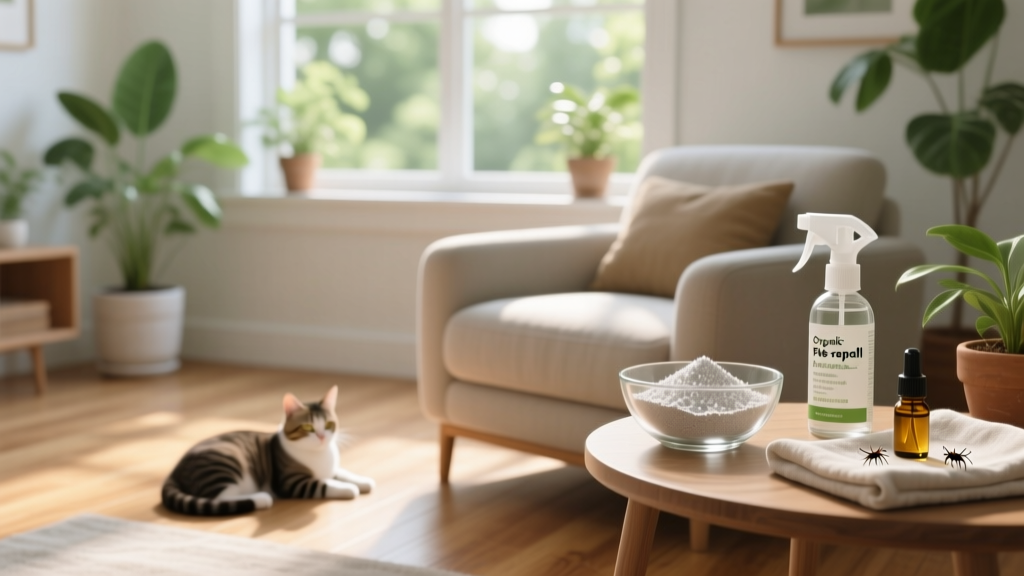
Treating Fleas in the House Naturally: The Chemical-Free Protocol
When addressing a flea infestation, most homeowners immediately reach for chemical foggers or synthetic Insect Growth Regulators (IGRs). However, these methods frequently fail because they cannot penetrate the protective cocoon of the flea pupae, leading to cyclical re-infestations. Treating fleas in the house naturally requires a shift from chemical toxicity to mechanical and biological disruption. By targeting the physical structure of the flea's exoskeleton and altering the environmental microclimate, you can achieve total eradication without exposing your family or pets to neurotoxic pesticides.
The 95% Rule of Flea Infestations
Adult fleas living on your pet represent only 5% of the total population. The remaining 95% exists in your home environment as eggs (50%), larvae (35%), and pupae (10%). Any natural treatment protocol that does not aggressively target the environmental 95% will fail.
Phase 1: Mechanical and Desiccant Eradication (Days 1-3)
The foundation of any chemical-free flea protocol is desiccation. Fleas possess a waxy epicuticle that retains moisture. When this layer is compromised, the insect rapidly dehydrates and dies. Diatomaceous earth (DE) is the most effective natural desiccant, but it must be applied with precise methodology.
Selecting and Applying Diatomaceous Earth
You must use Food Grade Diatomaceous Earth (amorphous silicon dioxide). Never use pool-grade DE, which is calcined (heat-treated) and contains crystalline silica that is highly toxic to mammalian lungs.
- Preparation: Put on an N95 respirator. While food-grade DE is non-toxic if ingested, inhaling any fine particulate matter can cause mechanical irritation to the respiratory tract.
- Application Rate: Apply a barely visible, micro-fine dusting over all carpets, rugs, pet bedding, and baseboard crevices. The target rate is approximately 1 pound per 1,000 square feet. If you can easily see piles of white powder, you have applied too much; fleas will simply walk around heavy clumps.
- Dwell Time: Leave the DE undisturbed for a minimum of 48 hours, ideally up to 72 hours.
- Extraction: Vacuum thoroughly using a HEPA-filter vacuum. The physical vibration of the vacuum also triggers pre-emerged adult fleas to hatch from their pupal cocoons, exposing them to the DE.
Humidity Failure Point: Diatomaceous earth loses its desiccant properties when ambient relative humidity exceeds 65%. If you live in a high-humidity climate, run a dehumidifier to drop indoor humidity below 50% before and during the DE treatment phase.
Phase 2: Thermal and Botanical Disruption (Days 4-14)
Once the initial adult and larval populations are desiccated, you must address the eggs and disrupt the pheromone trails that guide flea larvae to organic debris.
The 130°F Thermal Threshold
Flea eggs and larvae are highly susceptible to heat, but standard warm water washing is insufficient. All pet bedding, removable slipcovers, and area rugs must be laundered in water heated to a minimum of 130°F (54°C) for at least 10 minutes. This specific thermal threshold denatures the proteins in the flea's cellular structure, ensuring 100% mortality of eggs and larvae trapped in fabric weaves.
Botanical Repellent Matrix
After vacuuming up the DE, apply a botanical barrier to deter emerging adults and repel new invaders. The EPA recognizes several botanical oils as effective minimum-risk pesticides. Cedarwood oil (*Juniperus virginiana*) is particularly lethal to fleas due to its high cedrol content, which disrupts their octopamine receptors.
| Botanical Ingredient | Active Compound | Dilution Ratio (per 16 oz water) | Pet Safety Profile |
|---|---|---|---|
| Cedarwood Oil | Cedrol, Thujopsene | 15 drops | Safe for dogs; highly toxic to cats |
| Lemongrass Oil | Citral, Geraniol | 10 drops | Safe for dogs; toxic to cats |
| Rosemary Oil | 1,8-Cineole, Camphor | 10 drops | Safe for dogs; use with caution for cats |
| Liquid Castile Soap | Saponins (Emulsifier) | 1 teaspoon | Completely safe for all pets |
Formulation Note: Essential oils will not mix with water without an emulsifier. The liquid castile soap is mandatory to prevent the oils from floating to the top, which can cause localized chemical burns on pet skin if sprayed directly.
Phase 3: Outdoor Perimeter Defense (Biological Control)
According to the Centers for Disease Control and Prevention (CDC), fleas thrive in shaded, humid outdoor microclimates before being tracked indoors. Treating the house naturally is futile if the perimeter remains a breeding ground.
Deploying Beneficial Nematodes
Chemical yard sprays kill beneficial soil ecology. Instead, use Steinernema carpocapsae, a microscopic entomopathogenic nematode. These organisms actively seek out flea larvae in the soil, entering their bodies and releasing symbiotic bacteria that kill the larvae within 48 hours.
- Purchasing: Buy refrigerated, live nematodes (usually sold in sponges or gels containing 1 million to 5 million organisms).
- Application Rate: Apply 1 million nematodes per 1,000 square feet of shaded yard area using a hose-end sprayer.
- Timing and Soil Temp: Soil temperature must be above 55°F (13°C). Apply in the early evening or on overcast days, as UV radiation rapidly kills nematodes.
- Moisture Requirement: Water the lawn lightly before and immediately after application. Nematodes require a film of water to swim through soil pores to reach flea larvae.
Troubleshooting Common Natural Treatment Failures
The 'Pupal Window' Phenomenon: Homeowners often report seeing fleas 7 to 14 days after a flawless natural treatment. This is not a failure; it is the 'pupal window.' Flea pupae are encased in a sticky, debris-covered cocoon that is entirely impermeable to DE, botanical oils, and even synthetic chemicals. The vibrations of walking and vacuuming trigger the adults to emerge. Once they emerge, they contact the residual botanical barrier and die within hours. Continue daily vacuuming for 21 days to close this window.
Edge Case: Hardwood and Laminate Flooring
DE is less effective on smooth surfaces because it cannot anchor into the floor, and sweeping simply pushes it into piles. For hardwood floors, focus your efforts on the baseboard crevices. Use a crevice tool on your vacuum to extract organic debris (skin dander and flea dirt) from the expansion gaps, as this is the sole food source for hardwood-dwelling larvae.
Cost and Efficacy Matrix: Natural vs. Chemical IGRs
Understanding the financial and practical trade-offs helps in committing to the natural protocol. Data synthesized from Texas A&M AgriLife Extension and current market pricing illustrates the long-term value of biological controls.
| Treatment Modality | Average Cost (2,000 sq ft home) | Pupal Penetration | Environmental Toxicity | Long-Term Efficacy |
|---|---|---|---|---|
| Chemical Foggers (Bug Bombs) | $25 - $40 | 0% (Fails completely) | High (Residual neurotoxins) | Low (High rebound rate) |
| Synthetic IGR Sprays (Methoprene) | $60 - $90 | 0% (Stops egg hatching only) | Moderate | Moderate (Requires 30-day reapplication) |
| Natural Protocol (DE + Botanicals) | $35 - $50 | 0% (Relies on mechanical removal) | None (Food-safe components) | High (Breaks the physical life cycle) |
| Nematodes (Outdoor Perimeter) | $25 - $35 | N/A (Targets soil larvae) | Beneficial (Aerates soil) | Very High (Self-replicating population) |
Successfully treating fleas in the house naturally is not about finding a single 'magic' organic spray. It requires executing a multi-phase protocol that combines mechanical extraction, physical desiccation, thermal shock, and biological perimeter defense. By adhering to the specific measurements, temperatures, and dwell times outlined above, you can permanently break the flea life cycle while maintaining a non-toxic indoor environment.

