
Pest Control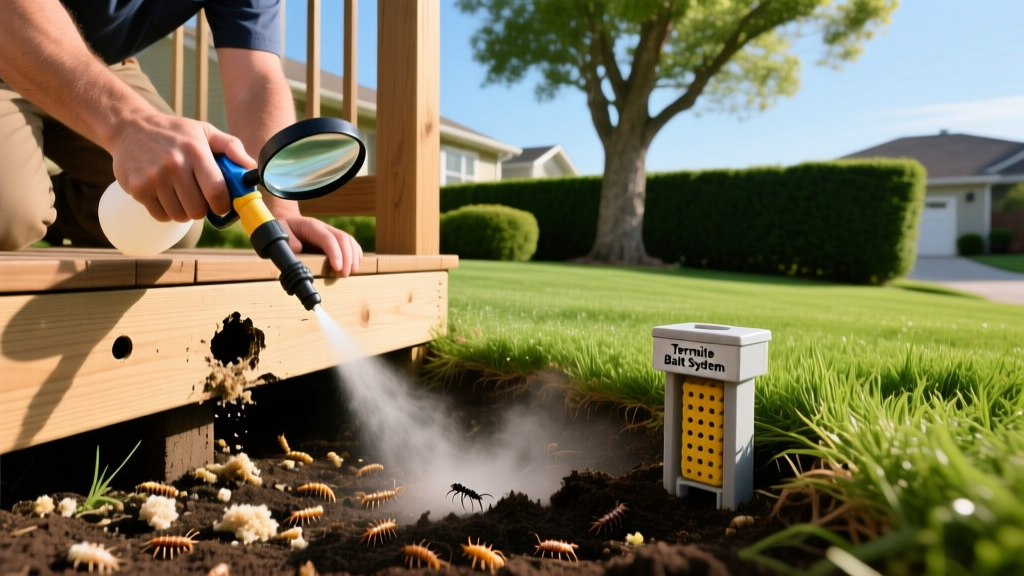
Treating Termite Infestations in Your Yard: Soil & Bait Defense
Identifying Yard Termite Activity Before Structural Damage
Subterranean termites (primarily Reticulitermes and Coptotermes species) forage up to 300 feet from their central colony in search of cellulose. When you spot evidence of termites in your yard, the colony is already well-established. Treating termite populations in the soil and landscape before they breach your home's foundation requires a targeted approach that disrupts their foraging trails and eliminates the colony.
Before selecting a treatment, confirm the species and activity level. Subterranean termites require constant contact with soil moisture and build distinct infrastructure to travel above ground:
- Mud Tubes: Pencil-sized tunnels made of soil, saliva, and feces running up foundation walls, piers, or tree stumps.
- Swarmers (Alates):strong> Discarded, translucent wings clustered near outdoor light fixtures, window sills, or garden beds in early spring.
- Frass vs. Soil: Unlike drywood termites that push out hexagonal wood pellets (frass), subterranean termites pack their galleries with soil, making wood appear muddy or hollowed out when probed with a screwdriver.
The Core Decision Matrix: Liquid Soil vs. Bait Stations
Modern termite defense relies on two primary chemical strategies. According to the UC Agriculture and Natural Resources integrated pest management guidelines, both non-repellent liquid termiticides and chitin synthesis inhibitor baits are highly effective, but they serve different logistical needs.
| Feature | Liquid Soil Barrier (e.g., Taurus SC) | In-Ground Bait (e.g., Advance Termite Bait) |
|---|---|---|
| Active Ingredient | Fipronil (Non-repellent transfer toxicant) | Diflubenzuron (Chitin synthesis inhibitor) |
| Speed of Control | 30 to 90 days via colony transfer effect | 6 to 12 months (requires foraging and molting) |
| DIY Cost (100 linear ft) | $130 - $180 | $350 - $500 (stations + active matrices) |
| Professional Cost | $8 to $12 per linear foot | $1,200 - $1,800 initial + $300 annual monitoring |
| Longevity | 5 to 10 years in undisturbed soil | Requires quarterly inspection and matrix replacement |
| Best Use Case | Immediate defense, slab foundations, heavy pressure | Landscaped yards, wells, sensitive ecosystems |
Step-by-Step: Trenching and Applying Liquid Termiticide
Creating a continuous chemical barrier is the most reliable method for treating termite foraging zones near your foundation. Fipronil-based products like Taurus SC (9.1% concentration) are the industry standard because they are undetectable to termites. Worker termites pass through the treated soil and transfer the lethal dose to the rest of the colony through grooming and trophallaxis (food sharing).
1. Dig the Perimeter Trench
Using a trenching shovel, dig a continuous trench directly against the foundation wall. The trench must be exactly 6 inches wide and 6 inches deep. If you encounter concrete walkways or patios, you will need to drill 1/2-inch holes through the concrete every 12 inches to inject the solution into the soil beneath.
2. Mix the Solution
For a 0.06% suspension, mix 0.8 fluid ounces of Taurus SC per gallon of water. A standard 20-ounce bottle will yield roughly 25 gallons of finished solution, which is sufficient to treat 60 linear feet of trench.
3. Apply at the Correct Rate
Apply 4 gallons of finished solution per 10 linear feet of trench. Pour the mixture slowly into the trench, ensuring it penetrates the soil at the foundation footing. Do not broadcast spray the surface; the chemical must be in the soil where termites forage.
4. Backfill and Tamp
Once the solution has soaked into the soil (usually 1 to 2 hours), backfill the trench with the excavated dirt and tamp it down to prevent surface water from pooling against your foundation.
Critical Safety Warning: Never apply liquid termiticides near private wells, cisterns, or within 5 feet of any water source. The Environmental Protection Agency strictly regulates soil applications to prevent groundwater contamination. Always wear chemical-resistant nitrile gloves and safety goggles when mixing and pouring concentrated Fipronil.
Installing In-Ground Bait Stations for Landscaped Yards
If your yard features extensive hardscaping, dense root systems from protected trees, or proximity to a water feature where trenching is prohibited, bait stations offer a highly effective alternative. Systems utilizing Diflubenzuron prevent termites from molting, eventually causing the colony to collapse.
Strategic Placement
Install bait stations 10 to 20 feet apart around the entire perimeter of the structure. Place them 2 to 4 feet away from the foundation—close enough to intercept foraging trails, but far enough to avoid dripping roof lines that can flood the station. Avoid placing stations directly under downspouts or in areas where landscape irrigation will constantly saturate the wood matrix.
The Monitoring Phase
Initially, insert untreated monitoring wood blocks into the stations. Inspect these blocks every 60 to 90 days. When you observe active termites feeding on the monitoring block, replace it with the active Diflubenzuron matrix cartridge. Do not disturb the termites during this swap; they will abandon the station if their mud packing is destroyed.
Yard Maintenance & Moisture Control (The Biological Defense)
Chemical treatments will fail if your yard's microclimate continually invites new colonies. Subterranean termites require high moisture levels to survive above ground. Altering your yard's hydrology is a mandatory component of long-term defense.
'Termites are essentially moisture insects that happen to eat wood. If you eliminate the moisture anomaly in your yard, you eliminate the termite's ability to establish a satellite foraging site.' — Structural Pest Control Board Guidelines
- Regrade the Soil: Ensure the soil slopes away from your foundation at a minimum grade of 1/4 inch per foot for the first 6 feet. This prevents the soil-to-wood contact that termites exploit.
- Mulch Management: Wood mulch retains massive amounts of moisture and provides a food source. Keep mulch at least 6 inches below your siding and limit the mulch layer to 2 inches thick. Consider switching to inorganic gravel or rubber mulch in high-risk zones.
- Firewood and Stump Removal: Never store firewood directly on the soil against your house. Grind down any dead tree stumps within 50 feet of the home, as these act as primary nursery sites for nascent colonies.
- Fix Irrigation Leaks: A single dripping sprinkler head or leaking hose bib can create a localized moisture dome in the soil, drawing termites from hundreds of feet away. Audit your irrigation system bi-annually.
Frequently Asked Questions
Can I treat my yard for termites if I have a vegetable garden?
Yes, but you must maintain a strict buffer zone. Fipronil and other synthetic termiticides cannot be applied within 5 feet of edible plants or vegetable beds. For areas immediately adjacent to gardens, rely on physical barriers (like stainless steel mesh) or install bait stations, which contain the active ingredient inside a sealed, tamper-resistant plastic housing that prevents soil leaching.
How deep do termite colonies go in the yard?
Subterranean termite nests are typically located 4 to 18 inches below the soil surface, though they can dig deeper in arid climates to reach the water table. This is why the 6-inch trenching method is effective; it targets the primary foraging horizon where worker termites travel between the nest and food sources.
Will nematodes kill yard termites?
Beneficial nematodes (Steinernema carpocapsae) can infect and kill individual termites in the soil, but they are not a viable standalone treatment for an active colony. The colony's sheer size (often exceeding 1 million individuals) and deep nesting habits make it impossible for nematodes to achieve the 100% mortality rate required to stop structural damage. Use nematodes as a supplementary organic soil health measure, not a primary termiticide.

