
Pest Control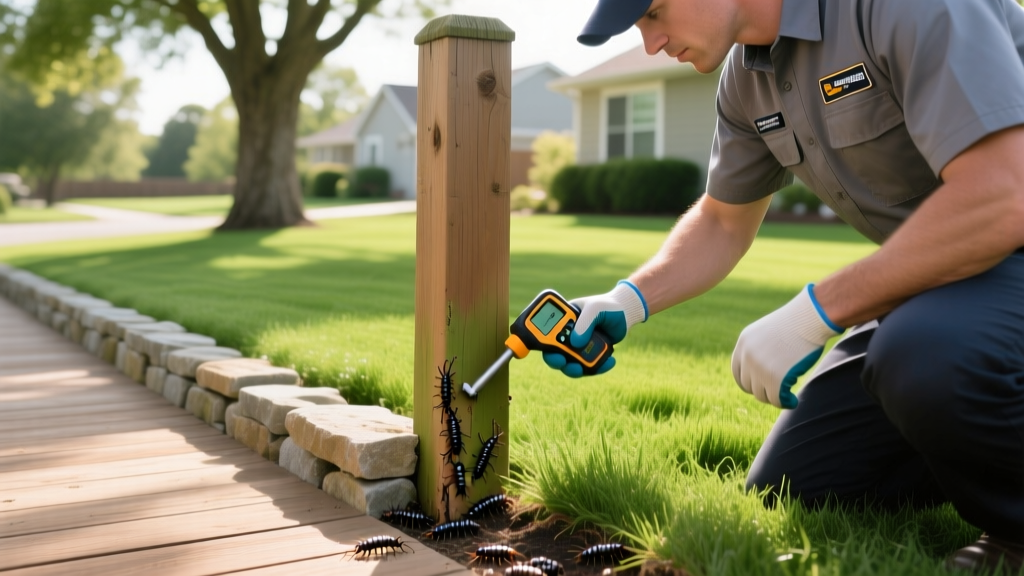
Treating Termites Outside: Yard Perimeter Defense Guide
The Perimeter Imperative: Stopping Subterranean Termites in the Yard
Subterranean termites cause over $5 billion in structural damage annually across the United States. Because these insects forage blindly through the soil seeking cellulose, your yard is the primary battlefield. Treating termites effectively requires establishing a defensive perimeter before they reach your home's wooden sill plates. According to the Environmental Protection Agency (EPA), soil-applied liquid termiticides and monitored bait systems remain the two most scientifically validated methods for protecting residential structures from the outside in.
This guide details the exact chemical concentrations, trenching dimensions, bait station spacing, and real-world costs required to build an impenetrable yard defense against Eastern, Western, and Formosan subterranean termites.
Liquid Trenching: Creating a Continuous Fipronil Barrier
Liquid termiticides create a continuous chemical zone in the soil. When termites tunnel through this treated zone, they pick up a lethal dose. Modern non-repellent chemicals like Fipronil (the active ingredient in Termidor SC and Taurus SC) utilize a 'transfer effect.' Foraging termites do not detect the chemical, allowing them to carry it back to the colony and spread it through trophallaxis (food sharing), eventually collapsing the entire population.
Exact Measurements and Dilution Rates
To achieve a continuous barrier, you must dig a trench directly adjacent to the foundation. The industry standard, backed by University of Kentucky Entomology research, mandates specific dimensions:
- Trench Dimensions: 6 inches wide and 6 inches deep, flush against the foundation wall.
- Dilution Rate: 0.8 fluid ounces of Fipronil 9.1% concentrate per 1 gallon of water.
- Application Volume: 4 gallons of finished solution per 10 linear feet of trench.
Pro Tip for Slab Foundations: If your home sits on a concrete slab, the trench alone is insufficient. You must also drill 1/2-inch holes through the concrete every 12 inches, extending 6 inches deep into the soil below, and inject 2 gallons of solution per 10 linear feet into the voids to treat the soil under the slab edge.
Step-by-Step Trenching Execution
- Clear the Perimeter: Remove all mulch, dead wood, and debris within 2 feet of the foundation.
- Dig the Trench: Use a narrow trenching shovel to dig the 6x6 inch channel. If you hit a concrete sidewalk or patio abutting the house, you will need a hammer drill with a 1/2-inch masonry bit to drill through the hardscape.
- Mix the Solution: Mix the Fipronil concentrate in a 5-gallon pump sprayer. Agitate thoroughly.
- Apply and Backfill: Pour the solution into the trench at the specified rate. As the liquid absorbs, backfill the trench with the excavated soil, mixing the treated soil back into the top layer to ensure the barrier extends to the surface.
Critical Safety Warning: Never apply liquid termiticides within 5 feet of a well, cistern, or pond. Fipronil is highly toxic to aquatic invertebrates. If your home relies on a private well, you must use a bait station system or hire a licensed professional who can apply specialized well-safe protocols.
Bait Station Networks: Colony Eradication via Chitin Inhibitors
If trenching is physically impossible due to extensive hardscaping, or if environmental concerns prohibit liquid soil drenching, termite bait stations offer a highly effective alternative. Systems like Sentricon (using Noviflumuron) or Advance Termite Bait System (using Diflubenzuron) rely on chitin synthesis inhibitors.
Termites must molt to grow. When they consume the bait matrix, the active ingredient prevents them from forming a new exoskeleton during their next molt, causing them to die. Because the bait acts slowly, the foragers have ample time to recruit nestmates to the food source before the colony realizes the danger.
Strategic Placement and Monitoring
Proper installation is non-negotiable for bait systems to intercept foraging termites:
- Distance from Foundation: Install stations 2 to 4 feet away from the foundation wall. Placing them directly against the concrete creates a dead zone where termites might bypass the station to enter through foundation cracks.
- Spacing: Space stations 10 to 20 feet apart around the entire perimeter. Never exceed 20 feet between stations, or foraging termites may slip through the gaps.
- Installation Depth: Auger a hole slightly deeper than the station tube. The station cap must sit completely flush with the soil or lawn grade to prevent tripping hazards and lawnmower damage.
Liquid Termiticide vs. Bait Stations: Strategic Comparison
Choosing between liquid and bait depends on your property layout, budget, and tolerance for soil disruption. Below is a direct comparison of the two primary yard defense strategies.
| Feature | Liquid Trench (Fipronil) | Bait Stations (Noviflumuron) |
|---|---|---|
| Initial Material Cost (Avg 150ft perimeter) | $350 - $500 | $600 - $900 |
| Speed of Control | 30 to 90 days | 3 to 6 months |
| Longevity | 5 to 10 years in soil | Requires annual bait replacement |
| Soil Disruption | High (trenching & drilling) | Low (small auger holes) |
| Colony Elimination | Secondary (via transfer effect) | Primary (targets molting cycle) |
| Best For | Active infestations, dirt crawlspaces | Preventative, wells, extensive patios |
Yard Ecology & Moisture Management
Chemical and bait treatments will fail if your yard ecology continuously invites termite pressure. Subterranean termites require high moisture levels to survive; they build mud tubes to retain humidity while traveling above ground. Altering your yard's microclimate is a mandatory layer of defense.
The 12-Inch Mulch Rule
Wood mulch retains moisture and provides a hidden highway for termites. You must maintain a strict 12-inch bare soil or gravel gap between any mulch bed and the foundation. If you prefer the look of mulch, switch to inorganic options like crushed gravel or rubber mulch within the perimeter zone. Never allow mulch to pile up against the siding or brick weep holes.
Eliminating Wood-to-Ground Contact
Inspect your yard for structural vulnerabilities. Fence posts, deck stairs, and trellis supports that rest directly on the soil act as termite bridges. Use galvanized steel post bases or concrete footings to elevate all exterior wood at least 6 inches above the soil grade. Remove buried construction debris, tree stumps, and railroad ties, which serve as satellite food sources that sustain local termite populations near your home.
'Termites are moisture-driven. If you fix the drainage and grading issues in your yard, you remove the primary catalyst that allows a termite colony to thrive near your foundation.' — Structural Pest Control Division Guidelines
Decision Framework: DIY vs. Professional Extermination
While DIY liquid trenching and bait station installation are physically possible for capable homeowners, the financial and structural risks require careful calculation.
When to DIY
DIY treatment is viable if you are establishing a preventative perimeter on a standard suburban lot with clear, unobstructed soil around the foundation. Expect to spend roughly $400 on generic Fipronil (like Taurus SC) and rent a hammer drill for $80 a day. However, you will not receive a transferable termite bond or warranty, which can impact future home resale value.
When to Hire a Professional
You must hire a licensed pest control operator if:
- You have an active infestation with visible mud tubes or swarmers inside the home.
- Your home has a complex foundation (multiple slab additions, deep crawlspaces, or extensive hardscaping).
- Your property has a private well, French drains, or a high water table that complicates soil drenching.
Professional treatments typically cost between $8 and $12 per linear foot, translating to $1,500 to $3,000 for an average home. This cost includes a renewable annual warranty, meaning the company will pay for structural repairs and retreatments if termites breach their barrier. For high-risk areas like the Southeast and Gulf Coast, this warranty is a non-negotiable asset for protecting your real estate investment.

