
Pest Control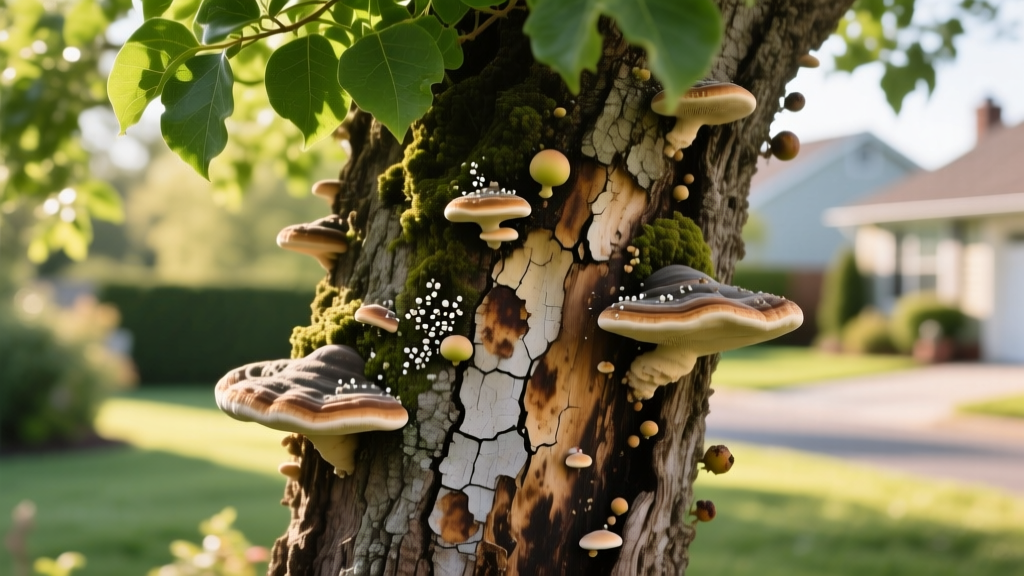
Tree Fungus Removal: Symptom Diagnosis & Rescue Fixes
The Triage Framework: Is Your Tree Salvageable?
Tree fungus removal is rarely as simple as scraping mushrooms off bark. Fungal pathogens are responsible for an estimated 80% of all plant diseases, and by the time fruiting bodies (conks or mushrooms) appear on the trunk, the internal mycelial network has often compromised the tree's structural integrity. Before purchasing fungicides or pruning equipment, you must conduct a structural triage assessment.
⚠️ Hazard Warning: When to Skip Rescue Fixes
If your tree exhibits any of the following, rescue treatments are futile and the tree poses a falling hazard. Consult an ISA Certified Arborist immediately for removal:
If your tree exhibits any of the following, rescue treatments are futile and the tree poses a falling hazard. Consult an ISA Certified Arborist immediately for removal:
- Shelf fungi (e.g., Ganoderma or Laetiporus) fruiting on the lower trunk or root flare.
- More than 30% canopy dieback combined with oozing, foul-smelling sap (slime flux).
- Visible soil heaving or root snapping on the windward side during moderate winds.
Symptom Diagnosis Matrix: Match the Signs to the Fungus
Accurate tree fungus removal begins with precise identification. Misdiagnosing a root rot as a foliar blight leads to wasted chemicals and continued decline. Use this diagnostic matrix to identify the culprit based on visual symptoms and host species.
| Visual Symptom | Probable Fungal Culprit | Primary Host Trees | Urgency |
|---|---|---|---|
| Black, swollen, knotty growths on twigs and branches | Apiosporina morbosa (Black Knot) | Plum, Cherry, Peach | High |
| Sudden wilting, canopy thinning, dark streaks under bark | Verticillium dahliae (Verticillium Wilt) | Maple, Ash, Elm | Critical |
| White, powdery coating on new shoots and leaf undersides | Erysiphe spp. (Powdery Mildew) | Oak, Sycamore, Dogwood | Low |
| Bleeding cankers, reddish-brown sap, sudden branch collapse | Phytophthora spp. (Root & Crown Rot) | Oak, Beech, Fir | Critical |
Rescue Fixes: Targeted Treatment Protocols
Once you have identified the pathogen, execute the corresponding rescue protocol. Modern arboriculture has shifted away from broad-spectrum, soil-drenching chemicals toward targeted systemic treatments and biological controls.
Protocol A: Surgical Pruning and Sanitation (For Cankers & Black Knot)
For localized branch infections like Black Knot or Nectria Canker, physical removal is the only effective cure. Fungicides cannot penetrate the thick, necrotic tissue of a mature gall.
- Timing: Prune strictly during the dormant season (late winter) when fungal spores are inactive.
- The Cut: Make your pruning cut at least 6 to 8 inches below the visible margin of the infection. For Black Knot, Penn State Extension recommends cutting 4 inches below the knot during summer, but 6-8 inches in winter to ensure you bypass the internal mycelium.
- Sanitization: Dip your bypass pruners in 70% isopropyl alcohol for 30 seconds between every single cut. Bleach solutions corrode steel blades and degrade cutting edges, leading to ragged wounds that invite secondary pathogens.
- Disposal: Burn the infected wood or bury it at least 2 feet deep. Do not compost or chip infected wood, as this spreads spores across your property.
Protocol B: Systemic Phosphites & Basal Bark Sprays (For Root Rots)
Phytophthora root rot thrives in poorly drained, compacted soils. While improving drainage is mandatory, chemical intervention is required to halt active cambial bleeding.
- Active Ingredient: Phosphorous acid (often sold as Potassium Phosphite or Agri-Fos). Unlike traditional fungicides, phosphites boost the tree's natural phytoalexin production, essentially hyper-charging its immune system against water molds.
- Application Method: For mature trees, use a basal bark spray. Mix the phosphite product with a penetrant oil (like PentraBark) and spray the lower 18 inches of the trunk until runoff. The oil carries the active ingredient through the lenticels and into the phloem.
- Trunk Injection: For high-value specimen trees, hire an arborist for micro-injections. Expect to pay between $18 and $28 per inch of DBH (Diameter at Breast Height) for professional phosphite injections.
Protocol C: Biological & Contact Sprays (For Foliar Mildews)
Powdery mildew and Anthracnose are rarely fatal but weaken the tree over successive seasons. To avoid copper toxicity in your soil, utilize biological fungicides.
- Product Selection: Look for products containing Bacillus amyloliquefaciens (e.g., RootShield PLUS or Cease). These beneficial bacteria colonize the leaf surface and outcompete fungal spores for space and nutrients.
- Application Window: Apply at bud break and repeat every 14 days during wet, humid spring weather. Ensure thorough coverage of the leaf undersides.
Product Spotlight: What Actually Works
Navigating the garden center aisle can be overwhelming. Here is a breakdown of specific, professional-grade active ingredients to look for on product labels:
🌿 Pro-Tip: Read the Fine Print
Many consumer products market themselves as "Tree Disease Control" but contain Imidacloprid, which is an insecticide, not a fungicide. Always verify the active ingredient targets fungi.
Many consumer products market themselves as "Tree Disease Control" but contain Imidacloprid, which is an insecticide, not a fungicide. Always verify the active ingredient targets fungi.
- Propiconazole 14.3%: A systemic triazole fungicide highly effective against rusts, powdery mildew, and oak wilt. Applied via macro-infusion by professionals. Cost: ~$150 for a 32oz professional concentrate.
- Copper Octanoate (Copper Soap): A safer alternative to Bordeaux mixture for dormant season sprays. Excellent for preventing Peach Leaf Curl and Anthracnose. Brands like Bonide Liquid Copper are widely available for under $20.
- Potassium Bicarbonate: A contact fungicide that physically destroys the cell walls of powdery mildew spores on contact. Highly effective as a rescue spray when mildew is already visible. Brands like GreenCure retail for roughly $35 per pound.
Cultural Controls: Altering the Microclimate
Fungi require specific moisture and temperature thresholds to sporulate. You can suppress fungal activity by altering the tree's immediate environment without using a single chemical.
The Percolation Test for Root Rot Prevention
If you suspect Phytophthora or Armillaria, test your soil drainage. Dig a hole 12 inches deep and 12 inches wide near the tree's drip line. Fill it with water and let it drain completely. Refill it and measure the drainage rate. If the water level drops less than 1 inch per hour, your soil is severely compacted.
The Fix: Use an air spade (or hire an arborist with one) to perform radial trenching or vertical mulching. This fractures compacted clay without severing major structural roots, allowing oxygen to reach the fine feeder roots and suppressing anaerobic root-rot pathogens. According to the Morton Arboretum, improving soil aeration is the single most effective long-term defense against Phytophthora.
Mulch Management
Volcano mulching (piling mulch against the trunk) keeps the root flare perpetually moist, inviting crown rot. Pull all mulch back 4 inches from the trunk flare. Maintain a 2-to-3-inch layer of coarse arborist wood chips extending to the drip line to regulate soil temperature and retain moisture without suffocating the roots.
When to Call an ISA Certified Arborist
While homeowners can manage foliar diseases and minor branch cankers, systemic vascular diseases require professional intervention. If your tree exhibits delayed bud break, flagging (sudden wilting of individual branches), or fungal conks at the base, contact an arborist certified by the International Society of Arboriculture (ISA). They possess the specialized trunk-injection equipment and diagnostic lab access necessary to confirm pathogens like Verticillium or Ophiostoma (Oak Wilt), which cannot be diagnosed accurately by visual symptoms alone.

