
Pest Control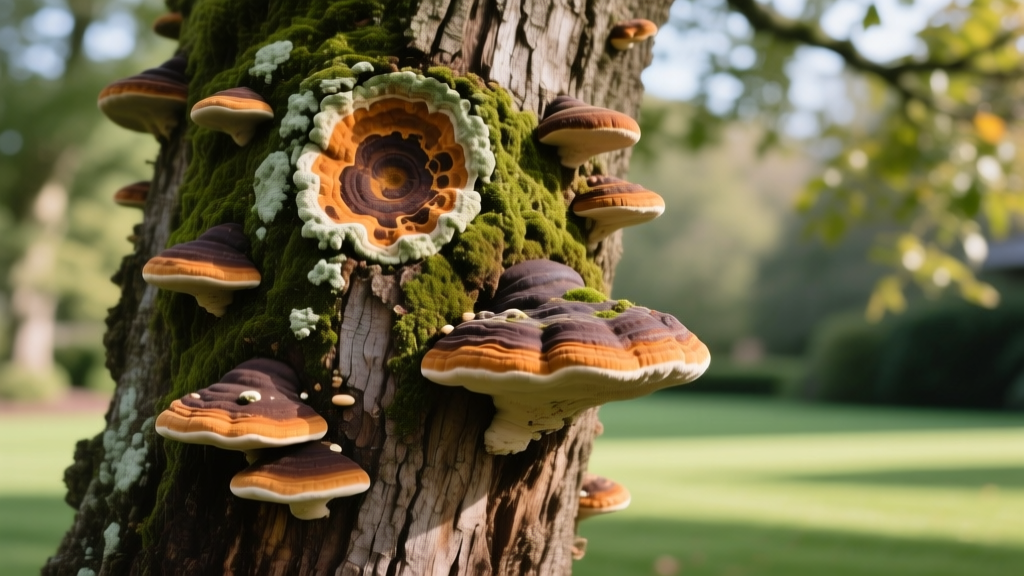
How to Diagnose and Treat Fungus That Grows on Trees
The Diagnostic Reality of Tree Fungal Infections
When a fungus that grows on trees becomes visible on the trunk, roots, or canopy, the infection is rarely in its early stages. Fungi are opportunistic pathogens or aggressive decay organisms that exploit environmental stress, physical wounds, or root compaction. Homeowners often mistake the fruiting bodies (mushrooms, conks, or powdery spores) for the entire problem, but these structures are merely the reproductive phase of a much larger internal mycelial network. Effective rescue requires matching the specific visual symptom to the underlying pathogen and deploying targeted chemical or mechanical interventions before structural failure or total vascular collapse occurs.
Symptom Matrix: Identifying the Pathogen
Accurate diagnosis dictates the rescue protocol. A foliar fungus requires entirely different chemistry than a root-rot organism. Use this diagnostic matrix to cross-reference your tree's symptoms with the most likely culprits.
| Visual Symptom | Likely Fungal Pathogen | Primary Location | Severity & Reversibility |
|---|---|---|---|
| White/gray powdery dust on leaves; premature leaf drop | Erysiphe spp. (Powdery Mildew) | Foliage, young shoots | Moderate; Reversible with fungicides |
| Rapid browning of leaves starting at the top outer canopy | Bretziella fagacearum (Oak Wilt) | Vascular system (Red Oaks) | Fatal; Requires immediate isolation |
| Hard, shelf-like brackets (conks) at the root flare | Ganoderma applanatum (Artist's Conk) | Lower trunk, structural roots | Fatal; Irreversible internal decay |
| Honey-colored mushrooms at base; white mycelial fans under bark | Armillaria mellea (Honey Fungus) | Root collar, lateral roots | Fatal; Spreads to adjacent trees |
| Black, crusty stromata exposed beneath peeling gray bark | Hypoxylon atropunctatum (Canker) | Trunk, major scaffold branches | Severe; Opportunistic on stressed trees |
Wood-Decay Fungi: Conks, Mushrooms, and Structural Failure
Wood-decay fungi like Ganoderma and Armillaria consume lignin and cellulose. By the time a single conk or mushroom emerges from the bark, the internal decay has typically compromised 70% or more of the structural wood in that specific zone. There is no chemical cure for advanced wood rot; the mycelium is permanently integrated into the tree's vascular and structural tissues.
⚠️ Hazard Warning: Armillaria Root Rot
Armillaria spreads subterraneanly via black, shoestring-like rhizomorphs that can travel up to 10 feet through the soil to infect healthy neighboring trees. If you identify honey-colored mushrooms at the base of a declining tree, do not attempt to "save" the tree with soil drenches. The rescue protocol for the surrounding landscape involves removing the infected tree, grinding the stump below grade, and severing the root grafts to adjacent trees using a vibratory plow.
When to Remove vs. When to Monitor
If a tree exhibits shelf fungi but still maintains a full canopy, an ISA Certified Arborist can perform a Resistograph test or Sonic Tomography. A resistograph drills a micro-needle into the trunk, measuring wood density to map the exact percentage of solid vs. decayed wood. This diagnostic service typically costs between $200 and $400. If the remaining solid wood shell meets the species-specific safety threshold (often a minimum of 30% sound wood thickness relative to the trunk radius), the tree can be retained with annual monitoring and canopy weight-reduction pruning.
Vascular and Canker Fungi: Saving the Canopy
Unlike wood-decay fungi, vascular pathogens and canker fungi attack the cambium and xylem. These infections can sometimes be halted or managed if caught before the canopy experiences total dieback.
Hypoxylon Canker: The Opportunistic Killer
Hypoxylon is a secondary pathogen. It rarely attacks healthy trees. The black, crusty stromata appear only after the tree has suffered severe environmental stress—typically prolonged drought, soil compaction, or grade changes that suffocate roots. The fungus colonizes the dead sapwood beneath the bark, causing the outer bark to slough off in large sheets.
Rescue Fix: You cannot spray Hypoxylon away. The rescue protocol focuses on alleviating the primary stressor. Apply a 2-to-3-inch layer of organic mulch out to the drip line (keeping it 3 inches away from the trunk flare) to retain soil moisture. Implement deep-root watering using a soil probe to deliver 15 gallons of water per inch of trunk diameter every two weeks during drought periods. If the canker is localized to a single scaffold branch, execute a lateral pruning cut at least 12 inches below the visible bark discoloration, sterilizing your pruning saw with 70% isopropyl alcohol between every single cut.
Oak Wilt: The Vascular Emergency
According to the Texas A&M Forest Service, Oak Wilt (Bretziella fagacearum) is one of the most destructive tree diseases in North America. Red oaks can die within 4 to 6 weeks of initial infection. The fungus blocks the xylem, causing rapid leaf wilting and bronzing from the top of the canopy downward.
Rescue Fix: Immediate intervention requires macro-infusion of Propiconazole (Alamo 41.8%) directly into the tree's vascular system. For preventative or early-stage treatment, the dosage is generally 0.2 to 0.4 ml of formulated product per inch of Diameter at Breast Height (DBH). Simultaneously, you must sever root grafts between the infected tree and adjacent oaks by trenching to a depth of 48 inches using a vibratory plow. Trenching costs average $15 to $25 per linear foot.
Step-by-Step Trunk Injection Protocol for Homeowners
For treatable foliar and vascular fungi (like Powdery Mildew, Anthracnose, or early Oak Wilt), trunk injections bypass the soil and deliver fungicides directly to the canopy. While large-scale treatments should be left to professionals, homeowners can treat smaller, high-value trees using DIY injection kits.
- Calculate the DBH: Measure the trunk circumference at exactly 4.5 feet above the ground. Divide this number by 3.14 to get the Diameter at Breast Height (DBH) in inches.
- Select the Chemistry: Use a systemic fungicide labeled for trunk injection, such as Propiconazole 41.8% or a Copper-based formulation like Monterey Liqui-Cop (for foliar issues, mixed at 0.5 to 2.0 fl oz per gallon for sprays, though injections require specific proprietary capsules).
- Drill the Ports: Using a 5/32-inch drill bit, drill holes at a 45-degree downward angle into the sapwood (the outermost 1.5 inches of the trunk). Space the holes 4 to 6 inches apart around the base of the trunk, starting 2 inches above the soil line.
- Inject the Fungicide: Insert the injection capsules or use a pressurized micro-infusion system to push the chemical into the xylem. Allow 15 to 30 minutes for uptake.
- Seal the Wounds: While traditional arboriculture advises against wound paint, modern injection protocols often recommend sealing the drill holes with a specialized pruning sealant or non-asphalt based tree wound dressing to prevent secondary entry by wood-boring beetles.
Expert Insight: Timing is critical for trunk injections. The University of Minnesota Extension notes that systemic fungicides must be applied when the tree is actively transpiring—typically between bud break in early spring and late summer. Injecting a dormant tree will result in the chemical pooling in the lower trunk, causing localized phytotoxicity and failing to reach the canopy.
Frequently Asked Questions
Can I just scrape the fungus off the tree bark?
No. Scraping off a conk or mushroom only removes the fruiting body. The mycelium remains deeply embedded in the wood or vascular system. Furthermore, physically wounding the bark to scrape off fungi creates new entry points for secondary pathogens and wood-boring insects.
Is black sooty mold a fungus that grows on trees?
Yes, but it is a superficial epiphytic fungus that feeds on the honeydew excreted by sap-sucking insects like aphids, scale, or whiteflies. It does not infect the tree tissue. The rescue fix is not a fungicide; it is an insecticide. Apply a horticultural oil or insecticidal soap to eradicate the insects, and the sooty mold will naturally weather away within a few weeks.
How do I sterilize my soil to kill tree root fungus?
Chemical soil sterilization (using products like metam sodium) is highly restricted, environmentally destructive, and will kill the tree's fine feeder roots along with the pathogen. Instead, utilize biological antagonists. Applying soil amendments containing Trichoderma harzianum (a beneficial fungus) can outcompete pathogenic root rots like Phytophthora and Fusarium, restoring the soil microbiome without toxic fumigants.

