
Pest Control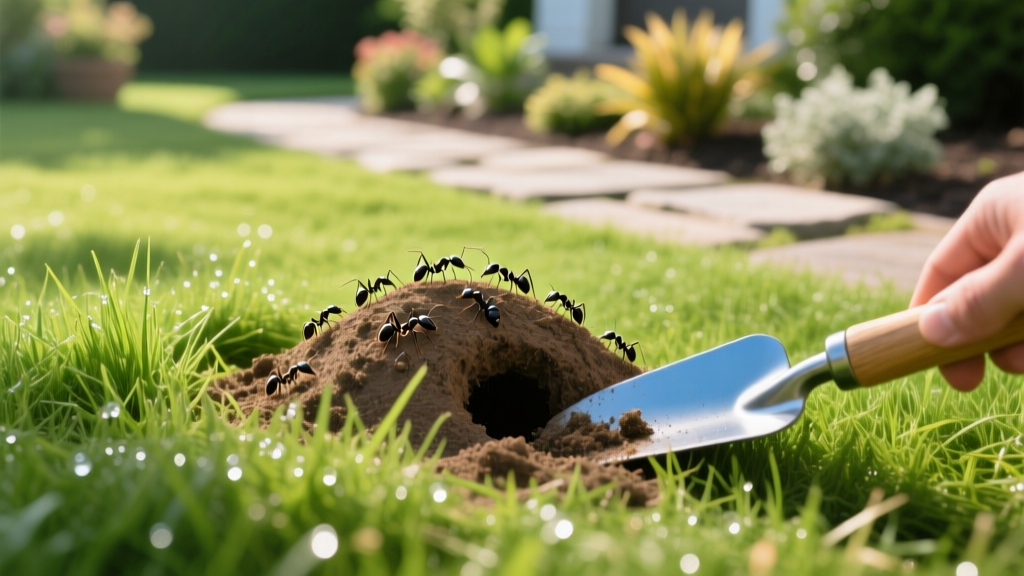
How to Eliminate Ant Hills in Yard Without Killing Turfgrass
The Hidden Cost of Ant Hills in Yard Ecosystems
Finding ant hills in yard spaces is a common frustration for homeowners, but these mounds represent more than just an aesthetic nuisance. Unmanaged ant colonies actively smother turfgrass by blocking sunlight to the crown, altering soil pH through their excavation, and creating hardened clay structures that dull or chip lawnmower blades. Replacing a damaged mower blade costs between $45 and $85, while severe turf chlorosis from mound shading can require costly sod replacement. Furthermore, aggressive species like the Red Imported Fire Ant (RIFA) pose severe health risks to children and pets playing on the lawn.
Effective eradication requires a strategic approach that eliminates the colony at its source without applying excessive synthetic chemicals that burn your Bermuda, Zoysia, or Fescue turf. By adopting the scientifically backed Two-Step Method and utilizing targeted, turf-safe active ingredients, you can reclaim your lawn while maintaining soil health.
Identification: Friend, Foe, or Fire Ant?
Before deploying treatments, accurate identification is critical. Not all ant hills in yard environments require total eradication. Native pyramid ants and harmless field ants actually provide beneficial soil aeration and prey on turf-damaging grubs.
⚠️ WARNING: Red Imported Fire Ant (RIFA) Identification
RIFA mounds are typically dome-shaped, lack a visible central opening, and are built in open, sunny areas. When the mound crust is broken, RIFA workers swarm aggressively within seconds, delivering painful, venomous stings that result in raised white pustules. If you observe this behavior, treat the mound immediately as a hazardous pest.
RIFA mounds are typically dome-shaped, lack a visible central opening, and are built in open, sunny areas. When the mound crust is broken, RIFA workers swarm aggressively within seconds, delivering painful, venomous stings that result in raised white pustules. If you observe this behavior, treat the mound immediately as a hazardous pest.
The Two-Step Eradication Protocol
Developed by entomologists at the Texas A&M Imported Fire Ant Research and Management Project, the Two-Step Method remains the gold standard for managing high-density ant populations in turf environments. This strategy combines area-wide baiting with targeted mound treatments to minimize chemical load on your grass.
Step 1: Broadcast Baiting (The Colony Killer)
Broadcast baits utilize slow-acting toxicants mixed with an attractive food carrier. Foraging ants carry the bait deep into the nest and feed it to the larvae and queen, eventually collapsing the entire colony. Because the active ingredient is encapsulated in a food matrix, it does not harm turfgrass roots or blades.
- Recommended Product: Amdro Fire Ant Bait (Active Ingredient: Hydramethylnon 0.73%).
- Application Rate: 1.5 lbs per acre, which translates to roughly 0.5 oz per 1,000 square feet of lawn.
- Timing: Apply in the late afternoon or early evening when ground temperatures are between 70°F and 85°F and ants are actively foraging. Avoid applying if rain is forecast within 24 hours, as moisture ruins the bait's palatability.
- Cost: Approximately $12 to $15 for a 1.5 lb shaker bottle, sufficient to treat a standard 5,000 sq ft lawn multiple times.
Step 2: Individual Mound Drenching (The Quick Knockdown)
While baits take 7 to 14 days to eliminate a colony, nuisance mounds near patios, play areas, or high-traffic walkways require immediate neutralization. Liquid drenches kill on contact and penetrate deep into the subterranean galleries.
- Piercing the Mound: Use a metal soil probe or a long screwdriver to punch 3 to 4 holes into the center and sides of the ant hill. This breaks the surface tension and allows the liquid to reach the queen's chamber, which can be up to 18 inches deep.
- Mixing the Drench: Combine 1 oz of a 0.5% Bifenthrin concentrate (such as Ortho Fire Ant Killer Mound Treatment) with 1 gallon of water. Bifenthrin is highly effective against insects but exhibits very low phytotoxicity, meaning it will not burn your grass when used at label rates.
- Application: Slowly pour 1.5 to 2 gallons of the mixed solution directly over and into the punctured mound. Use a watering can with a rose attachment or a pump sprayer with the nozzle adjusted to a gentle flood pattern to prevent soil erosion.
Active Ingredient Comparison Matrix
Selecting the right chemical profile ensures you eliminate the ant hills in your yard without triggering fertilizer burn or herbicide-like damage to your turf. Below is a comparison of the most effective turf-safe active ingredients available to homeowners.
| Active Ingredient | Product Example | Kill Speed | Turf Safety | 2026 Est. Cost |
|---|---|---|---|---|
| Hydramethylnon | Amdro Fire Ant Bait | 7-14 Days (Colony) | Excellent (Granular) | $14 / 1.5 lbs |
| Bifenthrin | Ortho Mound Treatment | Minutes to Hours | Very Good (Liquid) | $9 / 16 oz |
| Spinosad | Monterey Garden Insect | 24-48 Hours | Excellent (Organic) | $26 / 16 oz |
| Indoxacarb | Advion Fire Ant Bait | 3-7 Days (Colony) | Excellent (Granular) | $32 / 1.5 lbs |
Post-Eradication Turf Repair
Once the colony is confirmed dead (no activity for 48 hours after drenching), the physical mound must be dismantled to restore the lawn grade. Leaving dead mounds in place will continue to block sunlight and damage mower decks.
Pro-Tip: The Rake and Topdress Method
Do not use a shovel to slice the mound off at the base; this removes the top layer of your topsoil and healthy grass roots. Instead, use a stiff metal thatch rake to aggressively break apart the dried clay structure. Scatter the loose soil evenly over the surrounding turf as a natural topdressing. For severe mounds in warm-season grasses, overseed the bare spot with a quarter-inch layer of compost and matching turf seed, keeping it moist for 14 days.
Do not use a shovel to slice the mound off at the base; this removes the top layer of your topsoil and healthy grass roots. Instead, use a stiff metal thatch rake to aggressively break apart the dried clay structure. Scatter the loose soil evenly over the surrounding turf as a natural topdressing. For severe mounds in warm-season grasses, overseed the bare spot with a quarter-inch layer of compost and matching turf seed, keeping it moist for 14 days.
Perimeter Defense and Prevention
According to University of Minnesota Extension entomologists, ants frequently migrate into yard spaces from adjacent undisturbed wooded areas or cracked pavement. To prevent new queens from establishing satellite colonies in your turf, establish a chemical barrier.
Apply a granular perimeter treatment containing Lambda-cyhalothrin (such as Spectracide Triazicide) in a 3-foot band around the exterior foundation of your home, as well as along the borders of your property where it meets wooded lots. Water the granules in lightly with a hose to activate the active ingredient into the top inch of the soil. This barrier degrades over 8 to 10 weeks, requiring reapplication in early spring and late summer to disrupt the nuptial flight seasons when new winged queens seek nesting sites.
Frequently Asked Questions
Will boiling water kill ant hills without harming the grass?
While pouring 2 to 3 gallons of boiling water directly into a mound will kill roughly 60% of the colony, it will also instantly cook and kill the surrounding turfgrass roots, leaving a dead, brown ring on your lawn that requires reseeding. Chemical drenches are significantly more effective and turf-safe.
How do I treat ant hills in yard spaces during a drought?
During dry spells, ants build deeper subterranean galleries to access moisture, making surface drenches less effective. Switch exclusively to granular baits like Indoxacarb (Advion). Foraging ants will travel further for food and water during droughts, making them highly receptive to slow-acting baits that they will carry deep into the drought-adapted nest.
Are there organic options for vegetable gardens adjacent to the lawn?
Yes. If ant hills are encroaching on edible garden beds, avoid synthetic pyrethroids like Bifenthrin. Instead, use a Spinosad-based liquid drench. Spinosad is derived from soil-dwelling bacteria, is OMRI-listed for organic use, and breaks down rapidly in sunlight, making it safe for use near vegetable root zones once it has dried.

