
Pest Control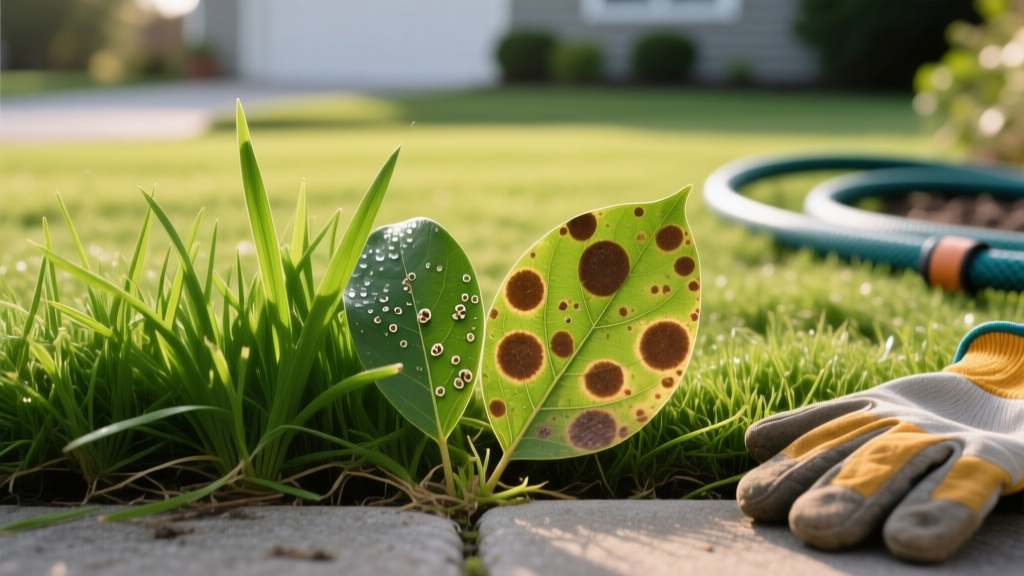
Diagnose and Treat Leaf Spot Fungus on Turfgrass Lawns
Leaf spot fungus is one of the most common and destructive turfgrass diseases in North America, primarily targeting cool-season grasses like Kentucky bluegrass, perennial ryegrass, and tall fescue. Left unchecked, what begins as minor cosmetic blemishes on leaf blades rapidly escalates into the lethal 'melting out' phase, destroying the plant's crown and root system. Effective rescue requires immediate symptom identification, targeted fungicide application, and precise cultural corrections to alter the microclimate.
The Disease Progression: From Spot to Melting Out
Leaf spot is caused by a complex of pathogens, most notably Bipolaris sorokiniana and Drechslera poae. These fungi thrive in moderate temperatures (60°F to 75°F) combined with high humidity and prolonged leaf wetness. Understanding the two distinct phases of the disease is critical for timing your rescue interventions.
Quick Symptom Checklist
- Phase 1 (Leaf Spot): Small, oval, water-soaked lesions appear on the leaf blades. As they mature, the centers turn tan or straw-colored with distinct dark brown or purplish-black borders.
- Phase 2 (Melting Out): The fungus penetrates the leaf sheath, invading the crown and roots. The turf thins rapidly, turning brown and 'melting' away, leaving irregular bare patches.
- Diagnostic Test: Pull gently on a yellowing turf shoot. If it detaches easily at the base and the crown tissue appears dark, rotted, and mushy, the disease has progressed to melting out.
According to NC State Turfgrass Pathology, the transition from the foliar leaf spot phase to the lethal melting out phase often occurs during late spring or early summer when daytime temperatures rise but nighttime moisture remains trapped in the canopy. Once the crown is compromised, fungicide efficacy drops significantly, making early foliar diagnosis the linchpin of lawn survival.
Rescue Fixes: Immediate Fungicide Interventions
When cultural practices fail to halt the spread, chemical intervention is mandatory. Fungicides for leaf spot are categorized by their mode of action and mobility within the plant tissue. For active rescue scenarios, systemic fungicides are required to protect new growth and halt internal crown infection.
Active Ingredient Comparison Matrix
| Active Ingredient (FRAC Group) | Brand Example | Est. Cost (2026) | Application Rate (per 1,000 sq ft) |
|---|---|---|---|
| Propiconazole (Group 3 - DMI) | Honor Guard PPZ | $45 / pint | 0.2 fl oz |
| Azoxystrobin (Group 11 - QoI) | Heritage SC | $125 / quart | 0.2 - 0.4 fl oz |
| Chlorothalonil (Group M5 - Contact) | Daconil Weather Stik | $38 / gallon | 2.0 fl oz |
Application Protocols and Timing
For active leaf spot infections, apply a systemic fungicide like Propiconazole (FRAC Group 3) immediately. To prevent fungicide resistance, rotate with a different FRAC group (such as Azoxystrobin, FRAC Group 11) for your second application 14 to 21 days later. Contact fungicides like Chlorothalonil are only effective as preventatives; they will not cure an active crown infection but can be tank-mixed with systemics to knock down surface spore loads.
Crucial Spray Technique: Foliar diseases require thorough canopy coverage. Calibrate your sprayer to deliver 1.5 to 2.0 gallons of finished solution per 1,000 square feet. Use a flat-fan nozzle (such as a TeeJet 8004) and maintain a steady walking speed of 3 mph. Do not water in the fungicide immediately; allow it to dry on the leaf tissue for at least 4 hours to ensure systemic absorption.
Cultural Rescue: Altering the Microclimate
Fungicides are a temporary bridge, not a permanent cure. The University of Minnesota Extension emphasizes that leaf spot pathogens are opportunistic, exploiting lawns with poor air circulation, excessive thatch, and improper fertility. Implement these cultural corrections immediately alongside your chemical rescue.
- Mowing Adjustments: Raise your mower deck to a minimum of 2.5 to 3.0 inches. Scalping the lawn removes the growing point and stresses the plant, accelerating the melting out phase. During active infection, bag your clippings to physically remove fungal inoculum from the property. Never mow when the grass is wet.
- Precision Irrigation: Leaf spot requires 10 to 12 hours of continuous leaf wetness to infect. Transition to deep, infrequent watering. Apply 0.5 inches of water twice a week, strictly between 4:00 AM and 8:00 AM. This ensures the water penetrates the root zone while the morning sun rapidly dries the canopy.
- Fertility Shifts: High nitrogen levels promote rapid, succulent leaf growth with thin cell walls that are easily penetrated by fungal hyphae. If your lawn is infected, halt all nitrogen applications. Instead, apply a potassium-rich fertilizer (e.g., a 5-0-20 NPK ratio) to thicken cell walls and improve drought and disease stress tolerance.
- Thatch Management: A thatch layer exceeding 0.5 inches acts as a sponge, trapping moisture and harboring fungal spores. Perform core aeration in the early fall to break up compaction and introduce oxygen to the root zone, which accelerates thatch decomposition by soil microbes.
'Over-fertilizing with nitrogen in the spring is the single most common homeowner mistake that triggers severe leaf spot outbreaks. The goal is to feed the soil biology and the root system, not to force explosive, weak top-growth.' — UMass Extension Turf Program
Frequently Asked Questions
Can leaf spot fungus spread to my garden vegetables or ornamental shrubs?
No. The specific strains of Bipolaris and Drechslera that cause turfgrass leaf spot and melting out are highly host-specific. They will not infect your tomatoes, roses, or broadleaf ornamentals. However, practicing good sanitation (cleaning mower decks and boots) prevents the spread of other non-specific pathogens like Pythium or Rhizoctonia.
Is it too late to treat if my lawn is already in the melting out phase?
If the crown tissue is entirely black and mushy, those individual plants are dead and cannot be rescued. However, applying a systemic fungicide like Azoxystrobin will protect the surrounding healthy tillers from secondary infection. Once the disease is halted, overseed the bare patches with a resistant cultivar (such as 'Midnight' or 'NuGlade' Kentucky bluegrass) in the early fall when soil temperatures drop to 65°F.
How long does it take to see results after applying fungicide?
Fungicides do not 'cure' existing brown lesions; the damaged tissue will remain tan or straw-colored. The true indicator of success is the cessation of new lesion formation and the halting of turf thinning. You should see healthy, green new growth emerging from the crown within 10 to 14 days post-application, provided cultural practices (watering and mowing) have been corrected.

