
Pest Control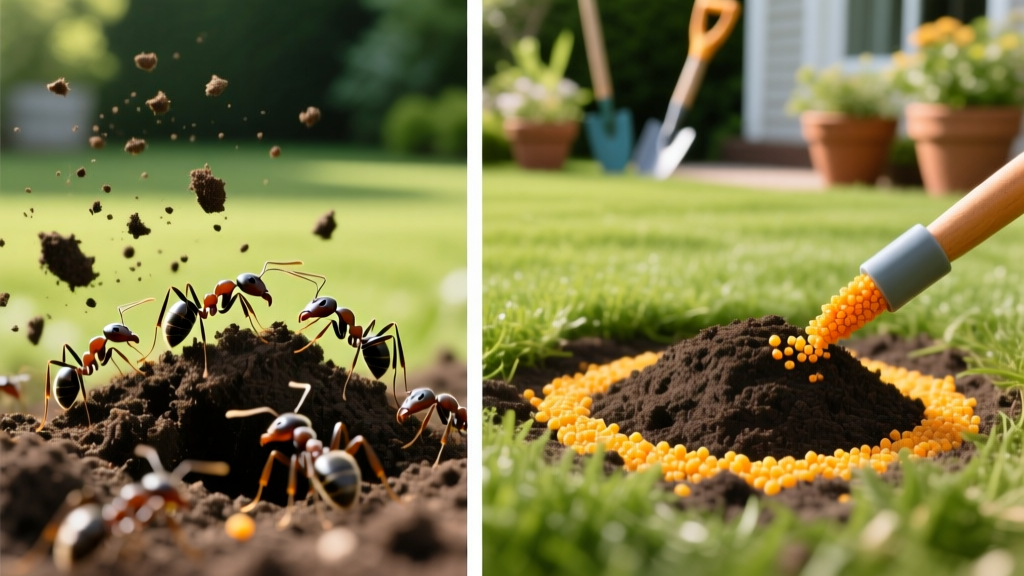
Proven Fire Ants Control: The Two-Step Mound & Bait Method
The Red Imported Fire Ant (Solenopsis invicta) is one of the most aggressive and destructive pests in the southern United States. Beyond the painful, venomous stings that can trigger anaphylaxis in sensitive individuals, these invasive insects damage electrical equipment, undermine pavement, and decimate native wildlife populations. Effective fire ants control requires moving past superficial DIY remedies and adopting a biologically driven, multi-phased strategy.
Surface sprays and homemade concoctions fail because they only kill the foraging workers, leaving the queen—located up to three feet underground—intact and capable of producing 1,500 eggs daily. To reclaim your yard, you must implement the Two-Step Method, a scientifically validated protocol that combines colony-eliminating baits with targeted mound drenches.
The Biology of the Mound: Why Surface Sprays Fail
Fire ant mounds are essentially climate-control towers, not the actual nest. The core colony resides in a complex network of subterranean tunnels. When you spray a contact insecticide directly onto the mound, the colony senses the chemical threat and initiates 'budding'—a process where the queen splits the colony and relocates, ultimately creating multiple new mounds across your property.
⚠️ Critical Warning: Never pour boiling water, bleach, chlorine, or gasoline into a fire ant mound. According to the EPA's safe pest control guidelines, these methods are highly illegal, environmentally devastating, and ineffective. They will contaminate your local water table and fail to reach the deep primary queen.
The Two-Step Fire Ants Control Protocol
Developed and extensively tested by university entomologists, the Two-Step Method achieves 90% to 95% long-term suppression when executed correctly. This protocol requires precise timing based on soil temperature and weather conditions.
Step 1: Broadcast Baiting (The Colony Killer)
Baits consist of an attractive food carrier (usually corn grit and soybean oil) laced with a slow-acting active ingredient. Foraging workers carry the bait deep into the nest and feed it to the queen via trophallaxis (regurgitation).
- Check Soil Temperature: Baiting is only effective when soil temperatures are between 65°F and 90°F. Ants stop foraging outside these ranges.
- Select the Right Bait: Use a dual-active ingredient bait like Extinguish Plus (Methoprene + Hydramethylnon) or a single-active bait like Amdro Fire Ant Bait (Hydramethylnon). Expect to pay $80-$90 for a 25 lb bag of professional-grade Extinguish Plus, which treats roughly 16 acres.
- Application Rate: Apply exactly 1.5 lbs per acre using a handheld rotary spreader (like the Scotts Whirl). Set the spreader to the lowest setting to ensure a light, even dusting.
- Timing: Apply in the late afternoon when ants are actively foraging. Ensure no rain is forecasted for at least 12 hours, as moisture ruins the soybean oil attractant.
Step 2: Targeted Mound Drenching (The Quick Knockdown)
Seven to ten days after broadcasting the bait, target any remaining active mounds near high-traffic areas (playgrounds, patios, AC units) with a liquid drench.
- Mix the Solution: Use a liquid concentrate like Bifen IT (7.9% Bifenthrin) or Demand CS (Lambda-cyhalothrin). Mix 1 ounce of Bifen IT per gallon of water. A 16 oz bottle costs around $30 and yields 16 gallons.
- Drench Technique: Do not disturb the mound with a stick first. Gently pour 3 to 5 gallons of the mixed solution over the mound using a watering can, starting from the outer edges and working inward to create a chemical barrier that prevents escape.
- Saturation: The goal is to soak the subterranean tunnels down to 3 feet. A standard 3-gallon drench will eliminate the mound within 15 to 30 minutes.
Product Comparison Matrix: Baits vs. Drenches vs. Granules
Choosing the right formulation depends on your specific yard defense goals, budget, and the severity of the infestation.
| Method | Active Ingredient | Example Product | Cost per 1/4 Acre | Time to Control | Best Use Case |
|---|---|---|---|---|---|
| Broadcast Bait | Methoprene + Hydramethylnon | Extinguish Plus | $15 - $20 | 2 - 4 weeks | Whole-yard eradication and queen elimination |
| Liquid Drench | Bifenthrin (7.9%) | Bifen IT | $2 - $5 | 15 - 30 minutes | High-traffic zones, electrical boxes, immediate threats |
| Contact Granules | Lambda-cyhalothrin | Spectracide Triazicide | $10 - $12 | 24 - 48 hours | Surface perimeter defense (does not kill deep queens) |
| Organic Bait | Spinosad | Fertilome Come and Get It | $25 - $30 | 3 - 5 days | Vegetable gardens, pet-safe zones, organic lawns |
Yard Defense & Perimeter Exclusion
True insect and rodent yard defense extends beyond killing existing mounds; it requires establishing a hostile perimeter to prevent re-infestation from neighboring properties. Fire ants migrate via nuptial flights and subterranean tunneling.
To fortify your property lines, apply a 3-foot wide band of Taurus SC (9.1% Fipronil) or Bifen Granules around the foundation of your home, fences, and retaining walls. Fipronil is a non-repellent termiticide/insecticide that creates an undetectable transfer effect. Ants walk through the treated soil, pick up the active ingredient, and transfer it to the colony. A 20 oz bottle of Taurus SC costs approximately $65 and provides up to six months of residual perimeter defense when trenched and applied at 0.8 oz per gallon.
Organic & Pet-Safe Alternatives
For homeowners with free-roaming pets, chickens, or active vegetable gardens, synthetic pyrethroids and IGRs (Insect Growth Regulators) may not be ideal. According to research from Texas A&M AgriLife Extension, organic control requires more frequent applications but is highly effective when managed correctly.
- Spinosad Baits: Derived from soil-dwelling bacteria, Spinosad disrupts the insect's nervous system. Products like Monterey Fire Ant Killer are approved for use in organic vegetable gardens and are safe for pets once incorporated into the soil.
- Beneficial Nematodes: Applying Steinernema carpocapsae via a hose-end sprayer introduces microscopic worms that hunt fire ant larvae in the soil. This requires keeping the soil consistently moist and costs about $40 for a million-nematode pack, treating roughly 3,000 square feet.
- Diatomaceous Earth (DE): While food-grade DE can desiccate individual ants, it is largely ineffective for colony control. Once DE gets wet from dew or rain, it loses its abrasive properties. Use it only as a localized, temporary barrier around specific garden beds.
Common Application Mistakes & Troubleshooting
If your fire ants control efforts are failing, you are likely making one of these critical errors:
- Disturbing the Mound Before Baiting: Poking a mound with a stick before dropping bait triggers a defensive response. The ants will stop foraging and focus on repairing the mound, ignoring your bait entirely.
- Using Stale Bait: The soybean oil in fire ant bait goes rancid. If the bag has been open for more than a few weeks and smells sour or musty, the ants will not eat it. Buy only what you need for the current season.
- Applying During the Heat of the Day: In mid-summer, fire ants forage at night. If you apply bait at 2:00 PM in July, the UV rays will degrade the active ingredient, and the ants won't emerge to collect it until long after the chemical has broken down.
- Ignoring the AC Unit: Fire ants are highly attracted to the electromagnetic fields and warmth of HVAC condenser units. Always check and drench the soil directly beneath and around your AC pads to prevent electrical shorts.
Frequently Asked Questions
Will treating my yard once keep fire ants away forever?
No. Fire ant queens can fly up to 12 miles during nuptial mating flights. Even if you eradicate every colony on your property, new queens will inevitably land and establish new mounds. The Two-Step Method should be repeated bi-annually (spring and fall) for continuous suppression.
Is it safe to let my dog outside after a liquid drench?
Keep pets and children off the treated lawn until the liquid drench has completely dried into the soil, which typically takes 2 to 4 hours depending on humidity and sunlight. Once dry, the bifenthrin binds to the soil organic matter and poses minimal risk to mammals.

