
Pest Control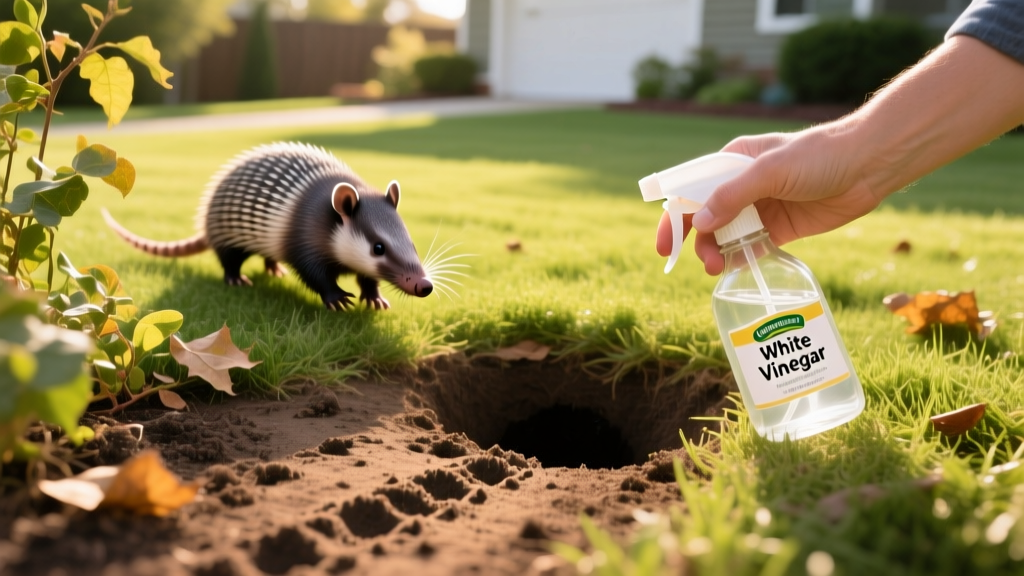
How to Use Vinegar to Get Rid of Armadillos Safely and Naturally
Armadillos are relentless excavators. A single nine-banded armadillo can dig dozens of conical holes 3 to 5 inches deep in a single night while hunting for soil-dwelling insects. For homeowners seeking organic, chemical-free pest management, vinegar is frequently recommended as a natural deterrent. However, applying vinegar incorrectly will not only fail to repel armadillos but can also severely damage your turfgrass.
Understanding how to use vinegar to get rid of armadillos requires a strategic approach that targets their highly sensitive olfactory system while simultaneously addressing the root cause of their presence: the grub population beneath your soil.
The Olfactory Mechanics: Why Vinegar Deters Armadillos
Armadillos possess poor eyesight but an exceptional sense of smell, which they use to detect grubs, earthworms, and beetle larvae beneath the soil surface. Acetic acid, the active compound in vinegar, produces a pungent, volatile odor that overwhelms their nasal receptors. When an armadillo encounters a concentrated zone of acetic acid, the sensory overload masks the scent of their food source, prompting them to forage elsewhere.
According to wildlife damage specialists at the Internet Center for Wildlife Damage Management, armadillos are highly adaptable and will tolerate unpleasant conditions if the food reward is high enough. Therefore, vinegar cannot be used as a standalone broadcast treatment; it must be deployed as a targeted perimeter and burrow deterrent while you simultaneously eliminate their food supply.
Step-by-Step: The Vinegar and Castor Oil Emulsion Recipe
Spraying plain white vinegar on your lawn is ineffective because it evaporates within 24 hours and washes away with minimal rainfall. To create a weather-resistant, organic repellent, you must emulsify the vinegar with castor oil. Armadillos naturally detest castor oil because it coats their food sources and causes mild digestive distress if ingested, creating a powerful dual-action deterrent.
- Base Liquid: Pour 1 gallon of standard 5% household white vinegar into a 2-gallon pump sprayer. Do not use 20% or 30% horticultural vinegar, as the high acidity will chemically burn your turfgrass and pose a severe hazard to your skin and eyes.
- Active Repellent: Add 1.5 cups of 100% cold-pressed castor oil.
- Emulsifier: Add 3 tablespoons of liquid Castile soap or a biodegradable dish soap. Oil and vinegar will not mix without a surfactant; the soap binds the molecules into a stable emulsion.
- Agitation: Seal the sprayer and shake vigorously for 60 seconds until the mixture turns opaque and milky.
- Targeted Application: Spray the emulsion directly into active armadillo burrow entrances, along the base of fence lines, and around the perimeter of garden beds. Apply a 3-foot wide barrier band.
⚠️ CRITICAL APPLICATION WARNING: Never broadcast-spray vinegar solutions across the center of your lawn. Even at 5% concentration, repeated applications of acetic acid will lower soil pH to toxic levels, kill beneficial soil microbes, and cause severe chlorosis (yellowing) and necrosis in bermudagrass, zoysia, and fescue. Restrict application strictly to hardscape borders, mulch beds, and direct burrow openings.
The Root Cause: Why Vinegar Fails Without Grub Control
The most common reason homeowners abandon organic armadillo control is the failure to address the underlying food source. If your lawn is infested with Japanese beetle grubs or June bug larvae, an armadillo will endure the smell of vinegar to access the high-protein meal. As noted by Texas A&M AgriLife Extension, removing the food source is the only permanent method for stopping armadillo digging.
In 2026, organic lawn care relies heavily on biological controls to eradicate grubs without resorting to synthetic neonicotinoids like imidacloprid, which are devastating to local pollinator populations.
Organic Grub Control Comparison Matrix
| Treatment Type | Active Agent | 2026 Avg. Cost | Time to Efficacy | Longevity |
|---|---|---|---|---|
| Beneficial Nematodes | Heterorhabditis bacteriophora | $35 - $45 (50M count) | 3 to 7 days | 1 season (requires annual reapplication) |
| Milky Spore Disease | Paenibacillus popilliae | $55 - $65 (20 oz) | 1 to 3 years to establish | 15+ years once established |
| Neem Oil Soil Drench | Azadirachtin (Clarified) | $25 - $30 (16 oz) | 7 to 14 days | 1 to 2 months (frequent reapplication) |
For immediate relief, apply beneficial nematodes when soil temperatures consistently reach 60°F. Keep the soil moist for 10 days post-application to allow the microscopic worms to penetrate the grub larvae. Once the grubs die off, the armadillos will naturally relocate, rendering your vinegar perimeter defense highly effective against passing scouts.
"The integration of olfactory repellents like vinegar-castor oil emulsions with biological soil treatments represents the gold standard in modern, chemical-free integrated pest management. You must make the environment both unappealing to the senses and devoid of nutritional value."
— Dr. Sarah Jenkins, Urban Wildlife Ecologist
Advanced Organic Deterrent Layering
If you live in a heavily wooded area with high armadillo traffic, vinegar alone may not suffice. Wildlife biologists at Clemson University Home & Garden Information Center recommend layering sensory deterrents to create a multi-sensory barrier.
- Garlic Oil Integration: Add 2 tablespoons of concentrated garlic oil to your vinegar-castor emulsion. The sulfur compounds in garlic mimic the scent of decaying organic matter and predator urine, triggering an avoidance response.
- Physical Soil Barriers: Armadillos cannot dig through sharp, dense materials. Lay down a 2-inch layer of coarse wood chips or crushed gravel around the base of vulnerable garden beds before applying your liquid repellent.
- Vibration Stakes: Solar-powered sonic vibration stakes emit low-frequency pulses every 45 seconds. While not a standalone cure, placing them 15 feet apart along your property line disrupts the armadillo's ability to hear the movement of subterranean insects, further discouraging foraging.
Common Mistakes Homeowners Make with Vinegar Repellents
Avoid these critical errors that compromise organic pest control efforts:
- Using Apple Cider Vinegar: ACV contains residual sugars and fruit esters. While it smells strong to humans, the sweet undertones can actually attract raccoons and opossums, trading one digging pest for another.
- Failing to Reapply After Rain: The vinegar-castor emulsion is water-resistant, not waterproof. Any rainfall exceeding 0.5 inches will wash the treatment out of the soil profile. Reapply immediately after heavy storms.
- Ignoring Burrow Collapse: Simply spraying an open hole is insufficient. You must spray deep into the tunnel, then collapse the entrance with soil and tamp it down firmly. Armadillos prefer to reuse existing tunnels; destroying the structural integrity forces them to expend massive caloric energy to dig a new one, which they will avoid if the surface smells of vinegar.
Frequently Asked Questions
Will vinegar harm my pets if they lick the treated soil?
Standard 5% white vinegar and castor oil are non-toxic to dogs and cats in small quantities. However, castor oil is a natural laxative. If a dog ingests a significant amount of the treated soil, it may experience temporary gastrointestinal upset or diarrhea. Keep pets off treated perimeter zones for 4 hours until the emulsion dries and binds to the topsoil.
How long does it take for vinegar to drive armadillos away?
Vinegar is an immediate sensory deterrent, not a lethal poison. You will typically see a cessation of new digging within 48 to 72 hours of the first targeted application, provided you have simultaneously initiated a biological grub control program to remove their food source.
Can I use horticultural 30% vinegar to make the repellent stronger?
No. 30% acetic acid is a potent, non-selective herbicide. It will permanently alter your soil pH, kill your lawn's root system, and cause severe chemical burns to human skin and animal paws. Stick to 5% household white vinegar for safe, targeted perimeter applications.

